
9v battery: The Complete 2026 India Guide That Avoids Bad Buys
Compare 9 V battery types, real runtime, charging and prices in India. Learn when to choose a 12 V pack or UPS battery instead.
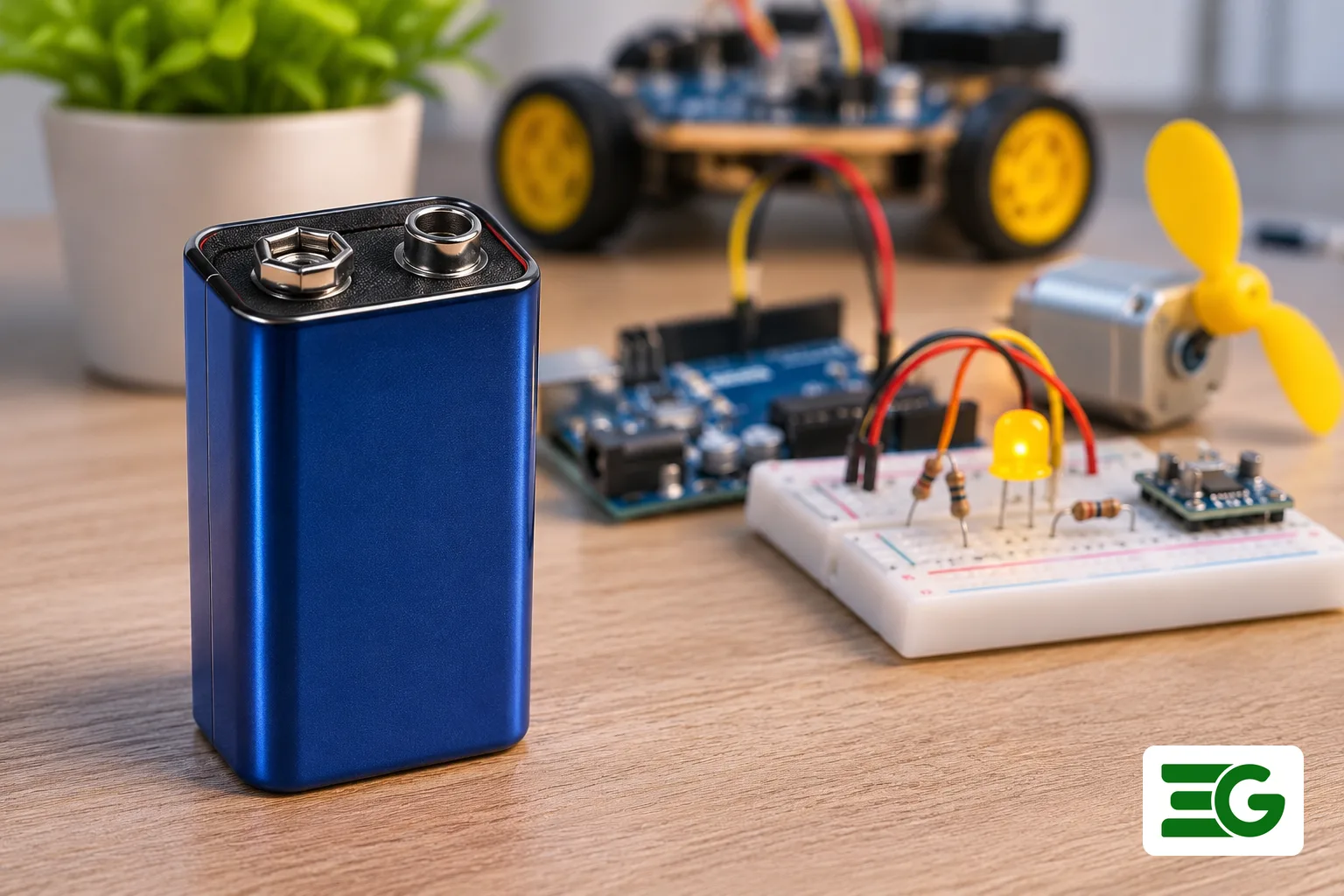
A 9v battery looks like an easy purchase until a circuit resets, a smoke alarm starts chirping, or a rechargeable replacement runs out earlier than expected. The same rectangular case can contain very different chemistry, capacity and discharge behaviour. A cheap cell may suit a school experiment but disappoint in a device that must work unattended.
For most occasional, low-current applications, a fresh alkaline PP3 battery is the sensible default. Choose a rechargeable model only when its output voltage, charger and runtime suit your device. For motors, home backup or a UPS, start with a different battery format entirely. The connector shape alone cannot tell you what a battery can power.
What a 9v battery contains and how it works
The familiar rectangular PP3 case has two snap terminals on top. The smaller round terminal is positive; the larger hexagonal terminal is negative. On a conventional alkaline design, six small cells connected in series produce a nominal 9 V. Labels such as 6LR61 and 6F22 identify related formats, but not necessarily identical chemistry. Read the actual package before ordering.
Those internal cells explain why the block has less current capacity than its size suggests. Each cell occupies a fraction of the enclosure, and all six share the same series current. You cannot compare a 9 V battery marked 500 mAh with a 1.5 V AA marked 2,000 mAh by the mAh number alone. Compare energy in watt-hours, approximately nominal volts multiplied by amp-hours, while remembering that usable energy changes with load.
For example, a nominal 9 V, 0.5 Ah battery represents about 4.5 Wh on paper. That is an illustration, not a guaranteed delivered figure. Internal resistance, temperature and the device cutoff voltage can reduce the usable amount. The Energizer 522 technical sheet plots capacity against discharge current; the curve is much more useful than a single bold number on a retail listing.
9v battery types: alkaline, zinc and lithium
Zinc-carbon 6F22 cells are inexpensive and often appear in starter kits. They can be adequate for brief classroom demonstrations and very light loads. Their weakness is voltage sag under higher current. We would not choose an unverified zinc-carbon cell for a critical alarm just because it fits the holder.
Alkaline 9 V batteries generally deliver better service in moderate loads and offer convenient storage life. A manufacturer sheet is more trustworthy than an advertisement claiming a universal runtime. The Energizer 522 specification describes 9.0 V nominal output, miniature snap terminals and a five-year shelf-life claim under stated conditions. Shelf life does not mean a battery powers a device continuously for five years.
Primary lithium 9 V batteries can be useful when low weight, storage conditions or long unattended service matter. The Energizer lithium 9 V data sheet gives the exact discharge and temperature limitations for one design. Lithium is not automatically rechargeable. A primary lithium cell must never go into a rechargeable battery charger.
Rechargeable NiMH blocks are commonly labelled 7.2 V, 8.4 V or 9.6 V depending on cell count. Some lithium-ion replacements use electronics to regulate their output near 9 V, while others expose different voltages as charge falls. A device that tolerates one format may reject another. Check both the nominal voltage and the discharge curve, especially for audio gear and instruments sensitive to supply voltage.
How long does a 9v battery last in practice?
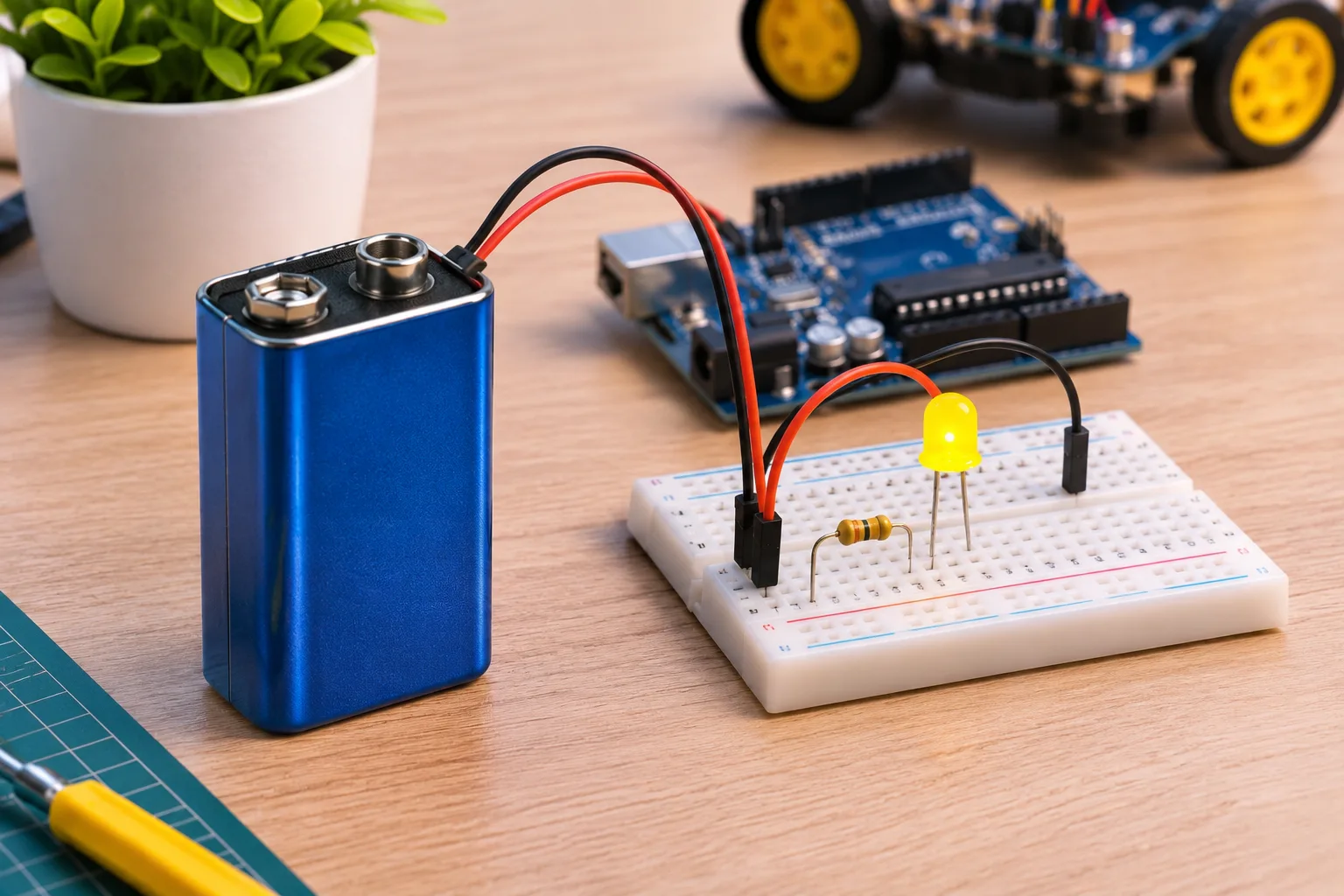
There is no honest single-hour answer. Runtime depends on the device current, its minimum operating voltage, battery chemistry and whether it draws power constantly or in short pulses. A digital multimeter left on a low-power range behaves differently from a radio with a speaker or a microcontroller driving peripherals. Measure the load before buying a box of replacements.
A rough planning formula is runtime in hours equals usable mAh divided by average mA. If you assume 400 mAh usable and a steady 20 mA load, the simple estimate is 20 hours. It is only a starting point. A higher-current load may get much less usable capacity, and a device that shuts down at 7.5 V can stop well before the cell is fully discharged.
The Energizer alkaline sheet illustrates this load dependence: its capacity curve is around 600 mAh at 10 mA, but nearer 440 mAh at 50 mA under the sheet's specified test conditions. A quoted mAh figure without discharge current and endpoint voltage tells you too little. That is why cheap cells can appear healthy on a meter and still fail as soon as the circuit starts drawing current.
For smoke alarms, follow the alarm manufacturer's specified battery chemistry and replacement instructions. Some detectors are designed for a particular primary battery and may not accept rechargeable substitutes. Use the test button after replacement. For guitar pedals or active pickups, check the instrument maker's guidance: musicians discussing rechargeable 9 V runtime describe practical differences, but individual anecdotes are not controlled battery tests.
A small Arduino project is another trap. A PP3 battery feeding a linear regulator wastes energy as heat, while sensors, LEDs and radio modules can demand bursts of current. If the board resets when a motor starts, replacing code rarely solves the underlying power issue. Choose a supply with enough current headroom and common ground, not merely the right nominal voltage.
How to test a 9v battery with a multimeter
A multimeter gives a useful first check, but open-circuit voltage is not a complete health test. Set the meter to DC volts on a range above 9 V. Touch the red probe to the smaller positive terminal and the black probe to the larger negative terminal. Keep the probes apart and never bridge both terminals with metal.
- Inspect the case for leaks, swelling, corrosion or unusual heat. Do not test a damaged battery.
- Read the printed chemistry and expiry or best-before date, if present.
- Measure DC voltage with the battery disconnected from the device.
- Reconnect it to its normal safe load and observe whether the voltage drops sharply, if your setup permits measurement.
- Compare the result with the device's specified minimum supply voltage and replace the battery when performance is unreliable.
A fresh alkaline block can measure above its 9 V nominal rating with no load. A reading close to 9 V does not prove that it can deliver useful current. Conversely, there is no universal dead-battery voltage: a detector, meter and pedal may have different cutoffs. The manufacturer's low-battery warning is more relevant than an internet threshold applied to every device.
Do not put the multimeter in current mode directly across the terminals. That creates a near-short circuit and can damage the meter, fuse or battery. If you need a load test, use a suitable resistor or purpose-built tester and observe safe current limits. For a school lab, measuring a known resistor load is much safer than improvising with loose wires.
Can you recharge a 9v battery safely?
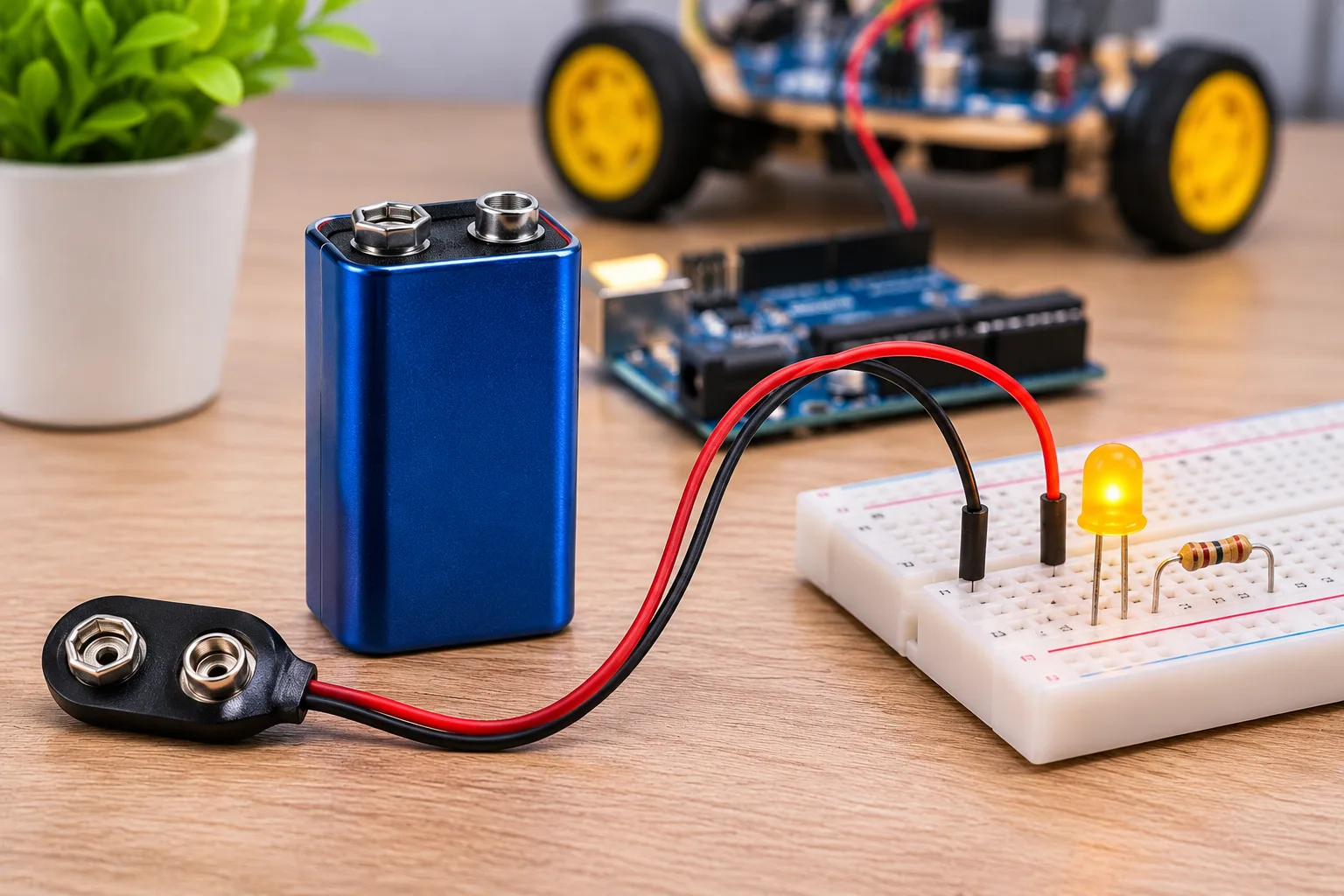
Only recharge a battery that explicitly says it is rechargeable. Ordinary zinc-carbon, alkaline and primary lithium 9 V cells are not intended for routine recharging. Attempting to charge them can cause leakage, heat or rupture. A connector that fits a charger does not change the chemistry inside the battery.
For NiMH, use a rechargeable battery charger that specifically supports the 9 V block format and its rated cell configuration. For lithium-ion 9 V replacements, follow the manufacturer's exact charging method. Some have a USB charging port and internal protection electronics; others require a dedicated charger. Do not assume an AA/AAA charger accepts PP3 blocks, and do not connect a bare cell to an unregulated adapter.
Rechargeables make sense when you use the same compatible device frequently enough to recover the higher purchase price. Yet rechargeables are not always better in a low-drain device that spends months waiting. Self-discharge, standby electronics in regulated lithium blocks and voltage differences can all matter. If a rechargeable model is labelled with an unusually large capacity, verify whether the unit is mAh or mWh and at what voltage it was measured.
Choose a charger by chemistry first, then physical slot, termination method and safety protections. We prefer clear specifications over a charger that promises to handle every cell type. Never charge unattended on combustible material, and stop using any battery that becomes abnormally hot, swollen or damaged. For product selection, start with the battery accessories and parts category and verify compatibility before purchase.
9v vs 12v battery vs UPS battery
| Battery type | Typical role | Buying priority |
|---|---|---|
| 9 V PP3 | Meters, alarms, small electronics | Chemistry and load current |
| 12 V rechargeable pack | LEDs, routers, robotics, portable projects | Current rating, BMS and charger |
| UPS battery | Short backup for computers and networking | Exact UPS compatibility and dimensions |
| Home inverter battery | Longer household backup | Inverter voltage, Ah and duty cycle |
A 12 V battery pack for a robot may use lithium cells with a battery management system, or a sealed lead-acid design. Neither is automatically safe for a circuit designed for 9 V. Even if the connector can be adapted, overvoltage can destroy electronics. A 12 V pack also needs a matching charging profile. Browse this example 12 V battery pack listing for connector and specification context, not as a substitute for checking the load.
A UPS battery is often a sealed lead-acid or compatible replacement chosen for a particular UPS model. The replacement must match the specified nominal voltage, physical size, terminal arrangement and discharge performance. A battery with more advertised Ah is not automatically an upgrade if it does not fit or the UPS charging circuit cannot support it. Disconnect mains power and follow the manufacturer's service instructions; a qualified technician is preferable for unfamiliar equipment.
For an inverter and battery for home use, estimate the essential wattage and backup hours first. A 150 W load for four hours needs 600 Wh delivered to the appliances before conversion losses. A 12 V 100 Ah battery has a nominal 1,200 Wh, but usable energy depends on chemistry, allowable depth of discharge, age and inverter efficiency. Do not treat nominal watt-hours as guaranteed backup.
Larger homes may use 24 V or 48 V systems, and inverter ratings are often quoted in VA rather than usable watts. Match the battery bank to the inverter manual. We would rather size for a measured fan, router and lighting load than buy the largest Ah label in the shop. A useful overview of battery technologies is available from Riello UPS.
9v battery prices and buying options in India
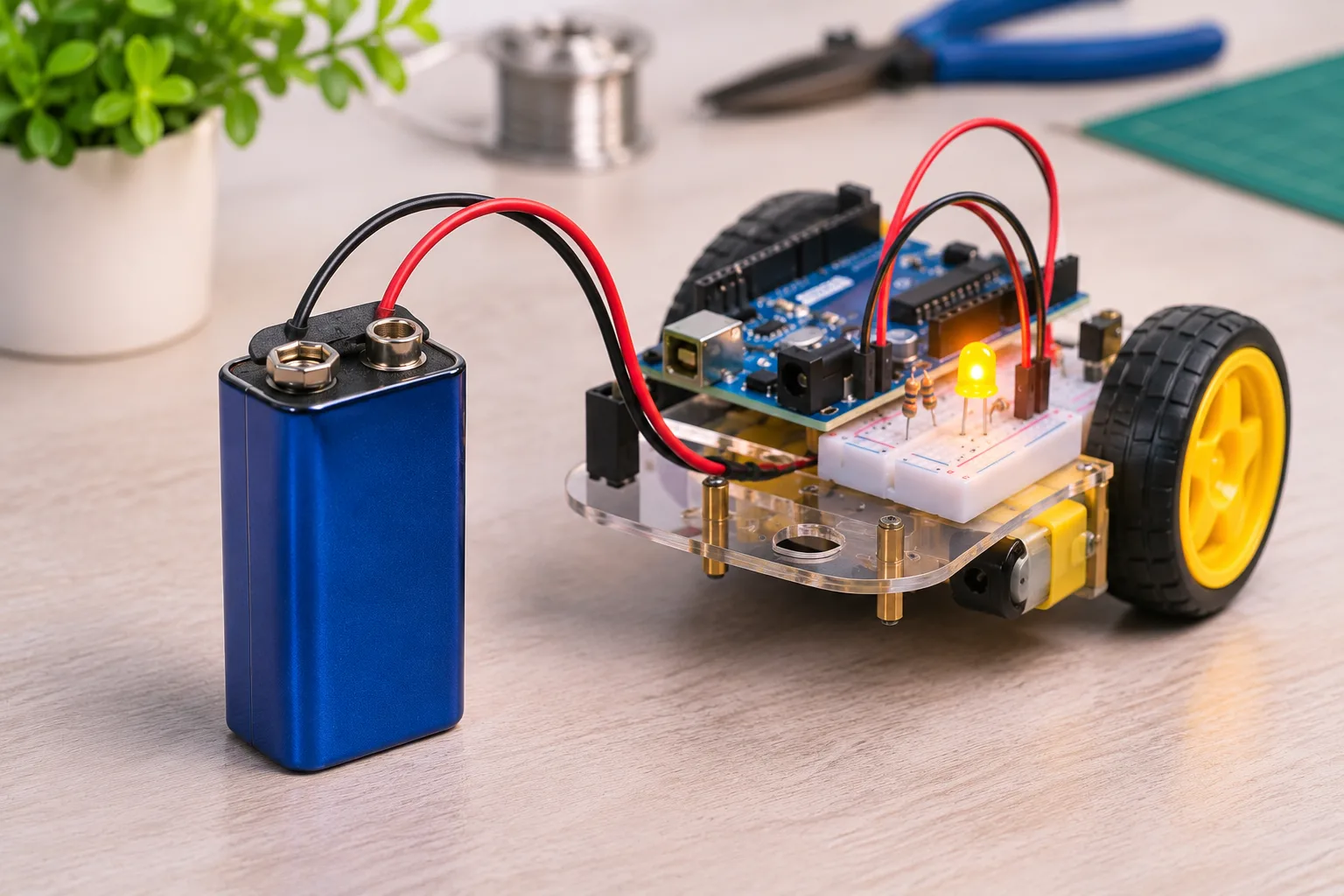
India has very different price tiers for rectangular 9 V cells. Low-cost zinc-carbon blocks can be found around ₹20 to ₹50 per unit in some component listings, while named alkaline models can cost more. Premium alkaline listings may exceed ₹200 depending on pack size and seller. These are observed listing ranges, not a fixed market price, and stock, shipping and taxes can change the final bill.
A price comparison site for Indian component sellers lists examples ranging from basic 6F22 cells to Duracell Ultra alkaline blocks. The cheapest item may be sold in a multi-pack, and a product described as heavy duty is not necessarily alkaline. Check the actual chemistry and per-cell price. A ₹30 cell that dies in a demanding device can cost more per useful hour than a dearer cell with a published discharge curve.
Duracell, Eveready, Panasonic, Energizer and generic electronics-marketplace labels all appear in India. Brand alone is not the full answer: compare freshness, sealed packaging, seller credibility and datasheet availability. For an unattended alarm, choose the device maker's approved chemistry and a reputable source. For a temporary LED or buzzer experiment, a budget cell may be adequate if you accept its limitations.
ElectroGlobal lists a Hi-Waote 9 V battery and a broader battery category. Verify the live product page for price, chemistry and stock before checkout. We do not recommend treating a listing title as proof of measured capacity. If you are ordering for a college lab, buy a few samples first and test them at your actual load before committing to a large batch.
For rechargeable products, calculate total cost as battery price plus the correct charger divided across realistic uses. Include the inconvenience of recharging and any spare batteries you need. A rechargeable block can be a sensible purchase for a frequently used meter, but it is a poor bargain if the output voltage causes early low-battery warnings.
Common mistakes and battery safety
The first mistake is assuming every 9 V block has the same output. NiMH, regulated lithium and primary alkaline variants may all look alike while behaving differently. The second is trusting an open-circuit meter reading under no load. The third is using a PP3 to run motors or high-current radios. A fourth is comparing mAh figures without voltage and discharge conditions.
Short circuits deserve special attention because both snap terminals sit close together. A loose battery in a drawer can touch coins, keys or metal tools and become hot. Cover the terminals with insulating tape for storage or disposal, keep cells in original packaging where practical, and do not mix old and new cells or different chemistries in the same battery holder.
Keep batteries away from children. A leaking battery should be handled according to its maker's instructions; avoid skin contact with residue. Do not puncture, crush, solder directly to a cell, expose it to fire or leave it on a sun-heated dashboard. In India, use an authorised collection or e-waste channel where available rather than tossing batteries into ordinary mixed waste.
The buying checklist is short: match the device specification before the battery shape. Confirm chemistry, nominal voltage, connector polarity, load current, charging method, storage date and supplier. For a safety device, follow the original equipment manual even when a cheaper alternative looks electrically similar.
Our practical 9v battery recommendation
For a school sensor demonstration, start with a basic fresh PP3 cell and measure current. For a multimeter or other low-current device used occasionally, a quality alkaline battery is usually the simplest choice. For repeated high-frequency use, a correctly specified rechargeable block and charger can lower waste, but check the actual voltage and standby behaviour before buying.
For a robot with motors, skip the PP3. Choose a rechargeable 12 V or lower-voltage pack that matches the motor driver and regulator, with suitable current capability and protection. For a UPS or home inverter, follow the appliance manual and calculate the load in watts and desired backup in hours. Those are separate purchasing decisions, not larger versions of the same battery.
Before ordering, note the battery model printed inside your device, check its manual and compare the ElectroGlobal battery selection. If the listing omits the discharge current or charger specification, ask for it. That one question can save you from a drawer full of batteries that fit perfectly but fail in service.
Tagged