
Inverter Battery Guide 2026: Honest Prices, Backup Math and Warranty Traps
The inverter battery guide we'd hand you at the counter: backup math in five minutes, real 2026 prices, warranty decoding and honest safety answers.
A power cut in May, with the fans dead and the fridge warming up, is when most people finally decide to buy an inverter battery. Then they hit the confusing part: 150Ah or 200Ah, tubular or lithium, Exide or Luminous, and warranty slips that read 36+24 months. Most buying guides answer none of that clearly.
Short version: size the battery to your load, not to the biggest discount. For a typical home running fans, lights, a TV and a fridge, a 150 to 220Ah tall tubular battery with a 1000 to 1400VA sine wave inverter is the proven combination. Lithium is worth it only if you can pay roughly double upfront.
We design and bench-test hardware at ElectroGlobal in Jaipur, and this is the guide we'd hand a customer at the counter: the backup math you can do in five minutes, real Indian prices, what those warranty numbers actually entitle you to, and honest answers on water top-ups, heat and fire risk.
How an inverter battery actually works
An inverter battery stores DC energy and recharges slowly from the 230 V mains whenever power is available. During a cut, the inverter converts that stored DC back into 230 V AC at 50 Hz and feeds your sockets. The battery is the fuel tank; the inverter is the engine.
Inverter batteries are deep-cycle by design. They deliver a small, consistent current for hours and tolerate being discharged deeply, again and again. Tata Green's explainer on deep-cycle inverter batteries makes the same point: they're built for long, steady discharge, not short bursts.
Inverter battery vs car battery
A car battery is the opposite animal. It gives a huge current for three seconds while cranking, then the alternator tops it straight back up. Pull deep discharges on a car battery a few dozen times and the plates warp; it dies within months on an inverter. We've seen people try it to save ₹2,000, then buy two car batteries in a year.
One more difference matters for maintenance. Flooded lead-acid cells lose water as they charge, because electrolysis splits water into hydrogen and oxygen. That's why a lead-acid inverter battery needs distilled water top-ups. Lithium packs are sealed and never do.
Types of inverter battery: flat plate, tubular and lithium
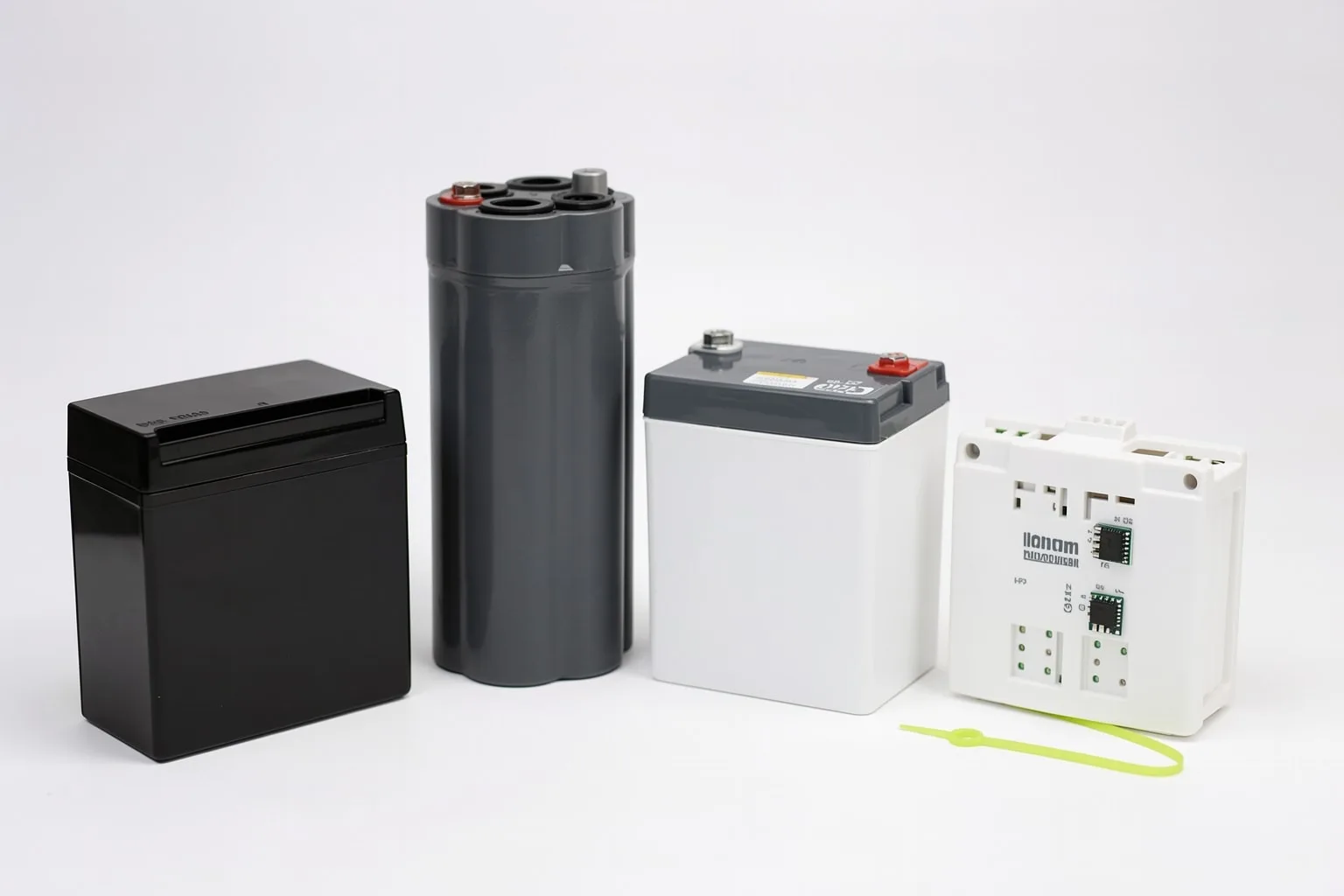
Walk into any shop and you'll see four technologies on the shelf. They differ in plate construction, maintenance and price, and those differences decide how long the battery survives your power-cut pattern.
| Type | Maintenance | Typical life here | Best for |
|---|---|---|---|
| Flat plate lead-acid | Water top-ups | About 2 to 3 years | Light loads, short and rare cuts |
| Tubular lead-acid | Water top-ups | About 3 to 5 years | Daily cuts, most homes |
| Gel / VRLA | Sealed, none | Moderate | People who won't open the caps |
| Lithium (LiFePO4) | Sealed, none | Longest cycle life | Buyers with the budget |
Tubular battery vs lithium
Tubular batteries use a positive plate built as a series of porous tubes around a central spine. That structure holds the active material in place through hundreds of deep discharges, which is exactly why tubular is the default for homes with daily cuts. It's also the cheapest per Ah.
Lithium inverter batteries use LiFePO4 cells. They weigh about a third as much, charge faster and need no water. Cycle life is far higher too. The catch is upfront price: a lithium pack still costs noticeably more than an equivalent tubular, though the gap keeps shrinking.
If the budget is tight this month, tubular wins. If you're setting and forgetting for a decade, lithium pays you back.
Which inverter battery is best for home in India
There's no single best brand; there's a best match for your outage pattern, load and tolerance for water top-ups. A 200Ah battery in a home with two 4-hour cuts a week lives a very different life than the same battery facing 6-hour cuts every day.
The Indian market is crowded: Exide, Luminous, Amaron, Livguard, Okaya, Genus, Tata Green, Su-Kam and V-Guard all sell into this segment. On Reddit threads asking the same question, people list five or six brands and still struggle to choose, which tells you the real differentiators are warranty terms and dealer support, not plate chemistry.
Exide vs Luminous vs Amaron
All three make competent tubular batteries, and a blind bench test wouldn't separate them by much. What separates buyers' experiences is the local dealer: how fast they honour a claim, whether they install free and whether they take the old battery in exchange. So shortlist by warranty structure and by the dealer's reputation in your own city, then pick the cheaper of the two.
For a feel of real outcomes, a Reddit user in Chennai reports a Luminous 200Ah battery with a sine wave inverter, about ₹22,000 for the pair, running a TV, 4 fans and 4 lights continuously for 6 to 8 hours. That's the kind of real buyer experience worth more than a brand brochure.
Sizing: capacity, backup time and the right inverter
Work backwards from load. List what you'll actually run during a cut, add up the wattage, then divide by the battery's usable energy.
- List each appliance and its wattage. A ceiling fan is roughly 70 to 80 W, a tube light about 40 W, an LED TV 80 to 120 W, a fridge 150 to 250 W while the compressor runs.
- Add up the load you'd run together. Two fans, four lights and a TV lands near 350 to 450 W.
- Compute backup hours: (Ah × 12 V × 0.8) ÷ load in W. The 0.8 covers inverter losses and the fact that you shouldn't discharge lead-acid to zero.
- Check the inverter VA. VA × power factor gives watts, so keep 25 to 30% headroom above your peak load, and match the battery voltage (12 V or 24 V) to what the inverter expects.
A common recommendation on r/AskIndia for a typical home is a 1000VA inverter with a minimum 230Ah tubular battery. That's a sensible, slightly generous pairing that also survives a fridge compressor kicking in mid-cut.
How much backup 150Ah, 200Ah and 220Ah really give
| Battery (12 V) | Stored energy | Usable at 0.8 | At 300 W | At 500 W |
|---|---|---|---|---|
| 150Ah | 1,800 Wh | ~1,440 Wh | ~4.8 h | ~2.9 h |
| 200Ah | 2,400 Wh | ~1,920 Wh | ~6.4 h | ~3.8 h |
| 220Ah | 2,640 Wh | ~2,110 Wh | ~7 h | ~4.2 h |
Real backup sits well short of what the Ah number suggests, and heavy loads or an ageing battery cut it further. If a seller quotes "10 hours backup", ask at what load.
A gaming PC is its own problem. An 850 to 1000W PSU needs at least a 1400 to 1500VA inverter, because the bottleneck is the inverter's continuous and surge rating, not the battery. Redditors on r/IndianGaming suggest exactly that pairing with a 150Ah battery, and backup at that load is realistically 1 to 2 hours.
Inverter battery price in India: what you should pay
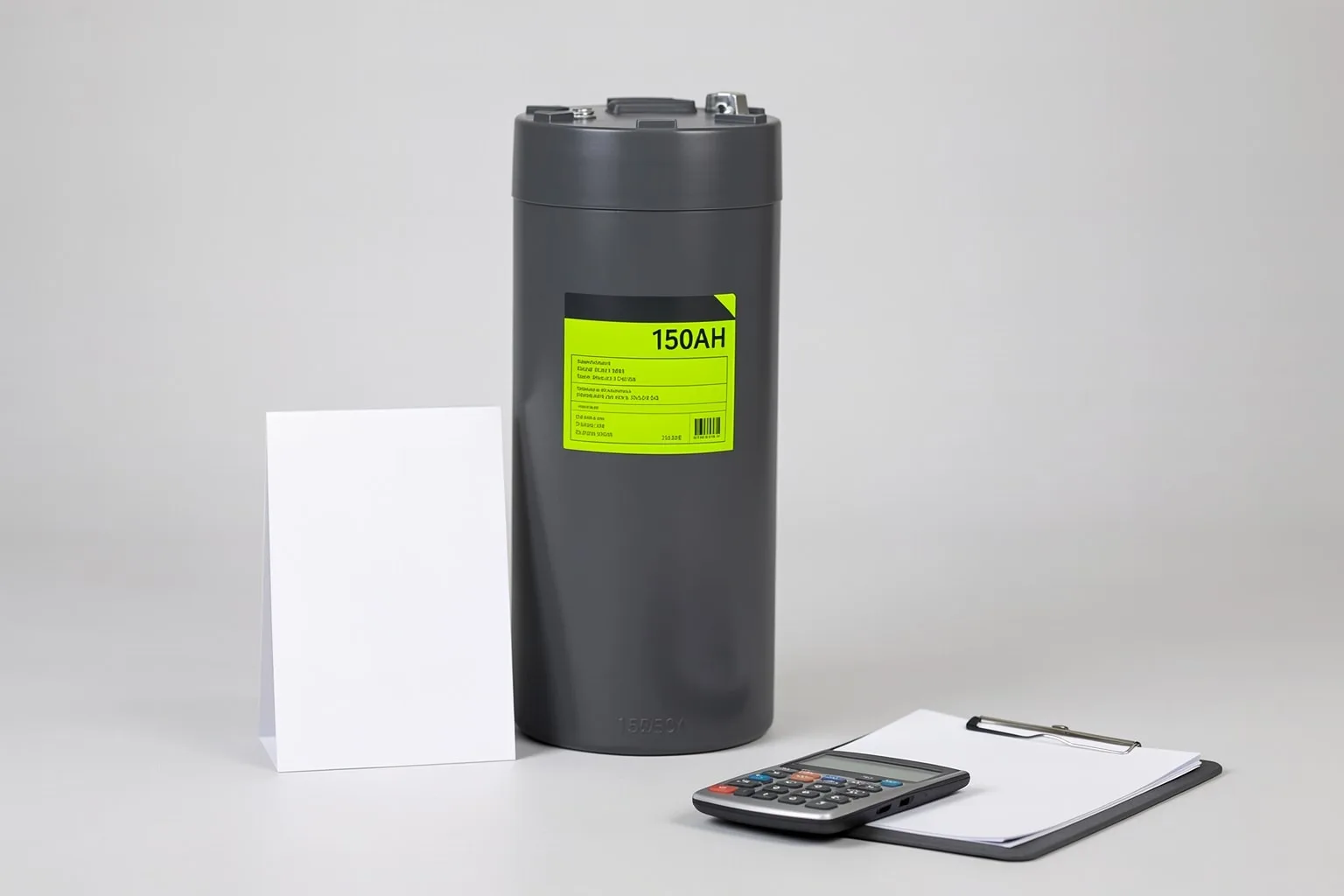
Prices swing wildly because discounts of 20 to 48% off MRP are normal, so compare street prices, not stickers. On current inverter battery listings on Flipkart, a Livguard 150Ah tubular with a 3-year warranty sells at ₹10,199 against an MRP of ₹16,500, and a Luminous 200Ah 36-month tubular at ₹14,999 against ₹21,100.
| Capacity | Typical street price |
|---|---|
| 80Ah short tubular | ₹8,799 (Luminous ILST 10036, 36-month warranty) |
| 120Ah | ₹8,999 to ₹10,899 |
| 150Ah tubular | ₹8,599 to ₹14,000 |
| 200Ah tubular | ₹14,999 to ₹15,599 |
| 220Ah tubular | ₹19,990 to ₹21,099 |
| 230 to 240Ah | ₹18,999 to ₹19,399 |
150Ah vs 200Ah vs 220Ah price check
Per Ah, the 150 to 200Ah band is where the value sits. Combos can help too: a Hyderabad buyer on Reddit paid ₹7,500 for a Luminous Eco Volt Neo 1250 inverter and ₹14,000 for a 150Ah tall tubular with a 36+24 month warranty, about ₹21,500 for the pair. Budget roughly ₹21,000 to ₹30,000 for a sensible inverter-plus-battery setup for a home, and you won't be far off.
Warranty decoded: what 36+24 or 48+36 months means
Indian inverter battery warranties come in two parts. The first number is the full replacement period: the company swaps the battery free. The second is the pro-rata period: you get a discount on a new battery based on months used. So 36+24 means 3 years of free replacement, then 2 years where you pay a sliding share.
The market spans 30 to 72 months total. Genus advertises 72-month warranties, Luminous goes up to 66 months across its range, and V-Guard sells 48+36 on some tubulars. Lithium warranties run long as well: V-Guard's Li-Energy 1.10, a sealed 100Ah lithium unit, carries 60 months.
Pro-rata value drops steeply, so a battery failing in month 40 of a 36+24 deal gets you a small discount, not a near-free swap. And registration trips people up: Exide asks customers to complete digital warranty registration within 7 days of purchase. Skip it and a claim can turn into an argument. Keep the invoice too.
Maintenance, water and safety: the honest answers
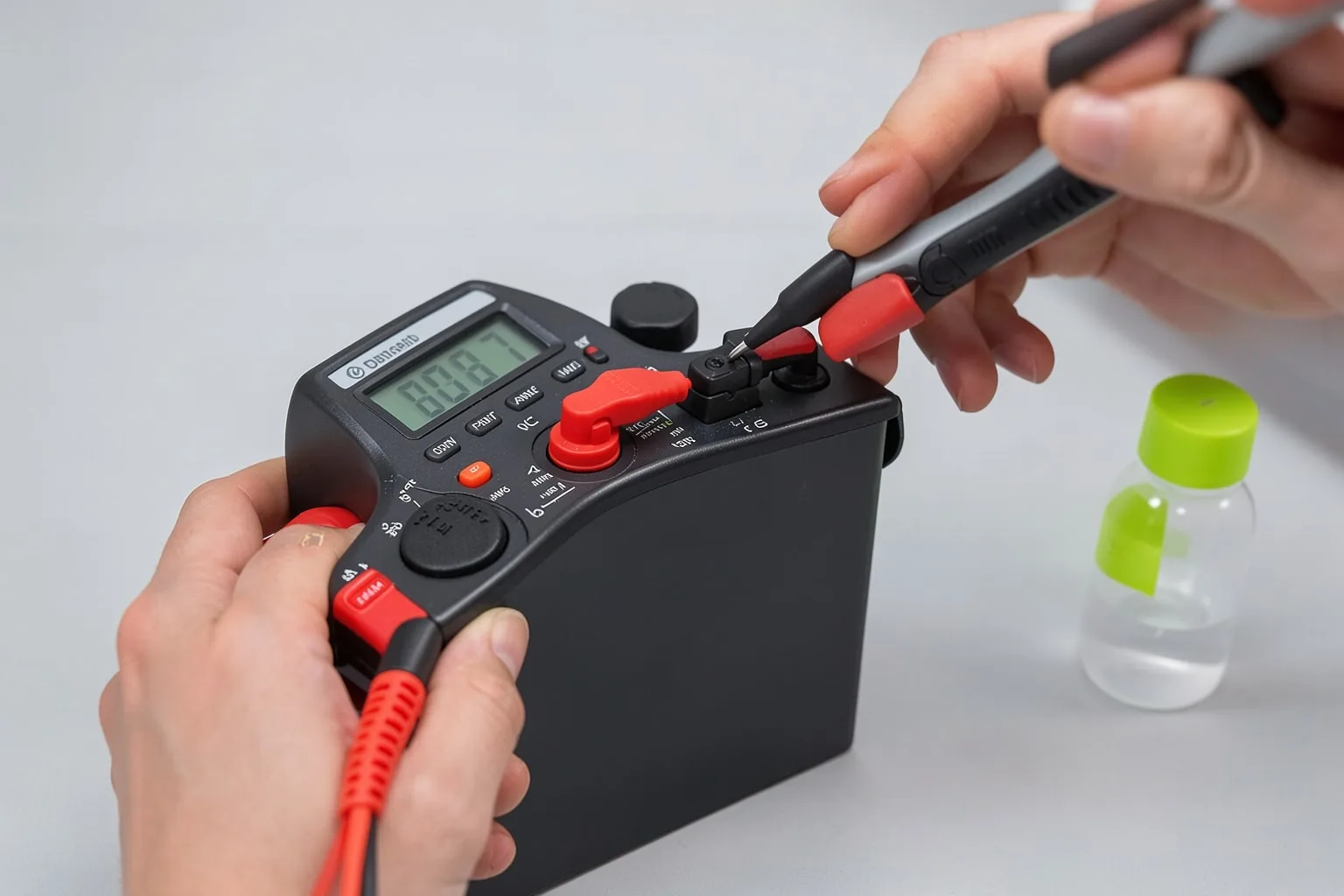
Lead-acid batteries lose water every time they charge hard. Check the electrolyte level every month or two, more often in summer when heavy cycling speeds up gassing, and top up with distilled water only until it sits above the plates. Tap water brings dissolved minerals that poison the chemistry, and overfilling dilutes the acid.
Now safety, honestly. A charging lead-acid battery releases hydrogen, which is flammable, so the battery needs ventilation and no sparks or open flames nearby. Batteries do heat up under heavy charging or with a failing cell; a case that's hot to the touch deserves a check. Keep the battery off the floor on a stand or trolley in a ventilated spot, because monsoon damp doesn't help the terminals.
Bench tip: A healthy 12V lead-acid battery rests around 12.6 to 12.8 V a few hours after a full charge. If yours sits below 11.8 V, one cell has likely died. A ₹200 multimeter tells you more than any app.
Why your battery is not charging or backup is low
Work through the usual suspects in order: loose or corroded terminals, low electrolyte, a charger section fault inside the inverter, and sulphation from the battery sitting discharged. Sulphated plates sometimes recover with a controlled equalising charge at the dealer; shorted cells don't. A battery that's 3 or more years old with badly fallen backup is usually past economic repair, and exchange value on the old unit softens the replacement cost.
Lithium-ion inverter batteries: worth the premium?
The numbers: lithium cells store 160 to 300 Wh/kg, run at 80 to 90% charge/discharge efficiency and last 400 to 1,200 cycles for standard chemistries, according to Wikipedia's lithium-ion battery page. LiFePO4, the chemistry used in inverter batteries, sits at the safer, longer-cycle end, which is why it's chosen here instead of the lithium polymer cells in phones.
Pack prices keep falling. BloombergNEF's December 2025 survey put average pack prices at $108 per kWh, and that eventually shows up in Indian retail. Marketing claims are already aggressive: one 24V LFP inverter battery on Reddit claims 90% charge retention at 5 years and 6,000+ cycles, against Microtek's stated 80% and 3,500+. Treat both as marketing until you see an independent test.
When does lithium make sense? When you can pay the premium without straining the budget, when you want zero maintenance, or when you're sizing backup for a shop or room where weight and footprint matter. When does tubular still win? When upfront price decides, which for most first-time buyers in India it does. Lead-acid has been around since 1859, the first commercial lithium cell only shipped in 1991, and the dealer network, spare parts and exchange value all still favour lead-acid for now.
Our buying checklist before you pay
- Match Ah to your load and VA to your peak wattage; don't undersize the inverter.
- Prefer tall tubular for daily cuts; flat plate only for light, rare outages.
- Compare total warranty months and the pro-rata terms, not the headline discount.
- Buy from an authorised seller, register the warranty within the window, keep the invoice.
- Ask for exchange value on the old battery before you agree on a price.
- For Jaipur and Rajasthan buyers: see and test the battery before paying, check the manufacture date on the casing, and insist on free installation.
If you're comparing options right now, browse inverter and lithium batteries at ElectroGlobal, or walk into our Jaipur store and we'll size the battery to your actual load in ten minutes. Bring your appliance list; it beats any online calculator.
Tagged