
Choosing the Best 3.7 V LiPo Battery 2000mAh for Reliable DIY Electronics
Discover the best 3.7 v lipo battery 2000mah and 12v lipo battery options for reliable DIY electronics. Choose smart power solutions today!
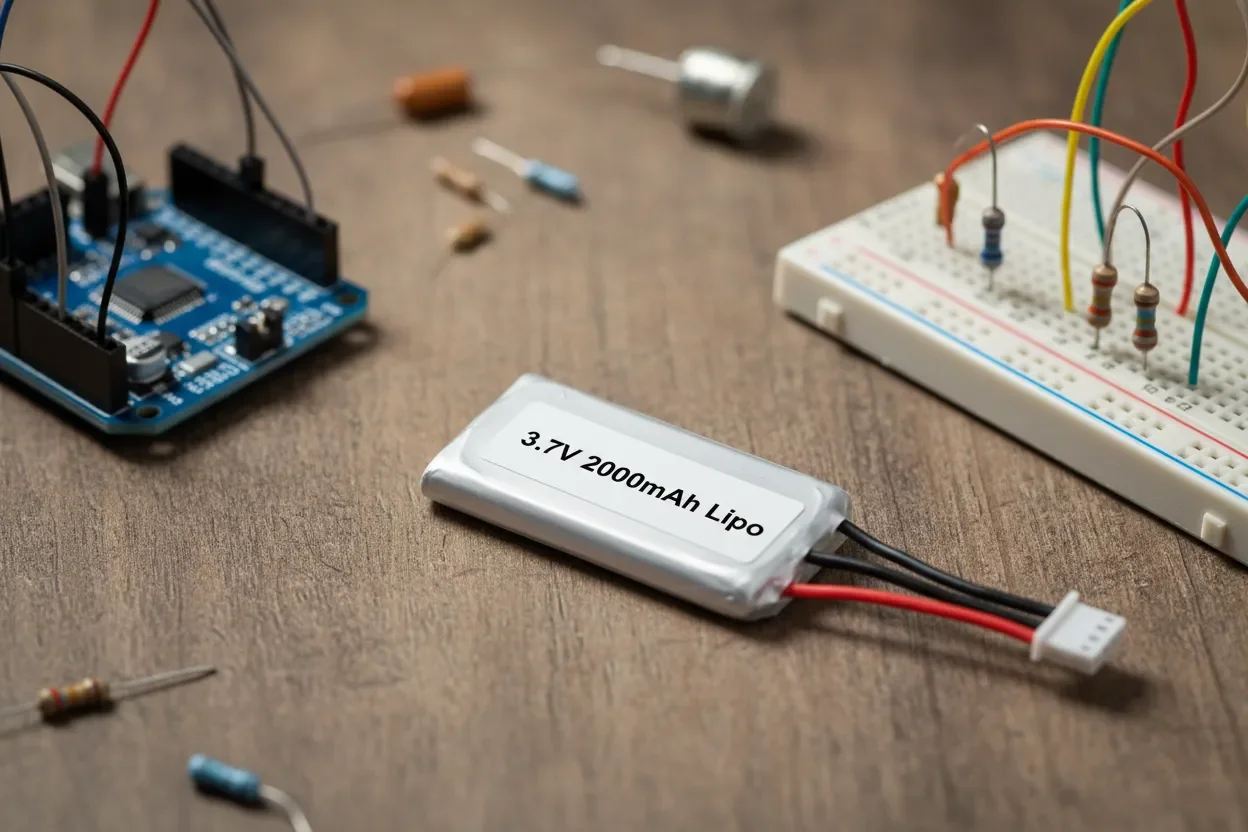
June 2026By ElectroGlobal Team10 min readSEO
Table of Contents
Choosing the Right 3.7 V LiPo Battery 2000mAh for DIY Electronics Projects
Comparing 12v LiPo Battery and 3.7 V 10000mAh LiPo Battery Options
Safe Handling and Storage Practices for 3.7 V LiPo Batteries in DIY Projects
Selecting 3000mAh 3.7 V LiPo Batteries for Balanced Performance in Portable DIY Electronics
Picking the right battery is like picking the right engine for your bike. A 3.7 v lipo battery 2000mah is super popular with both seasoned engineers and tinkerers for good reason. It’s compact, gives decent runtime, and can power anything from your pet IoT project to a mini robot. Don’t let a weak battery spoil your hard work!
In India, you’ll see options like the 12v lipo battery, big boys like the 3.7 v 10000mah lipo battery, and the trusty 3.7 v lipo battery in every form factor. Knowing what to buy saves you headaches and money. Here’s a fun fact: LiPo batteries pack almost three times the punch (energy density) of those old-school NiMH cells. That’s why pros on the Electro Global platform love matching LiPos to their projects for efficient designs every time.
Here’s what you’ll learn in this guide:
You’ll figure out how to pick the right LiPo battery voltage and capacity for your project’s needs.
We’ll cover easy calculations to estimate energy, current, and runtime for your DIY circuits.
Read about safe charging, handling, and storage—LiPos need some respect!
See when a 2000mAh, 3000mah lipo battery, or heavy-duty pack makes sense for your build.
Get tips on sourcing reliable cells in India and staying compliant with safety norms.
Key Takeaways
Always check both voltage (3.7 V) and capacity (mAh) before picking a LiPo.
The battery’s size and discharge rate should suit your circuit’s max and average current draws.
Never skip LiPo balance chargers. Seriously—don’t overcharge or overdischarge.
Use battery protection circuits (BMS/PCM). They keep your builds and your workspace safe.
Stash LiPos at partial charge, and always away from heat, to keep them healthy longer.
With Indian suppliers and smart EDA tools, you’ll always find the right LiPo for your project.
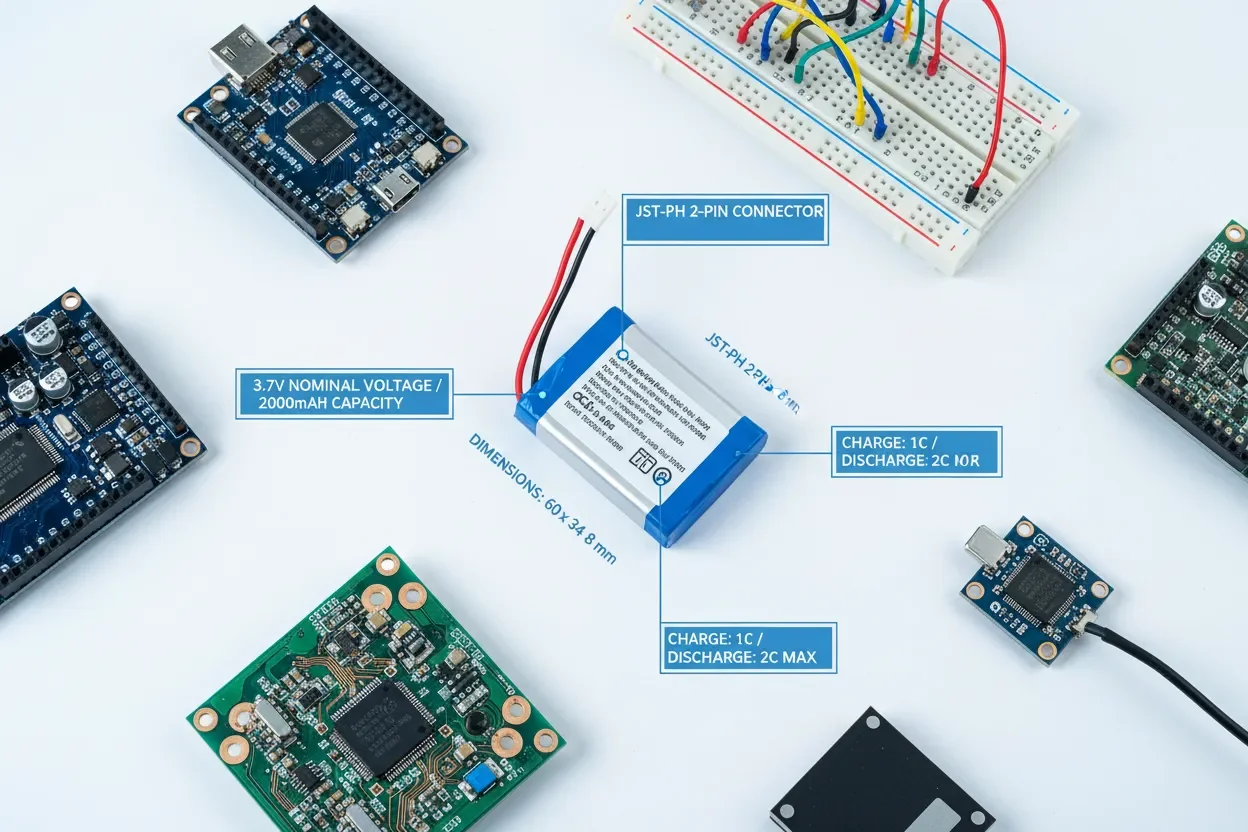
Choosing the Right 3.7 v lipo battery 2000mah for DIY Electronics Projects
3.7V LiPo battery specs project integration
Understanding 3.7 V LiPo Battery Specifications and Capabilities
One cell, 3.7V nominal, 4.2V when it’s fully charged—that’s your typical LiPo anatomy. The mAh rating tells you how long your battery will last. For a 2000mAh cell, you’ll get about 2 hours with a 1-amp pull. More current? Less time. And don’t forget: actual runtime’s always a bit less due to conversion losses and real-world inefficiency.
Check the “C” rating for discharge. For example, a 20C, 2000mAh cell can kick out up to 40A—useful for high-drain devices like motors and Wi-Fi modules. LiPos are also way lighter than old battery chemistries, so your projects can be sleek. That’s why health wearables and trackers in India love the 3.7 V form factor.
Practical Tips for Integrating 2000mAh LiPo Batteries in Circuits
Adding a 3.7 V LiPo 2000mAh battery is simple, but don’t skip proper charging or protection circuits. Always use a charger built for LiPos, ideally with balancing. For a 2000mAh cell, 1C (2A) charging is plenty fast—usually finished in 1–1.5 hours. Charging at half that rate can make your battery last even longer.
Protection PCB (PCM) is non-negotiable. It stops over-discharge, overcharge, and shorts. For low-power microcontroller projects (think sleep mode), add a basic voltage monitor. In India, tons of wearables use 3.7V 2000mAh packs plus a safety cut-off—it’s a must for overnight or travel.
Expert Tip: Double-check polarity with your multimeter, then use a JST or similar connector. Never solder straight onto a LiPo tab! Soldering directly can kill the cell, or worse—start a fire.
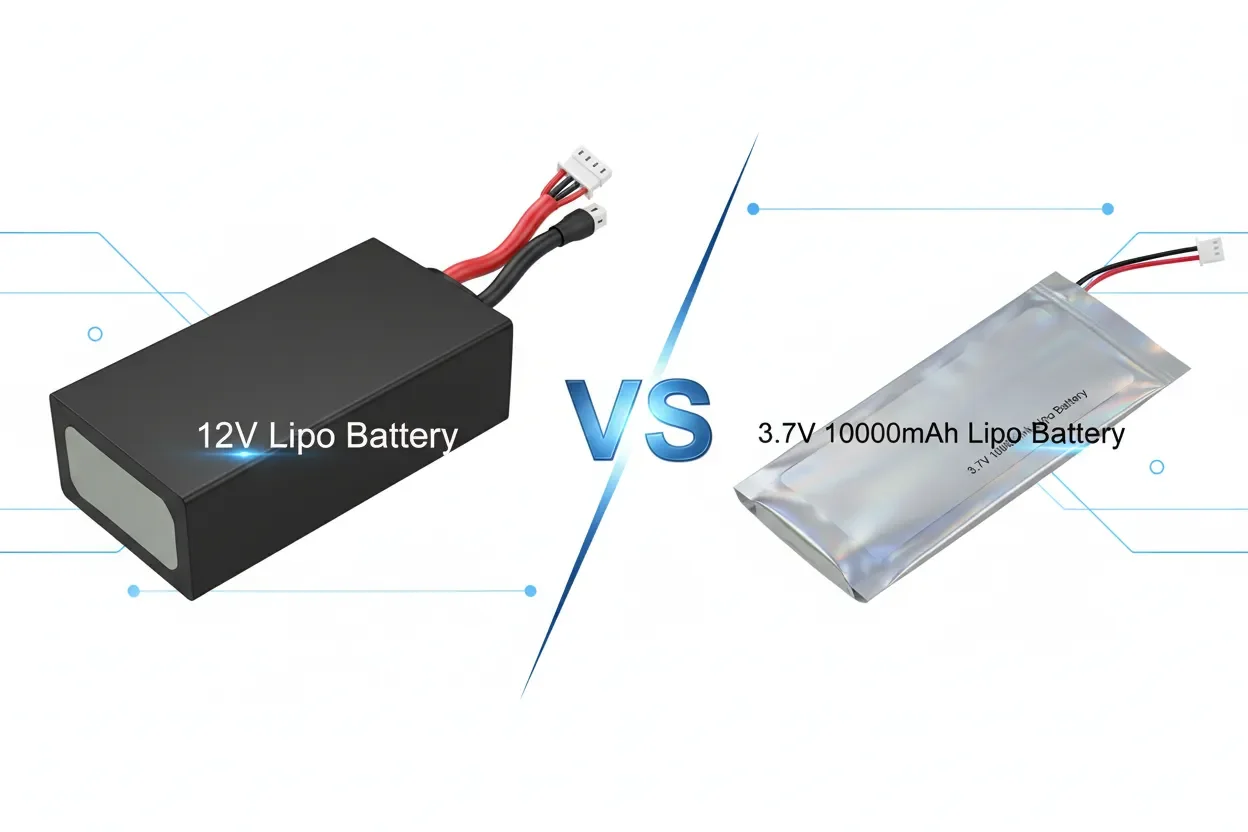
Comparing 12v lipo battery and 3.7 v 10000mah lipo battery Options
battery comparison12V LiPo high capacity
Voltage and Capacity Trade-offs Between 12V and High-Capacity 3.7V Cells
Want higher voltage for your project? A 12v lipo battery is just three 3.7V LiPo cells in series—nominal 11.1V, max 12.6V. Great for robots, powerful LEDs, or any circuit that likes 9–12V.
The 3.7 v 10000mah lipo battery is a beast for long runtime at low voltage. Big capacity means longer working hours, but also more risk if you skip safety steps. Always respect max charge/discharge rates with high-capacity cells. Don’t cut corners.
Choosing Between 12V and High-Capacity 3.7V LiPo — Quick Checklist
Need more than 5V? Choose a 12V LiPo (3S) for easy step-down or direct use.
Want longest runtime at 3.3V–5V and don’t mind a bigger battery? Try a 10,000mAh 3.7V cell.
Only use big packs with a good BMS or PCM installed.
Got a 3S (12V) pack? Use a proper balance charger—don’t skip cell balancing.
Application Suitability and Charging Considerations for Each Type
Robots, drones, and big embedded systems love 12V LiPos for strong, steady supply rails. Projects like medical wearables and fitness gadgets use monster 3.7 V 10,000mAh packs for days of power. Each has its place—just match your needs.
Charging tips: 12V (3S) batteries need balance chargers that can handle three cells at once. Don’t risk it with a basic charger. For a 10,000mAh single-cell, keep it slow—0.5C or less. It’ll keep heat low and your battery healthy for years. Worth remembering: Safety matters even more as capacity goes up.
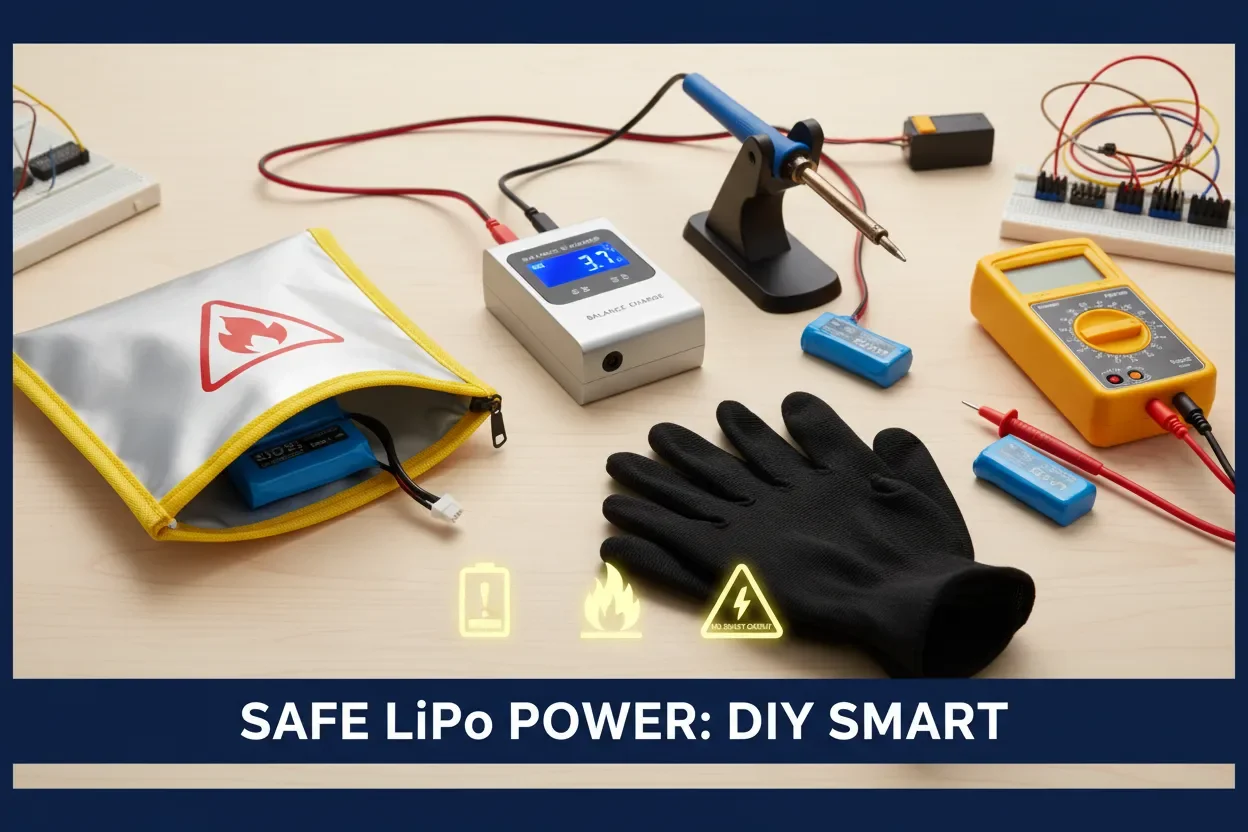
Safe Handling and Storage Practices for 3.7 v lipo battery in DIY Projects
safety storage charging best practices
Preventing Damage Through Proper Charging and Protection Circuits
Don’t mess around—protection circuits (BMS or PCM) are essential for every LiPo pack. They cut off during overcharge, deep discharge, or short-circuit. Balancing chargers keep multi-cell batteries healthy by making sure no single cell goes out of range.
Never puncture or crush a LiPo. Don’t charge near anything flammable. Many cheap packs from local markets lack protection, so check for a built-in PCM. If it’s missing, add one before you power your PCB. Delhi drone makers learned this the hard way—cell swelling is real when temps rise!
// Simple voltage monitor for Arduino-based LiPo DIY projects int lipoPin = A0; // analog input pin void loop() { float voltage = analogRead(lipoPin) * (5.0 / 1024.0) * (4.2 / 5.0); // scale ADC to 4.2V if(voltage < 3.3){ // Cut off output to prevent overdischarge... } }
Ideal Storage Conditions to Maximize Battery Lifespan
Store LiPos at 40%–60% charge, around 3.7–3.8V per cell. Keep them somewhere cool and dry—never in direct sun or heat. Hot weather kills LiPos faster than anything, especially here in India.
If you won’t use a pack for a while, charge it to storage voltage and give it a look each month. If you spot swelling or a leak—time to recycle. Always use a fireproof bag or box in labs or crowded workspaces. Bottom line: treat LiPos with respect and they’ll last a lot longer.
Expert Tip: If your LiPo gets puffy or swollen, don’t risk it. Dispose it at an e-waste facility or follow local guidelines. Even unplugged, a damaged LiPo can still start a fire. Stay safe!
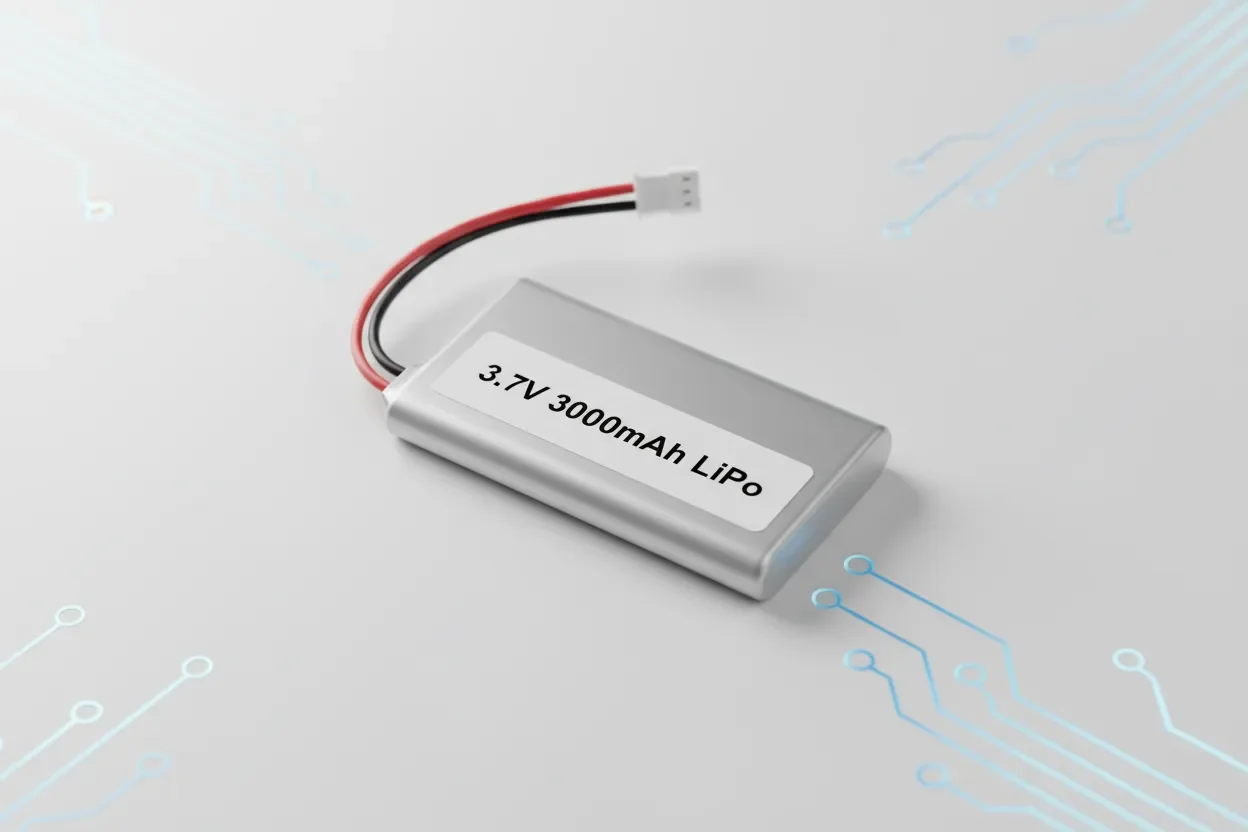
Selecting 3000mah lipo battery 3.7 V LiPo Batteries for Balanced Performance in Portable DIY Electronics
3000mAh LiPoportable powerbattery balance
Advantages of 3000mAh LiPo Batteries for Portability and Power
A 3000mah lipo battery strikes a sweet spot. It’s bigger than 2000mAh but still fits most portables. At 20C, it can supply up to 60A for short bursts—enough for mini drones or bright LED strips. Not too bulky, not too weak.
If you want longer runtimes without carrying a brick, 3000mAh is a great call. Many smart home sensors, portable controllers, and field devices in India use these for 10–18 hours on moderate loads. Worth remembering: You don’t always need the biggest battery—balance is key.
Typical Use Cases and Discharge Rate Considerations
Environmental sensors, portable speakers, and mid-size bots are all a good fit for 3000mAh. You’ll get a steady 3.7V supply and enough power for a full workday in the field. For circuits drawing about 250mA, you’re looking at 8–12 hours nonstop.
Charging isn’t a headache, either—1C means one to two hours for a full top-up. Most modern 3000mAh LiPo packs already come with protection circuits inside, so prototyping and deployment are much safer. Many Chennai-based IoT startups swear by these for everyday builds.
Frequently Asked Questions
What exactly is a 3.7 V LiPo battery and how does it work?
3.7 V LiPo batteries use lithium-ion chemistry in a flexible pouch. They’re rechargeable, lightweight, and provide more energy than older types. Fully charged, they hit 4.2V. You’ll find them everywhere—from fitness bands to Bluetooth gadgets. Super handy for powering anything small and portable.
How do I safely charge a 3.7 V LiPo battery 2000mAh?
Always use a LiPo charger set for 3.7V cells and 4.2V cutoff. Charging at 1C (2A) is safe, but slower is better for battery life. Don’t leave LiPos charging alone, and check for swelling or too much heat. Charging overnight? Not a good idea—unplug and keep an eye on things.
What is the main difference between a 12v lipo battery and a single-cell LiPo battery?
12V LiPo packs are three 3.7V cells in series—so you get ~11.1V instead of 3.7V. Good for motors or audio amps needing more volts. Single 3.7V cells are best for sensors and microcontroller stuff. Just remember—charging and protection is different for each type.
Is a 3.7 v 10000mah lipo battery safe for long-duration wearable gadgets?
Yes, as long as you use a proper protection circuit and a slow, controlled charger. High-capacity LiPos shouldn’t be pushed past their limits. If you stick to the rated discharge, they’re safe for fitness bands or medical trackers that need many hours between charges.
How do I choose between 2000mAh, 3000mAh, or 10000mAh battery for my project?
First, estimate your average current and how many hours you want your device to run. Tiny sensors often work with 2000mAh. Daily-wear gadgets? Go for 3000mAh. If you need long life between charging—think 12 hours or more—10000mAh is great, but it’s bigger and heavier. Don’t forget, charging takes longer for larger packs.
What happens if I over-discharge my 3.7 V LiPo battery?
Going below 3.0V damages the cell and can make it swell or fail completely. Many battery packs have built-in cut-off protection. If not, monitor voltage in your code and disconnect loads early. Saving a few extra minutes of runtime isn’t worth killing your battery.
Are replacement LiPo batteries easy to source in India for hobby projects?
Yep! You’ll find all sizes—from 200mAh to 10000mAh—online or at local electronic shops. Rapid delivery is common now, especially in cities. Platforms like RapidChip even help match your PCB design to what’s available here in India, so no more waiting for imports.
Can I use a regular USB charger for my LiPo cells?
Nope. Only use chargers labeled for LiPo. USB chargers don’t have the cut-off or voltage control needed for LiPos, so they could overcharge or damage the cell. Always pick a LiPo charger, especially for multi-cell (12V) packs.
How much does a 3.7 V LiPo battery 2000mAh typically cost in India?
As of 2026, you’ll pay around INR 180–400 for a good 3.7V 2000mAh LiPo. Prices swing with brand, quality, or added protection circuits. Cheap ones are out there, but they might not last long or could be unsafe. Worth paying more for reliability.
What’s the best storage method for unused LiPo batteries?
Keep them at storage voltage (3.7–3.8V), slip them into a fireproof pouch, and stash them in a cool, dry spot. Check monthly for swelling or leaks. Never store LiPos fully charged or flat for long periods—they won’t thank you for it!
Should I add a PCM to small LiPo batteries for Arduino projects?
Yes, especially if your pack doesn’t already have one. Even with low-power circuits, a PCM protects against short circuits, overcharge, and deep discharge. It’s cheap insurance for your LiPo and your project. Don’t skip it, even for basic DIY builds.
How can I tell if my LiPo battery is going bad?
Watch for swelling, excessive heat during normal use or charging, or sudden drops in capacity. A healthy LiPo will hold charge well and stay cool. If your battery gets puffy or performance nosedives, replace it—it’s not worth the risk (or the fire hazard!).
With 3.7 V LiPo batteries, you get power and portability, perfect for all kinds of DIY electronics. Doesn’t matter if you’re choosing a 2000mAh, a 3000mAh, or a giant 12V or 10,000mAh pack—your battery is the heart of your project. Make a thoughtful pick, and both your uptime and peace of mind will go up.
Picking the right combination of battery size and voltage improves both reliability and performance. With Electro Global and RapidChip, you get smart tools that show live options and match your project to batteries stocked right here in India. Still hungry for more? Check out 3.7 v lipo battery 2000mah for deeper technical details and extra buying tips. Ready to power up that next idea? You’ve got this!
Tagged
Related Content
From the Blog
- Raspberry Pi Pico Battery Guide Featuring 3000mAh LiPo Battery Insights
- Complete LiPo Battery Safety Guide for Engineers and Hobbyists
- 3s LiPo Battery Capacity Explained for Electronics Projects
- Understanding and Managing Heating Issues in 3.7 V LiPo Battery Packs
- Optimize ESP32 Battery Life with a 3000mAh LiPo Battery