
Understanding and Managing Heating Issues in 3.7 V LiPo Battery Packs
Explore heating issues in 3.7 V LiPo battery packs and solutions for 3000mAh, 2000mAh, and 10000mAh LiPo batteries. Optimize your embedded systems today!
June 2026By ElectroGlobal Team10 min readSEO
Table of Contents
Common Causes of Battery Heating in 3.7 v LiPo Battery Packs
Preventing Overheating in 3000mAh and 3.7 v 10000mAh LiPo Batteries
Thermal Challenges in 12V LiPo Battery Packs and Voltage Balancing
Tools and Techniques for Simulating and Diagnosing LiPo Battery Heating Issues
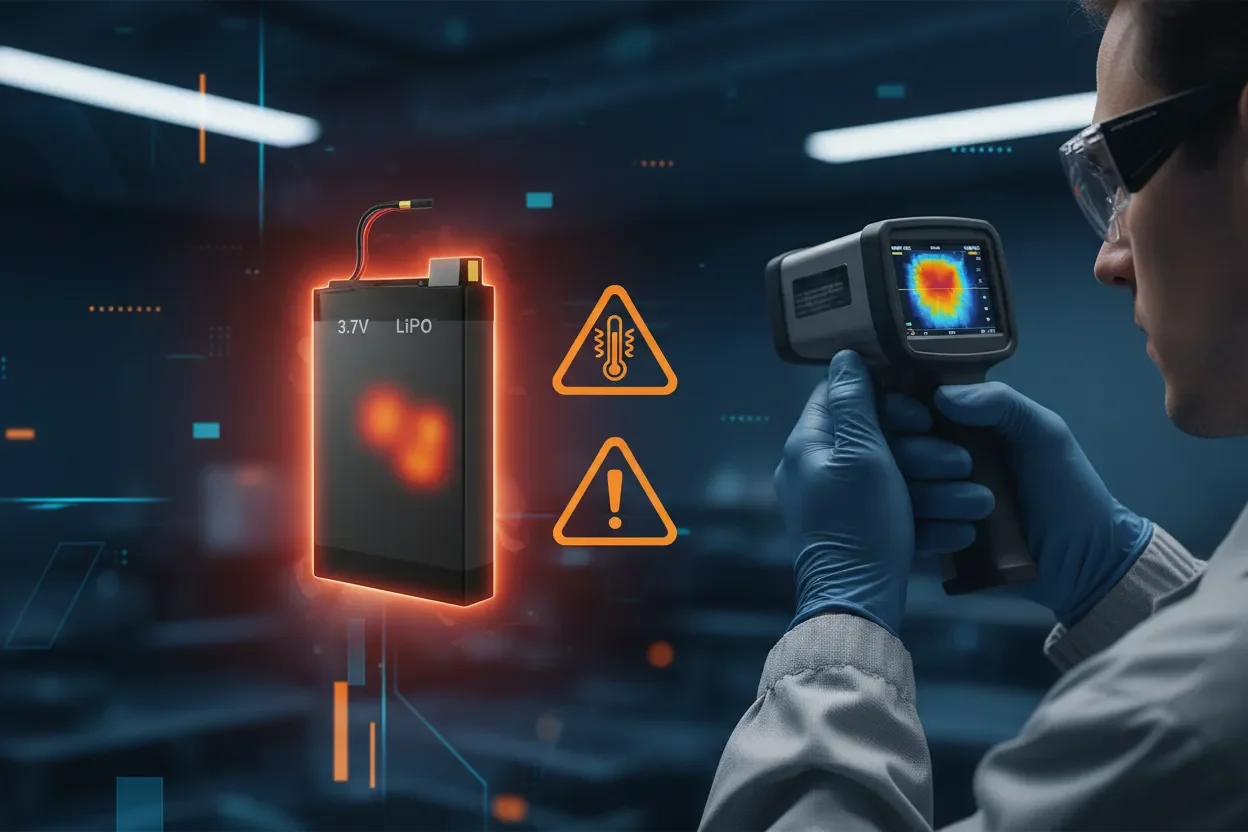
Heating headaches or battery "runs hot"—it's what every embedded engineer and hobbyist faces with a 3.7 v lipo battery. Even if your prototype runs fine at first, higher temps pop up fast under real-world loads. Sometimes it's just a little warm, but other times you risk big damage, safety scares, or killing your battery too soon. Studies show heavy use can bump LiPo temps 10–15°C above room. And if you’ve ever had a cell balloon or go into thermal runaway—you'll know it's no joke.
Whether you’re powering IoT, drones, or gadgets with a 3000mah lipo battery, playing with a 3.7 v lipo battery 2000mah in your hobby project, or running something beefy like a 3.7 v 10000mah lipo battery, you’ll hit the same problem: heat. Stack up cells to make a 12v lipo battery and the heat just multiplies. Don’t worry—Electro Global’s seen every flavor of this issue, and you’re in good company.
Grab your chai, let’s break it down. We’ll cover why batteries get hot, real fixes for keeping them cool, the right way to charge and balance packs, plus how AI simulation can spot heating issues before you wreck hardware.
Why 3.7V LiPo batteries heat up in the real world and not just datasheets.
Choosing safe charging currents & making BMS actually work for you.
Hands-on tricks to cool 3000mAh, 10000mAh, and even cheap 2000mAh LiPo cells.
How series-wired 12V LiPo packs often go wrong (and how to fix).
How to use modern simulation and diagnostics to save time and money.
Key Takeaways
Watch your charge/discharge current (stay within C-rate). This helps avoid nasty surprises with heat.
Use thermal pads or forced airflow if your design’s tight and batteries are big (think 3000mAh+).
Keep tabs on internal resistance as batteries age—higher resistance means more heat risk.
In 12V LiPo packs, always balance cells to stop one from overheating and failing early.
Never skip a BMS for high-capacity cells—especially 3.7 V 10000mAh types.
Simulate thermal and electrical behavior before hardware—AI tools catch problems early.
Common Causes of Battery Heating in 3.7 v lipo battery Packs
battery heating internal resistance charging issues
Electrical Stress and Internal Resistance Growth
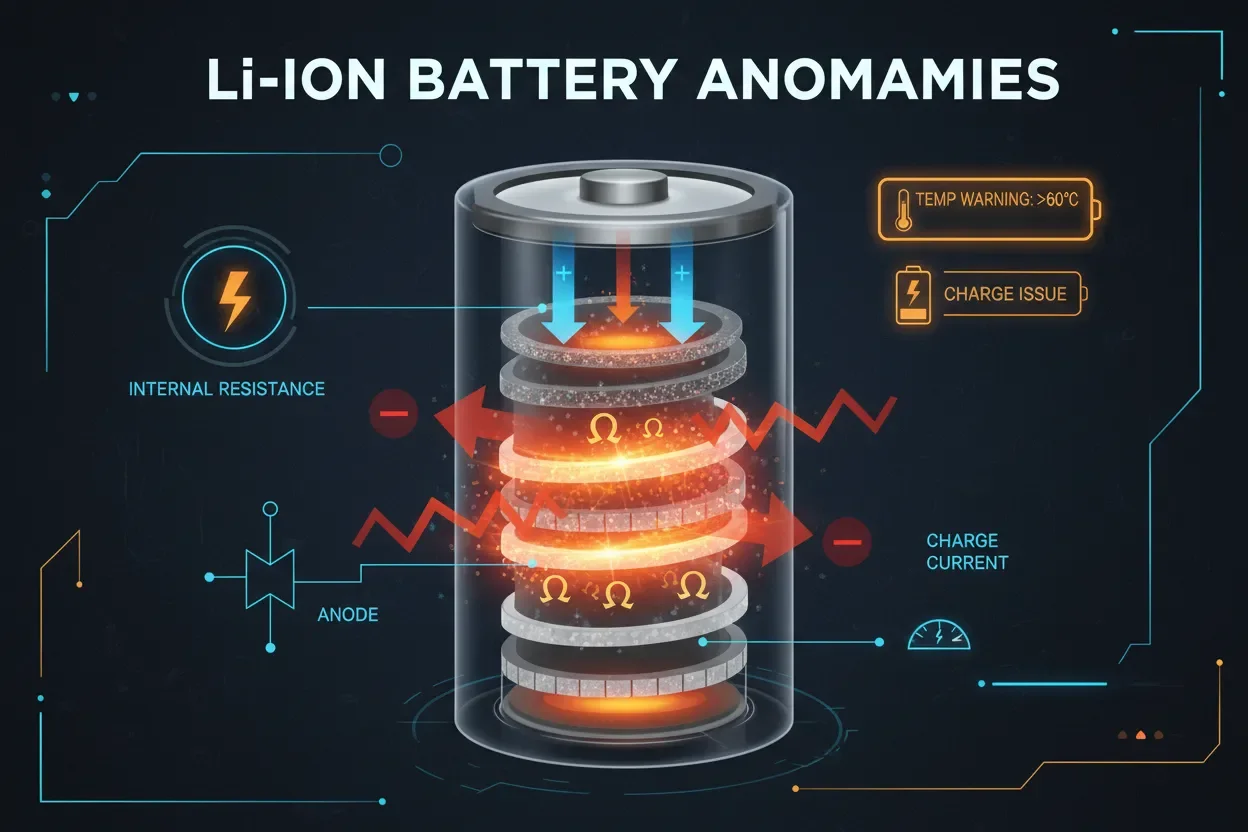
Internal resistance is public enemy number one for heating. Every 3.7 V LiPo battery starts out with low resistance but, over time, chemistry changes inside ramp it up—sometimes it doubles after a few hundred cycles. When you push current through that resistance, you get heat. That’s why a 3.7 v lipo battery 2000mah might feel cool when new but starts running hot after 6–12 months of use.
Pulling serious amps? If you’re running a 3000mah lipo battery in a drone at 10A, even 0.08Ω of resistance turns into 8 watts of heat. That’s enough to raise the cell temp by 10°C+ if you’re not careful. Small packs, big packs, doesn’t matter—it adds up fast.
Expert Tip: Every 3–4 months in prototyping, check the battery’s internal resistance. Most multimeters have a mode for it. Catching a rising resistance early means you’ll prevent surprise heating later.
Charging Practices and Environmental Impacts
How you charge matters as much as day-to-day usage. Charging above 1C (so, more than 3A for a 3000mAh cell) almost always means extra heat—cell temps can shoot over 45°C. Overcharge by even 0.1V past 4.2V and you’ll age the pack by 30% faster, plus heat it up more each cycle.
Don’t ignore the setting. Stuffing electronics into sealed boxes or hot garages in May? The ambient heat makes everything worse. In India, drone pros often see this—fast-charging batteries in summer temps brings more heating headaches and battery cells puff up or fail much sooner.
Checklist: Avoiding Battery Heating from Stress and Charging
Stick to the battery’s rated charge/discharge current and voltage—don’t push your luck.
Check battery resistance now and then, especially if performance drops off.
Use real LiPo chargers with auto cut-off at 4.2V per cell—no cheap knockoffs.
Keep battery working between -20°C and 60°C. Hotter, and you risk swelling or runaway.
For 12v lipo battery packs, always check cell imbalance before long sessions or hard charging.
# Formula: Heat Generated (W) = I² × R # For example, 3.7 V 3000mAh LiPo, 10A load, 0.08Ω resistance: Heat = 10*10*0.08 = 8W
-b8b00a33-2e9c-42d9-9792-984f3e545dc3.webp)
Preventing Overheating in 3000mah lipo battery and 3.7 v 10000mAh LiPo Batteries
thermal management BMS charging safety
Thermal Management Techniques for Medium and High Capacity Cells
Bigger batteries, bigger heat headache. A 3.7 v 10000mah lipo battery stores a ton of energy in a small package, so more heat is created and can’t get out easily—especially if your design is packed tight.
How to cool? Use silicone thermal pads between cell and case, open up air vents, or try a mini heat sink if you’ve got room. Even a 1mm pad on a 3000mAh pack can drop outside temps by 4–7°C on heavy use. It’s low-tech, but it works and might save your battery (and your PCB!).
Battery Management Systems and Safe Charging Practices
If your LiPo is over 3000mAh, don’t skip a smart BMS. It keeps an eye on temps and voltage, cuts charging the moment things get risky, and balances cells so heat’s not loaded onto just one. This is a must in medical IoT and pro gear using chunky single cells or homebrew packs.
Go for chargers with balancing and proper cut-off. Never push more than 1C charging (so, max 3A for 3000mAh). A good BMS prevents overheating cycles, and that can boost lifespan by 40% or more.
Expert Tip: Mount your BMS close to the battery. That way, overheating gets caught early and you’ll avoid “missed” shutoffs or slow sensor lag.
For example, medical IoT teams in India run 3.7 V 10000mAh LiPo batteries with onboard BMS kits. It lets them keep batteries cool—even if devices run flat-out for days, even in tough hot-weather conditions. Worth remembering: good thermal design is simple but powerful.
Thermal Challenges in 12v lipo battery Packs and Voltage Balancing
12v packs voltage balancing thermal risks
Heat Generation from Series Cell Configuration
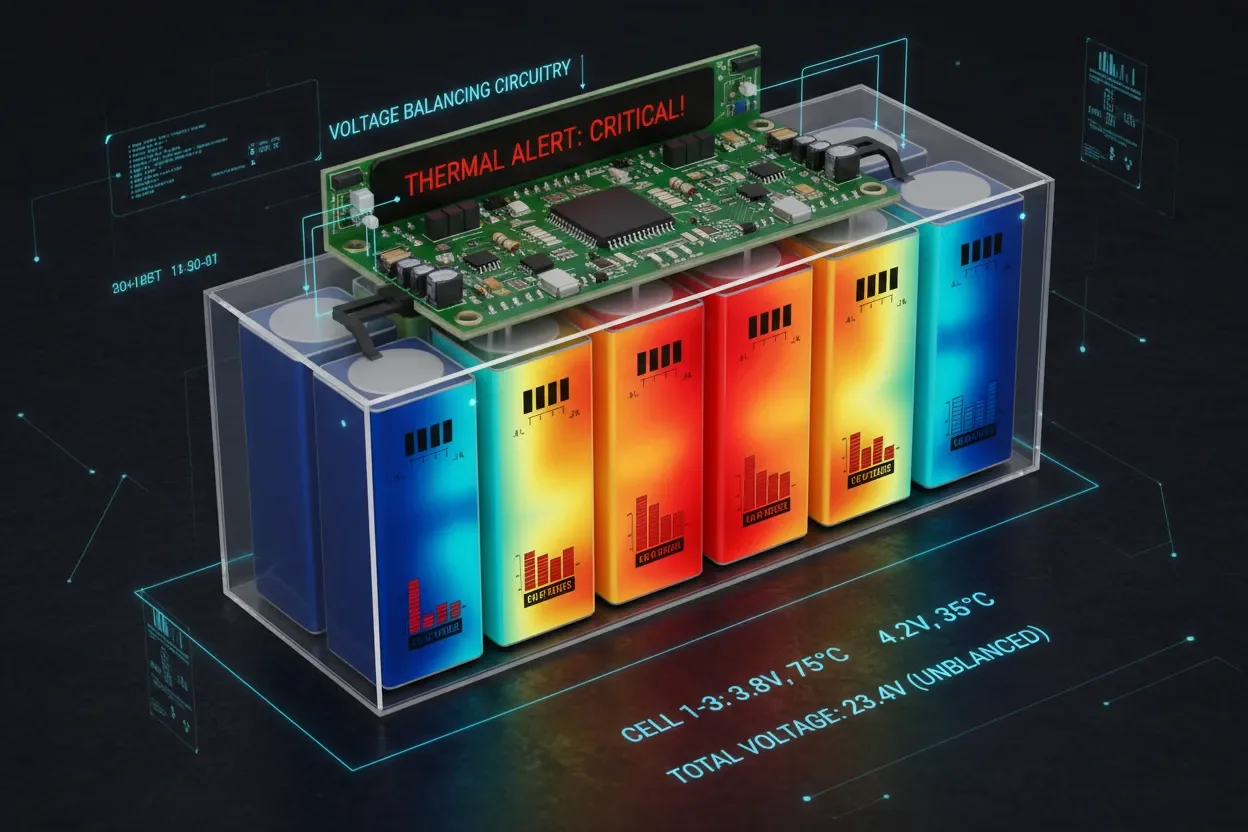
A 12V LiPo is really three 3.7 V cells chained in series. Sure, you get more voltage, but now you’ve got three cells—each with their own quirks. Differences in resistance, state of charge, or thermal properties mean that the sum of cell heating is higher than just running one big cell by itself.
During heavy loads, the weakest cell in the chain gets hottest. It’s normal to see a 8–12°C difference between hot and cool cells in a poorly balanced series pack, especially in tight or fanless builds.
Voltage Imbalance Risks and Their Thermal Effects
Charging or discharging series packs can make small voltage differences into big problems fast. If one cell hits 4.2V before the others and charging keeps going, that cell overheats—sometimes hitting 70°C or more. Balancing circuits step in to shunt charge and keep each cell within 0.02V, which keeps heat even and prevents runaway.
Best practice? Put temp sensors right on each cell, make space for at least basic airflow, and never charge above the label rating. Indian e-bike makers used to burn through packs until they started combining BMS balancing and smarter cooling—now their batteries last much longer. Bottom line: balancing = safety and longer service life.
Tools and Techniques for Simulating and Diagnosing LiPo Battery Heating Issues
simulation diagnostics thermal management tools
Using Cloud-Based AI Simulation Platforms
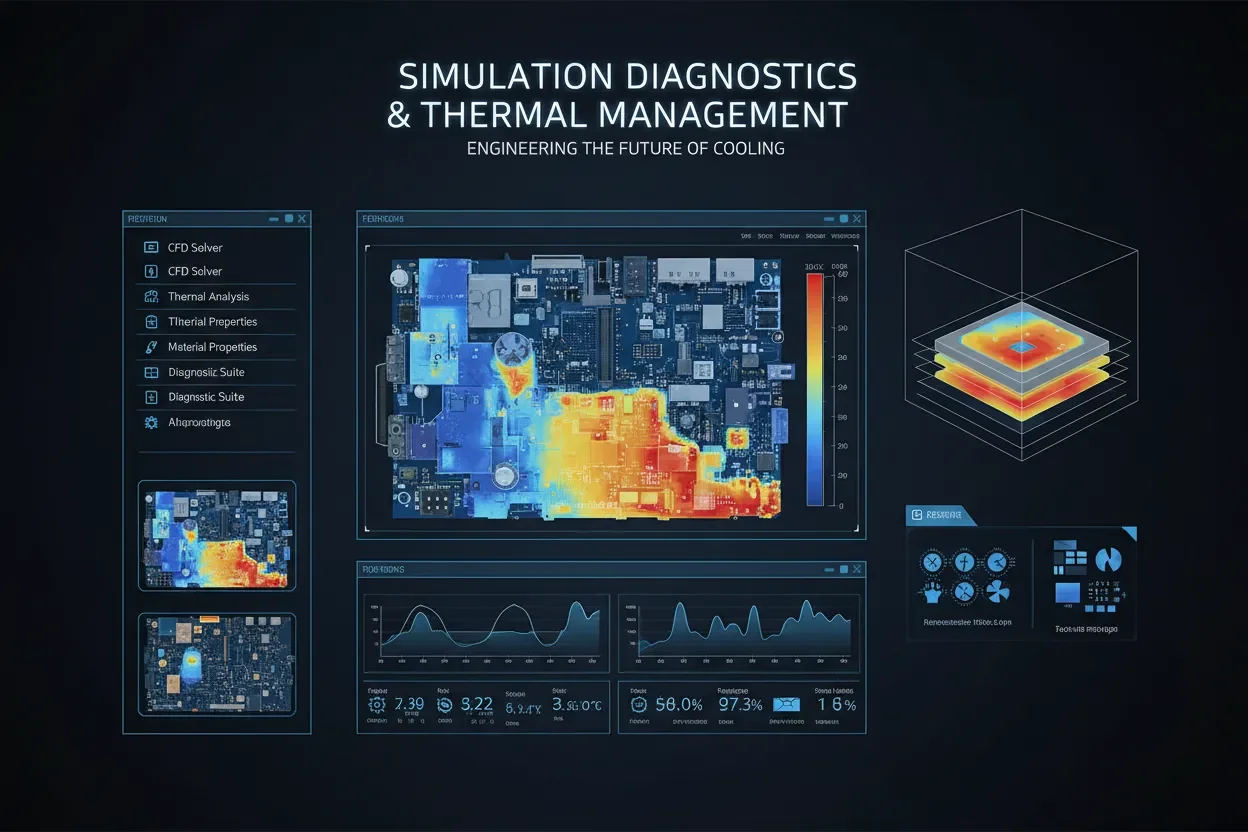
AI tools are a game-changer for battery thermal design. Platforms like RapidChip from Electro Global let you simulate battery heating—electrical and thermal—before you spend a rupee on hardware. You’ll see exactly how copper, case material, vents, and your 3000mah lipo battery, 3.7 v 10000mah lipo battery, or even a 3.7 v lipo battery 2000mah will interact.
It’s all about catching hotspots, tweaking heat paths, and figuring out if your BMS and charger spec will actually keep the cells cool—before anything melts down. You can even compare cell types or test fail-safes digitally. Worth remembering: simulation means fewer burnt boards and more peace of mind.
Practical Diagnostic Methods in Prototyping
Nothing beats hands-on. Thermal cameras, IR thermometers, and cheap temp sensors (DS18B20, thermocouples) show you exactly where heat is popping up—when charging or draining. In a stress test, log that temp every minute, especially if you’re pounding a 3000mAh pack with max current.
In India, students and tinkerers with 3.7 v lipo battery 2000mah packs catch early failures just using IR guns in bench tests. Write readings down—if you see a sudden temp jump next month, you’ll know something’s going wrong inside. Bottom line: a bit of temp data now saves a lot of headache later.
# Python snippet: Logging battery temp in testing import time while True: temp = read_temp_sensor() log_to_file(time.time(), temp) time.sleep(60) # log every minute
Frequently Asked Questions
What is a 3.7 v LiPo battery and why is it popular in electronics?
It's a single-cell lithium-polymer battery with a nominal 3.7V (fully charged at 4.2V). People love it because it packs great energy into a small, flat body, which is perfect for DIY projects, IoT, and most battery-powered gadgets. It's easy to fit and has a high energy-to-weight ratio, so it wins out over bulkier battery types for small devices.
How does a 3000mAh LiPo battery differ from higher or lower capacity LiPo batteries?
A 3000mAh LiPo battery lasts longer than a 2000mAh cell, but it also runs warmer if you pull heavy current. Higher capacity options, like a 3.7 v 10000mah lipo battery, deliver way more power but demand better cooling and smarter management (BMS, thermal pads, airflow)—otherwise things heat up much faster and you risk damage.
Who should use a 3.7 v lipo battery 2000mah in their design?
Go for a 3.7 v lipo battery 2000mah if you’re making something compact—like a wireless sensor, mini robot, or basic IoT gadget. It’s light, small, and gives enough juice for 2–8 hours in most simple projects. Students and hobbyists love it for quick builds and learning where big runtime isn’t top priority.
What is the safe charging current for 3.7 v LiPo batteries?
Stick to 0.5C–1C for charging. For a 3000mAh cell, that means 1.5A–3A max. Go higher and you’re asking for heat trouble—cells can get hot, age faster, or even get damaged. Use a proper charger with cutoff at 4.2V per cell. Never fast-charge unless your battery’s label says it’s okay.
Why do 12v LiPo batteries need voltage balancing?
A 12v lipo battery is three 3.7V cells chained in series. If one cell charges faster, it gets overcharged and hot, while others lag behind. Balancing makes sure each cell stays at the right voltage—keeps temps even, prevents overcharging, and helps the whole pack last longer.
How do you monitor LiPo battery temperature during development?
Use an IR thermometer, thermal cam, or even a DS18B20 sensor stuck to the cell. Many modern BMS boards let you read temp live or log it to your PC. Best: log temps while charging and discharging, so you can spot weird increases before they cause damage.
What are the key features of a good Battery Management System (BMS) for LiPo batteries?
A solid BMS checks every cell’s voltage and temp, balances series cells, and shuts things down if there's overcharge, overheat, or under-voltage. That’s vital for bigger packs like a 3.7 v 10000mah lipo battery or stacked 12V packs. Without BMS, you're risking safety, reliability, and battery lifespan.
How can simulation tools benefit LiPo battery design?
Simulation tools (like RapidChip) show you where your battery might overheat or fail—before you build anything. You can tweak PCB layout, airflow, and charger strategy in software and see what works best. Saves you money and lets you fix issues before burning through expensive parts.
Are there India-specific challenges in LiPo battery usage?
Definitely! India’s climate gets brutally hot. Higher ambient temp means batteries heat up faster and risk swelling or dying early—especially under load. Make sure to use BMS, limit charge rates, and ventilate boxes. Drones and outdoor gadgets, especially, need extra care.
What can go wrong if you overcharge a LiPo battery by just 0.1V?
Overcharging even a bit (charging to 4.3V instead of 4.2V) can make the cell hotter, kill performance, and shorten life by nearly a third. You might see swelling, weird voltage drops, or, in worst case, a fire risk. Always use chargers with precise cutoff and avoid leaving cells unattended when topping up.
If you stay on top of temperature, charge rates, and resistance, your 3.7 V LiPo battery will run safer and last longer. The little things—like keeping cells balanced in a 12v lipo battery pack, or adding a BMS to a big 3.7 v 10000mah lipo battery—make a big difference in real-world reliability.
Want fewer burnt boards and better battery life? Let ElectroGlobal’s RapidChip and EGPT AI tools run the numbers for you early on. Whether you’re tinkering with a 3000mAh or building a multi-cell 12V system, simulation and smart diagnostics save mistakes and cash. Visit Electro Global to get started.
Still have doubts or want pro tips from engineers in the field? Find more advice and battery stories in this active 3.7 v lipo battery community thread.
Tagged
Related Content
Related Products
From the Blog
- Choosing the Best 3.7 V LiPo Battery 2000mAh for Reliable DIY Electronics
- Complete LiPo Battery Safety Guide for Engineers and Hobbyists
- Raspberry Pi Pico Battery Guide Featuring 3000mAh LiPo Battery Insights
- 3s LiPo Battery Capacity Explained for Electronics Projects
- Understanding LiPo Battery Charger Balance Charging for Optimal Safety and Performance