
Inverter and Battery for Home: Best Picks Under ₹15,000
A practical Indian guide to sizing a home inverter, comparing battery types and avoiding misleading budget combo offers.
Introduction
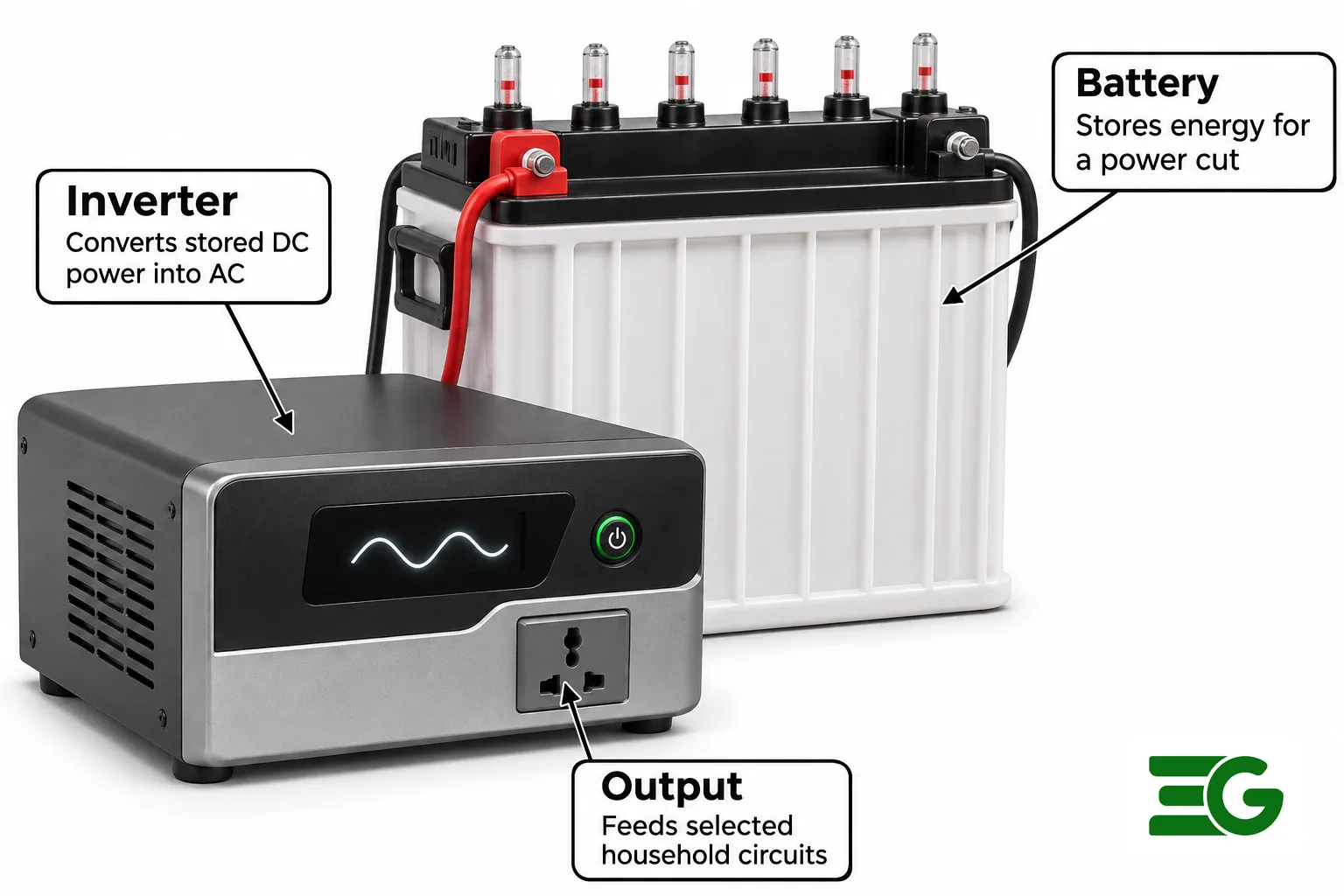
Inverter and battery for home buyers often start with a ₹15,000 budget, then discover that the advertised battery price excludes the inverter, wiring and installation. The costly mistake is choosing by amp-hours or warranty months before measuring the appliances you actually need during a power cut.
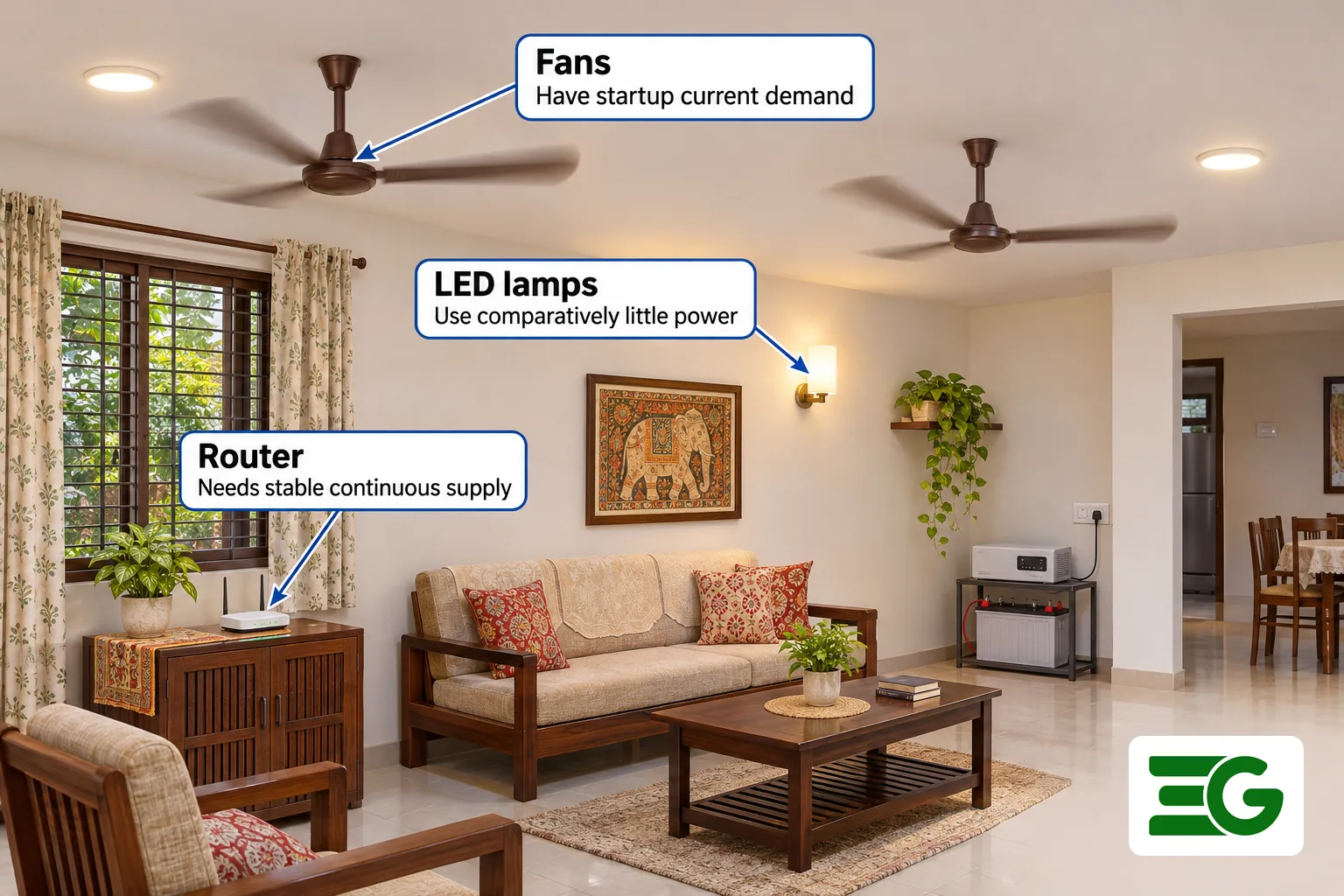
For a small Indian household, two fans, LED lights and a router create a very different load from a refrigerator or an induction cooktop. We would first write down the wattages, decide how long backup must last and only then compare tubular, sealed and lithium batteries.
There is no single best combo for every home. A correctly matched inverter and battery, with realistic runtime expectations and a local service option, beats an oversized battery connected to the wrong charger.
How to size an inverter and battery for home
Write down the actual appliances
An inverter and battery for home should be sized from the appliances you intend to run during a cut, not from the number of rooms. Write down each light, fan, router and television, then read its watt rating. A ceiling fan might draw far more than a modern LED lamp, so counting devices without their ratings gives a misleading total. We would keep an electric iron, induction cooktop and geyser off a budget backup circuit. Their heating loads can consume the available inverter output almost immediately. The sensible first purchase is a watt meter if the appliance labels are unclear.
Understand watts, VA and surge
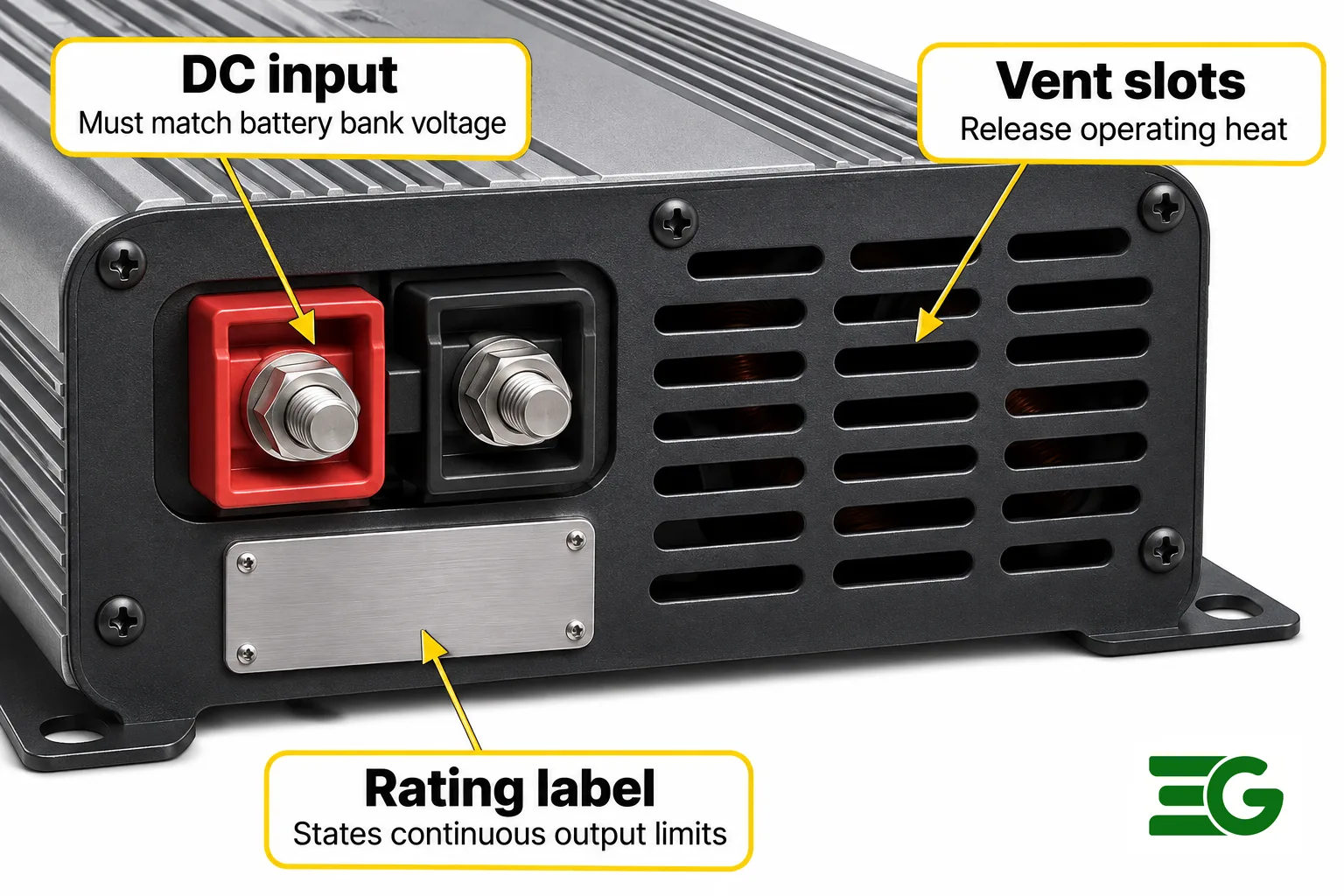
An inverter is commonly sold by its volt-ampere rating, or VA, while appliances consume watts. The inverter also has a rated watt output, which is the limit you must check. A 900VA unit is not automatically a 900W unit. Motors can draw extra current as they start, and the inverter must handle that brief surge. Add the running wattages, allow a margin for starting loads, then select an inverter whose published continuous and surge ratings suit the result. We prefer a pure sine wave output for fans and sensitive electronics because it reduces compatibility worries compared with a crude square-wave design.
Estimate backup hours honestly
A rough energy estimate starts with nominal watt-hours: battery voltage multiplied by amp-hours. A 12V 100Ah battery has a nominal 1,200Wh rating at its specified discharge conditions. That does not mean a 300W load will run for four hours. Lead-acid capacity falls at higher discharge currents; depth-of-discharge limits, inverter losses and ageing also reduce usable energy. As a simple illustration, if only half the nominal energy is usable after allowances, 600Wh divided by 300W gives two hours. Treat that as arithmetic, not a guaranteed runtime. Manufacturer runtime tables and a measured load are better guides.
Battery types compared for Indian power cuts
Tall tubular lead-acid batteries
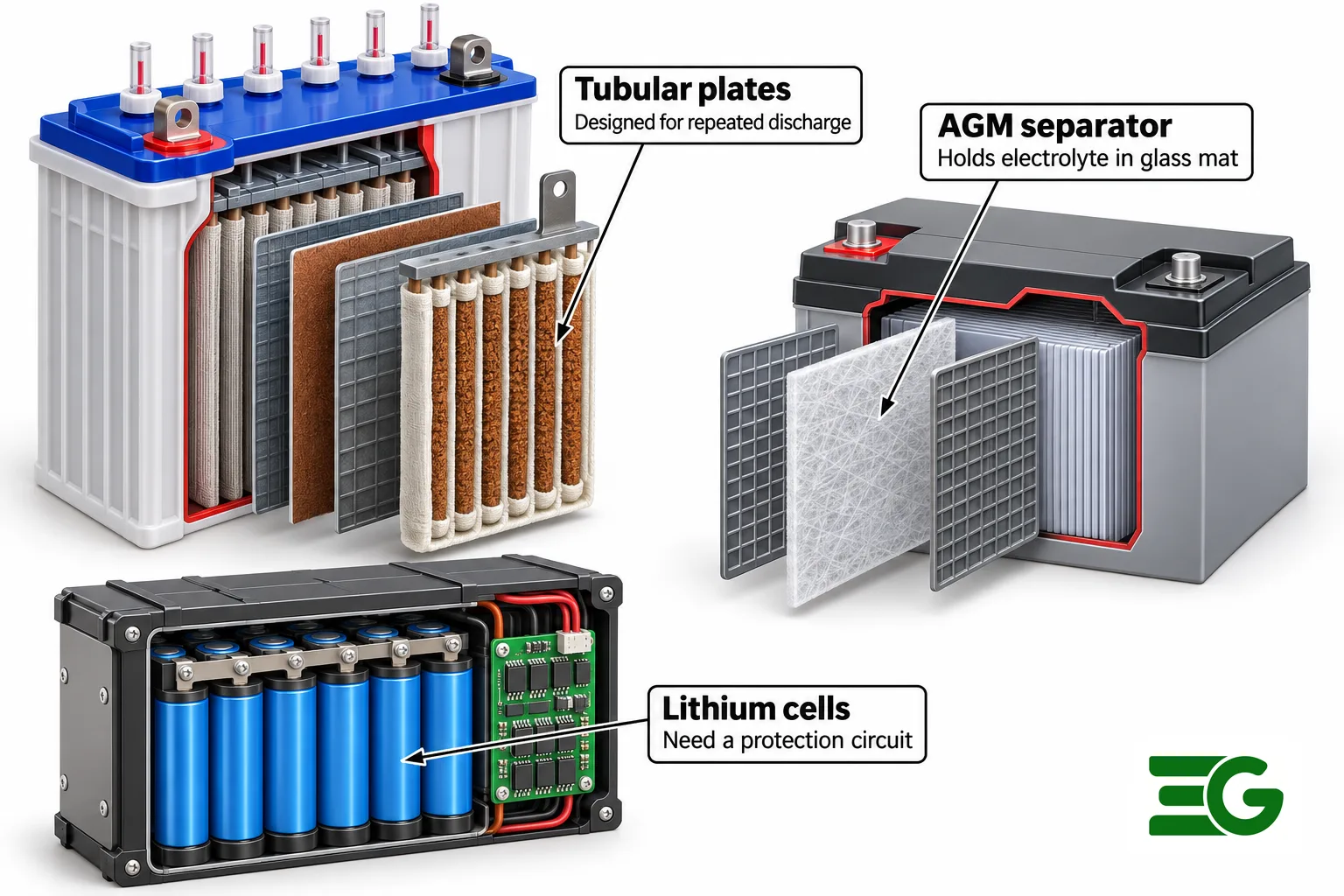
A tall tubular battery uses a lead-acid design intended for repeated charging and discharging in an inverter application. It is physically large and heavy, but its service support and familiarity make it a practical option where power cuts happen often. Exide lists a 150Ah Inva Tubular model with a 66-month conditional warranty and an MRP of ₹27,766 on its official product page. That is a published MRP, not a promise about local dealer prices. Our view: if you have a ventilated place for a battery and can manage water checks, a correctly sized tubular model is still a defensible choice.
Sealed AGM and gel batteries
A sealed VRLA, AGM or gel battery can reduce routine water maintenance, but it must be compatible with the inverter charger. These labels describe different constructions and charging requirements. Do not assume that every sealed battery is suitable for daily deep cycling. A small 12V 7Ah UPS battery is designed for a very different job from a 150Ah household inverter battery. We would use the exact chemistry and capacity recommended by the inverter maker rather than choosing solely on the phrase maintenance-free. Sealed does not mean heat-proof or immune to ageing.
Lithium and LiFePO4 systems
A purpose-built lithium inverter battery may provide more usable cycles and lower weight, but the purchase price and electronics matter. LiFePO4 packs need a battery management system and compatible charging voltage, current and cutoff behaviour. A pack that fits beside the inverter can still be incompatible with its lead-acid charger. Ask the manufacturer for an explicit compatibility list and warranty conditions before spending more. We would consider a matched lithium inverter system for frequent cycling, but would not retrofit an unknown lithium pack into an old lead-acid setup. An unsupported retrofit can trip protection or overcharge cells.
Best inverter and battery combos under ₹15,000
What a ₹10,000 budget can buy
For a complete new inverter and substantial household battery, ₹10,000 is a tight budget. Do not mistake a listing for a battery alone as the price of a working system. The invoice must include the inverter, battery, cables, installation and any trolley or protective enclosure required. If you already own a functioning inverter, a compatible replacement battery may be the more realistic purchase. We would ask a dealer for separate line items rather than accept a vague combo quote. A suspiciously cheap package may use a small battery that offers only short backup.
What changes at ₹15,000
At ₹15,000, the same problem remains for many branded full-size tubular combinations. For perspective, the official Luminous Power Sine 800 with AB18060 gel battery combination was listed at ₹23,998 when checked for this guide. Exide's official 150Ah Inva Magic tubular battery alone shows an MRP of ₹21,386. Those examples are not universal market prices, but they show why a promise of a full premium home system under ₹15,000 deserves scrutiny. We would rather recommend a smaller verified backup requirement or a staged upgrade than invent a bargain that cannot be sourced.
Budget comparison without misleading picks
| Budget or situation | Practical route | Check before paying |
|---|---|---|
| Under ₹10,000 | Service an existing inverter or consider limited-load backup | Actual battery condition and watt demand |
| Under ₹15,000 | Seek a documented dealer quote for a smaller compatible system | Capacity, warranty, installation and exchange credit |
| Full-size tubular backup | Plan a larger total budget | Published manufacturer pricing and local stock |
| Matched lithium system | Compare long-term cycle cost | BMS, charger support and service availability |
A fair comparison uses the same appliance load and backup-hour target. A small sealed pack and a large tubular battery cannot be judged by sticker price alone. If your budget is fixed, reducing the backed-up appliances is often safer than buying unverified cells.
Maintenance-free versus water-topping batteries
What without water actually means
A flooded lead-acid battery can require periodic distilled-water top-ups as specified by its maker. Sealed AGM and gel products generally do not allow water filling. The term maintenance-free refers to the absence of routine topping, not to the absence of inspection, ventilation or replacement. We would be cautious about a seller who promises that a flooded tubular battery never needs checking. Read the exact model instructions. Do not add water to a sealed battery, and never open a sealed battery case to investigate low runtime.
Safe water checks for flooded batteries
If the manufacturer permits user water maintenance, follow its level indicators and use only the specified distilled water. Wear appropriate protection and keep sparks, cigarettes and metal tools away from the battery. Lead-acid batteries contain corrosive electrolyte and can release hydrogen during charging. We recommend having an installer demonstrate the procedure rather than improvising it. Do not overfill, do not use tap water and do not remove caps while the battery is charging unless the manufacturer explicitly directs a qualified technician to do so.
Heat, placement and cleaning
Indian summers can put batteries in rooms hotter than their preferred operating range. Keep the inverter and battery in a dry, ventilated location away from direct sunlight and rain. Leave the clearances required by the manual, especially around the inverter's fan and vents. Check for corrosion only through approved maintenance procedures and ask a technician to deal with damaged terminals. A neat battery trolley is useful when it prevents accidental contact, but it must not trap heat or block airflow. We would prioritise ventilation over appearance every time.
Installation and rechargeable battery charger matching
Match the DC battery bank
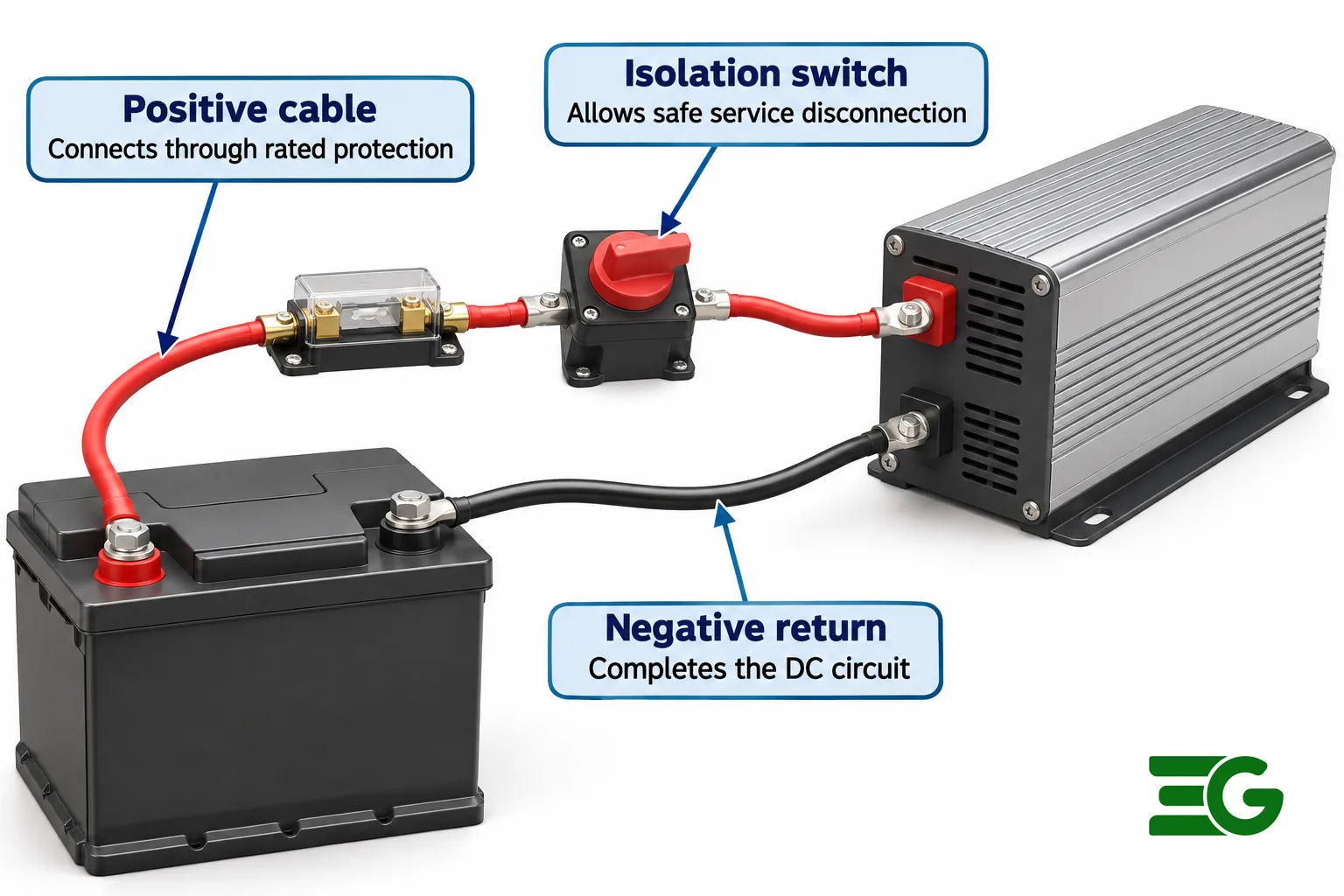
Check the inverter's DC input before connecting anything. A 12V inverter generally expects a 12V-class battery bank; a 24V inverter generally expects a 24V-class bank. One 12V battery cannot directly power a 24V inverter as specified. Two matched 12V batteries may form a 24V series bank only when the inverter maker approves that configuration and a qualified installer handles it. Mixing old and new batteries in series creates unequal charging behaviour. Polarity mistakes can damage equipment instantly, so never improvise battery cables or terminals.
The installation checklist
- List essential appliances and their watt ratings.
- Choose an inverter whose continuous output and starting capacity cover the load.
- Verify the DC voltage, supported battery chemistry and approved Ah range.
- Get a written quote including correct cable gauge, fuses, isolation and installation.
- Have a qualified electrician connect the inverter through an approved changeover arrangement.
- Check earthing, ventilation, battery polarity and charger settings against the manuals.
- Test the backup circuit with a modest load, then confirm safe shutdown and recharge.
Never backfeed a household socket using a plug-to-plug cable. Mains wiring and battery short circuits can both cause serious injury.
Choose the right charger profile
A rechargeable battery charger is not interchangeable across chemistries. Flooded lead-acid, AGM, gel and LiFePO4 batteries can require different charge voltages, absorption behaviour and temperature compensation. Most household inverters contain their own charger, so the question is whether that charger supports the battery you want. A separate car charger is not a substitute for a manufacturer-approved inverter charging profile. For small electronics, a battery accessory may be useful, but it should not be connected to household inverter terminals without a documented design.
UPS battery versus home inverter battery
Why the small UPS pack is different
A desktop UPS often uses a compact sealed lead-acid battery for minutes of backup. A home inverter is normally sized for longer support of lights, fans and a router. Both may be labelled 12V, but their capacity, discharge design and physical connections are different. A 12V 7Ah UPS battery has 84Wh nominal energy, while a 12V 150Ah inverter battery has 1,800Wh nominal energy. Neither number directly equals delivered AC energy. We would not attach a tiny UPS battery to a household inverter expecting hours of backup.
Replace a battery or replace the UPS
If a UPS is a few years old and gives only a minute under the same load, a worn battery is plausible. Check its self-test and charger status first. A battery replacement makes sense only if the UPS electronics are healthy and the correct approved battery is available. If the UPS smells burnt, has damaged wiring or reports a charger fault, have it serviced or replaced. Buying a larger battery will not increase the UPS inverter's watt rating. For a computer, safe shutdown matters more than an exaggerated runtime promise.
Can a car battery do the same job
A car starter battery is built for short, high-current engine cranking rather than repeated deep discharge. It may power some equipment in an emergency when properly designed, but it is a poor default for a permanent home inverter installation. Charging and ventilation requirements also matter. A household inverter battery is usually built for the expected cycle pattern. We would buy a battery specified for stationary backup instead of reusing an old car battery simply because it has the same voltage. The cheap shortcut can cost more through early failure.
Common buying mistakes and a warranty checklist
Avoid marketing shortcuts
Battery listings sometimes emphasise long warranty numbers without explaining free replacement and pro-rata periods. Read both. A 60-month warranty does not necessarily mean five years of free replacement. Check the manufacturing date, installation record, dealer invoice and service coverage in your city. Also ask whether the old battery has exchange value and whether the quoted price already includes that credit. We prefer written specifications to claims like ultra power or zero maintenance, which do not tell you how many watt-hours the system can deliver.
Watch the hidden ownership costs
Compare the price of the inverter and battery together, the expected replacement interval, routine service and electricity used during charging. A flooded battery may have a lower upfront price but require water checks and ventilation. A compatible lithium system can cost more initially while offering a different cycle-life profile. The useful comparison is cost per dependable backup cycle under your real usage, not a headline warranty alone. We would also check whether replacement parts and technicians are available locally before buying an unfamiliar model.
Final checklist before you pay
- Record essential load in watts and the desired backup duration.
- Confirm inverter continuous watts, VA rating and DC input voltage.
- Choose battery chemistry and capacity from the manufacturer's approved list.
- Ask for a complete installed price and itemised invoice.
- Read warranty exclusions, free replacement and pro-rata terms.
- Check ventilation, safe installation and recycling or exchange arrangements.
For electronics projects rather than home mains backup, explore ElectroGlobal batteries and the 12V DC battery pack. Those small packs are not drop-in replacements for a household inverter bank.
Conclusion: choose the right backup, not a bargain
For an inverter and battery for home, start with a load calculation, then verify the inverter output, DC voltage, battery chemistry and charger compatibility. Under ₹15,000, ask for a fully itemised quote and expect trade-offs in capacity or runtime. Compare official specifications and warranty terms before paying. For smaller DC projects, browse our battery category; for household mains backup, use a qualified installer.
Tagged