
Inverter Battery Buying Guide 2026: Smart Capacity, Chemistry, Voltage, Backup Time, Maintenance, Safety, Real Home Load Planning, and Practical Checks Before You Buy
Choose an inverter battery using real household load, capacity, compatibility, and safety checks.
Introduction
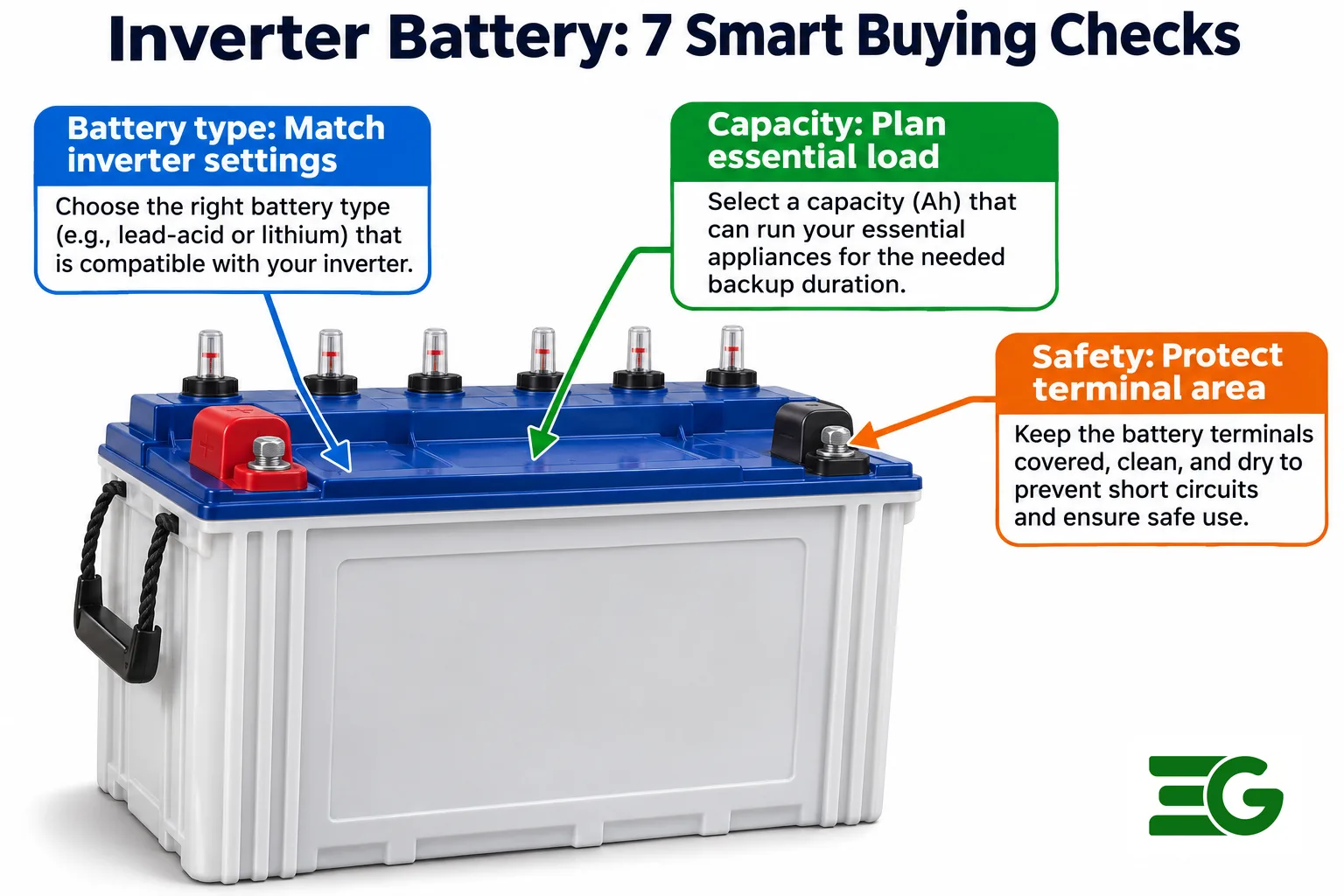
Inverter battery selection should begin with your actual backup load, required runtime, and inverter compatibility. The right battery is the one that supports the essential devices safely, charges correctly, and delivers predictable backup without forcing the inverter or cables beyond their ratings.
How inverter battery capacity affects backup time
Choose an inverter battery after checking the inverter's DC voltage, the expected backup load, and the battery chemistry recommended by the manufacturer. Capacity is normally expressed in ampere hours, but backup time depends on the actual watt load, inverter efficiency, battery condition, temperature, and cutoff settings. A larger label alone does not guarantee useful backup. Compare the complete system: battery voltage, charging current, physical space, terminal type, warranty, and the support available where the system will be used.
For a typical home backup installation, keep battery terminals clean, tight, and protected from accidental short circuits. Use correctly sized cable and avoid extending the leads unnecessarily. Flooded tubular batteries require ventilation and periodic water checks only when the battery maker specifies it. Sealed lead acid and lithium options have different maintenance and charging requirements. Never mix old and new batteries in one bank, and do not substitute a battery type unless the inverter supports its charging profile.
Estimate demand before purchase. Add the running watts of selected lights, fans, router, television, or computer, then decide which loads must remain available during an outage. High surge appliances such as pumps, refrigerators, and tools need separate attention because starting current can exceed the steady value. Test the installed system with the intended load and note the observed runtime. That result is more useful than a sales claim because it includes real wiring losses and the way your household uses power.
Tubular, flat plate, and lithium battery choices
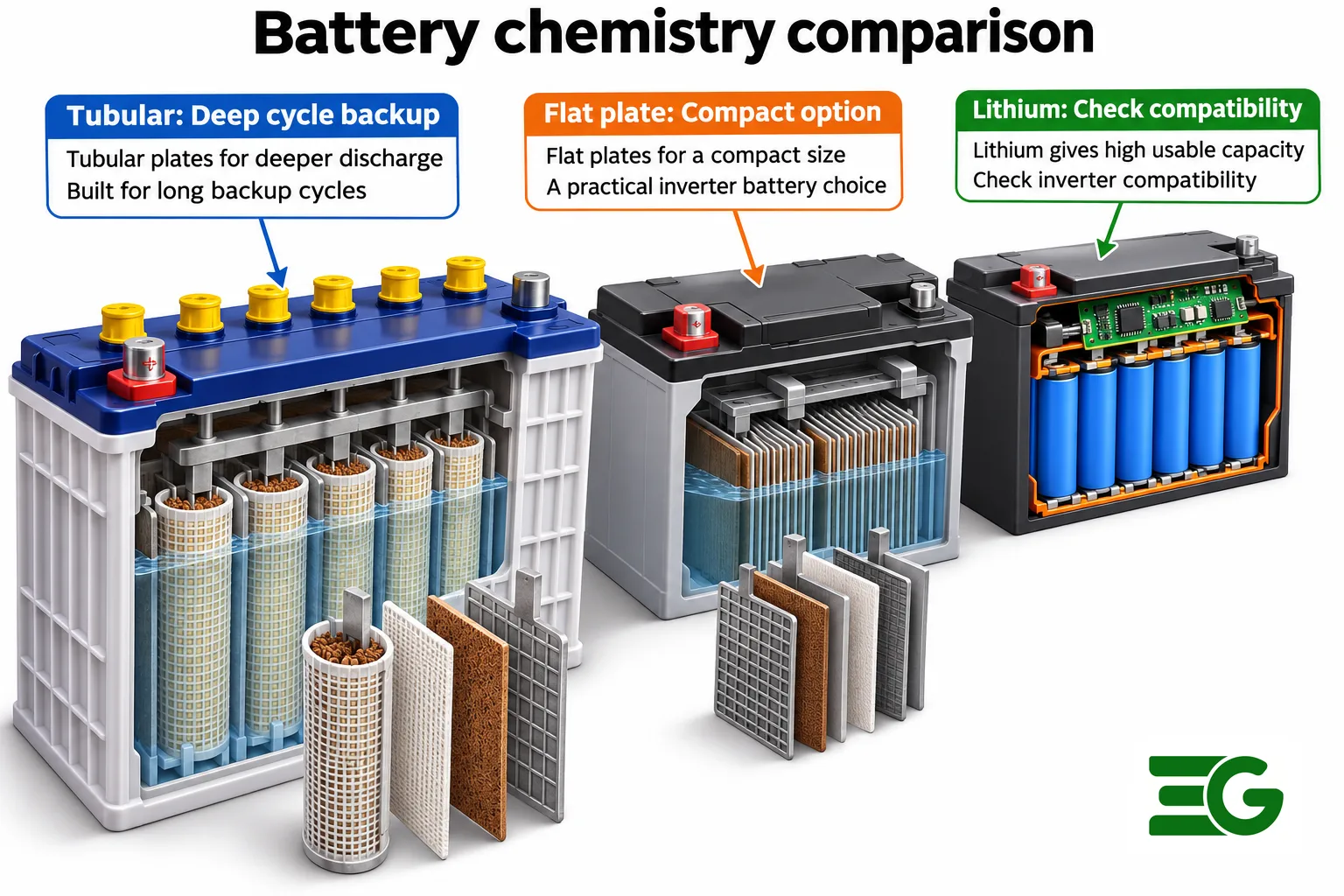
Choose an inverter battery after checking the inverter's DC voltage, the expected backup load, and the battery chemistry recommended by the manufacturer. Capacity is normally expressed in ampere hours, but backup time depends on the actual watt load, inverter efficiency, battery condition, temperature, and cutoff settings. A larger label alone does not guarantee useful backup. Compare the complete system: battery voltage, charging current, physical space, terminal type, warranty, and the support available where the system will be used.
For a typical home backup installation, keep battery terminals clean, tight, and protected from accidental short circuits. Use correctly sized cable and avoid extending the leads unnecessarily. Flooded tubular batteries require ventilation and periodic water checks only when the battery maker specifies it. Sealed lead acid and lithium options have different maintenance and charging requirements. Never mix old and new batteries in one bank, and do not substitute a battery type unless the inverter supports its charging profile.
Estimate demand before purchase. Add the running watts of selected lights, fans, router, television, or computer, then decide which loads must remain available during an outage. High surge appliances such as pumps, refrigerators, and tools need separate attention because starting current can exceed the steady value. Test the installed system with the intended load and note the observed runtime. That result is more useful than a sales claim because it includes real wiring losses and the way your household uses power.
Matching inverter voltage and charging settings
Choose an inverter battery after checking the inverter's DC voltage, the expected backup load, and the battery chemistry recommended by the manufacturer. Capacity is normally expressed in ampere hours, but backup time depends on the actual watt load, inverter efficiency, battery condition, temperature, and cutoff settings. A larger label alone does not guarantee useful backup. Compare the complete system: battery voltage, charging current, physical space, terminal type, warranty, and the support available where the system will be used.
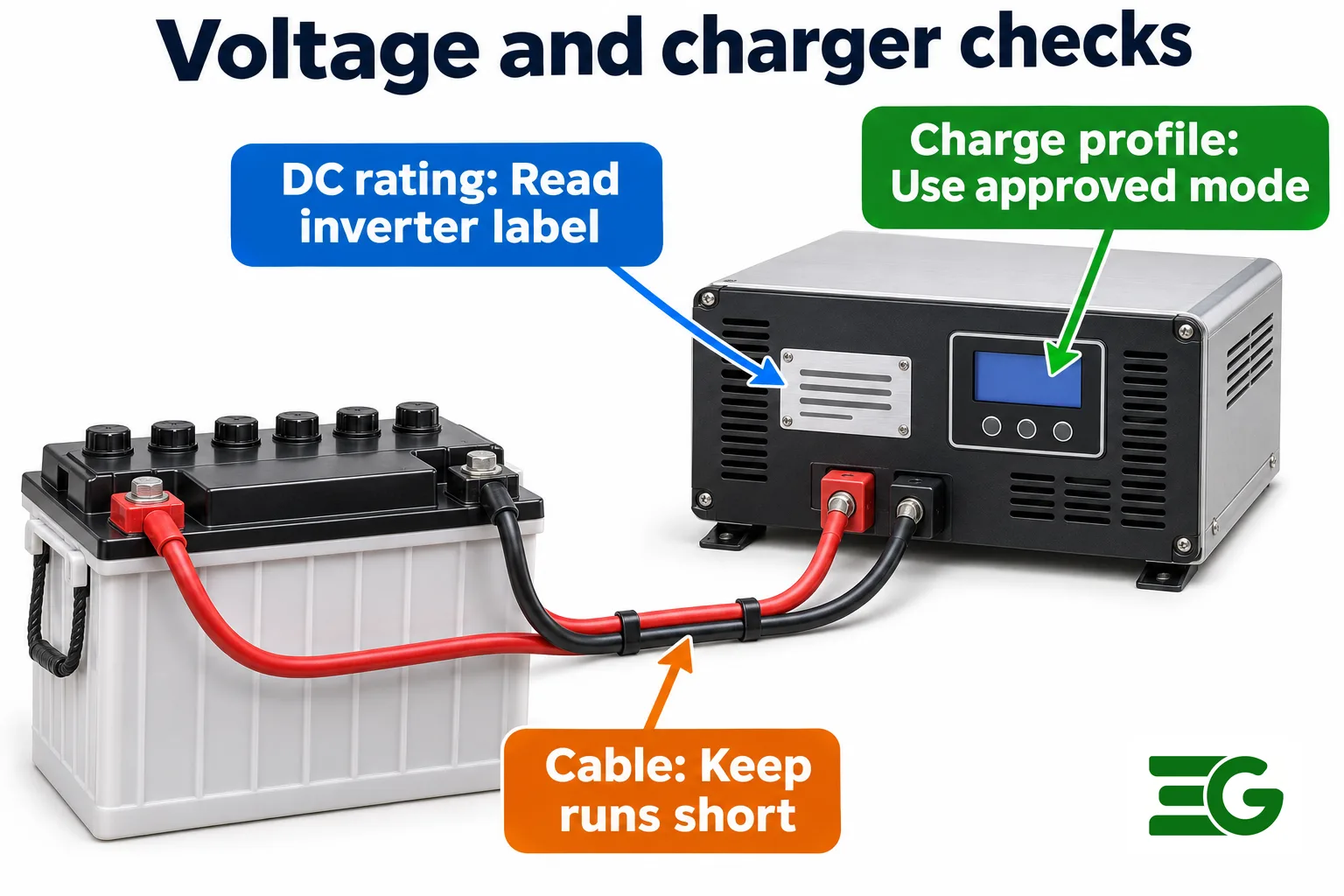
For a typical home backup installation, keep battery terminals clean, tight, and protected from accidental short circuits. Use correctly sized cable and avoid extending the leads unnecessarily. Flooded tubular batteries require ventilation and periodic water checks only when the battery maker specifies it. Sealed lead acid and lithium options have different maintenance and charging requirements. Never mix old and new batteries in one bank, and do not substitute a battery type unless the inverter supports its charging profile.
Estimate demand before purchase. Add the running watts of selected lights, fans, router, television, or computer, then decide which loads must remain available during an outage. High surge appliances such as pumps, refrigerators, and tools need separate attention because starting current can exceed the steady value. Test the installed system with the intended load and note the observed runtime. That result is more useful than a sales claim because it includes real wiring losses and the way your household uses power.
Load planning before buying an inverter battery
Choose an inverter battery after checking the inverter's DC voltage, the expected backup load, and the battery chemistry recommended by the manufacturer. Capacity is normally expressed in ampere hours, but backup time depends on the actual watt load, inverter efficiency, battery condition, temperature, and cutoff settings. A larger label alone does not guarantee useful backup. Compare the complete system: battery voltage, charging current, physical space, terminal type, warranty, and the support available where the system will be used.
For a typical home backup installation, keep battery terminals clean, tight, and protected from accidental short circuits. Use correctly sized cable and avoid extending the leads unnecessarily. Flooded tubular batteries require ventilation and periodic water checks only when the battery maker specifies it. Sealed lead acid and lithium options have different maintenance and charging requirements. Never mix old and new batteries in one bank, and do not substitute a battery type unless the inverter supports its charging profile.
Estimate demand before purchase. Add the running watts of selected lights, fans, router, television, or computer, then decide which loads must remain available during an outage. High surge appliances such as pumps, refrigerators, and tools need separate attention because starting current can exceed the steady value. Test the installed system with the intended load and note the observed runtime. That result is more useful than a sales claim because it includes real wiring losses and the way your household uses power.
Installation checks for safer home backup
Choose an inverter battery after checking the inverter's DC voltage, the expected backup load, and the battery chemistry recommended by the manufacturer. Capacity is normally expressed in ampere hours, but backup time depends on the actual watt load, inverter efficiency, battery condition, temperature, and cutoff settings. A larger label alone does not guarantee useful backup. Compare the complete system: battery voltage, charging current, physical space, terminal type, warranty, and the support available where the system will be used.
For a typical home backup installation, keep battery terminals clean, tight, and protected from accidental short circuits. Use correctly sized cable and avoid extending the leads unnecessarily. Flooded tubular batteries require ventilation and periodic water checks only when the battery maker specifies it. Sealed lead acid and lithium options have different maintenance and charging requirements. Never mix old and new batteries in one bank, and do not substitute a battery type unless the inverter supports its charging profile.
Estimate demand before purchase. Add the running watts of selected lights, fans, router, television, or computer, then decide which loads must remain available during an outage. High surge appliances such as pumps, refrigerators, and tools need separate attention because starting current can exceed the steady value. Test the installed system with the intended load and note the observed runtime. That result is more useful than a sales claim because it includes real wiring losses and the way your household uses power.
Maintenance that protects battery life
Choose an inverter battery after checking the inverter's DC voltage, the expected backup load, and the battery chemistry recommended by the manufacturer. Capacity is normally expressed in ampere hours, but backup time depends on the actual watt load, inverter efficiency, battery condition, temperature, and cutoff settings. A larger label alone does not guarantee useful backup. Compare the complete system: battery voltage, charging current, physical space, terminal type, warranty, and the support available where the system will be used.
For a typical home backup installation, keep battery terminals clean, tight, and protected from accidental short circuits. Use correctly sized cable and avoid extending the leads unnecessarily. Flooded tubular batteries require ventilation and periodic water checks only when the battery maker specifies it. Sealed lead acid and lithium options have different maintenance and charging requirements. Never mix old and new batteries in one bank, and do not substitute a battery type unless the inverter supports its charging profile.
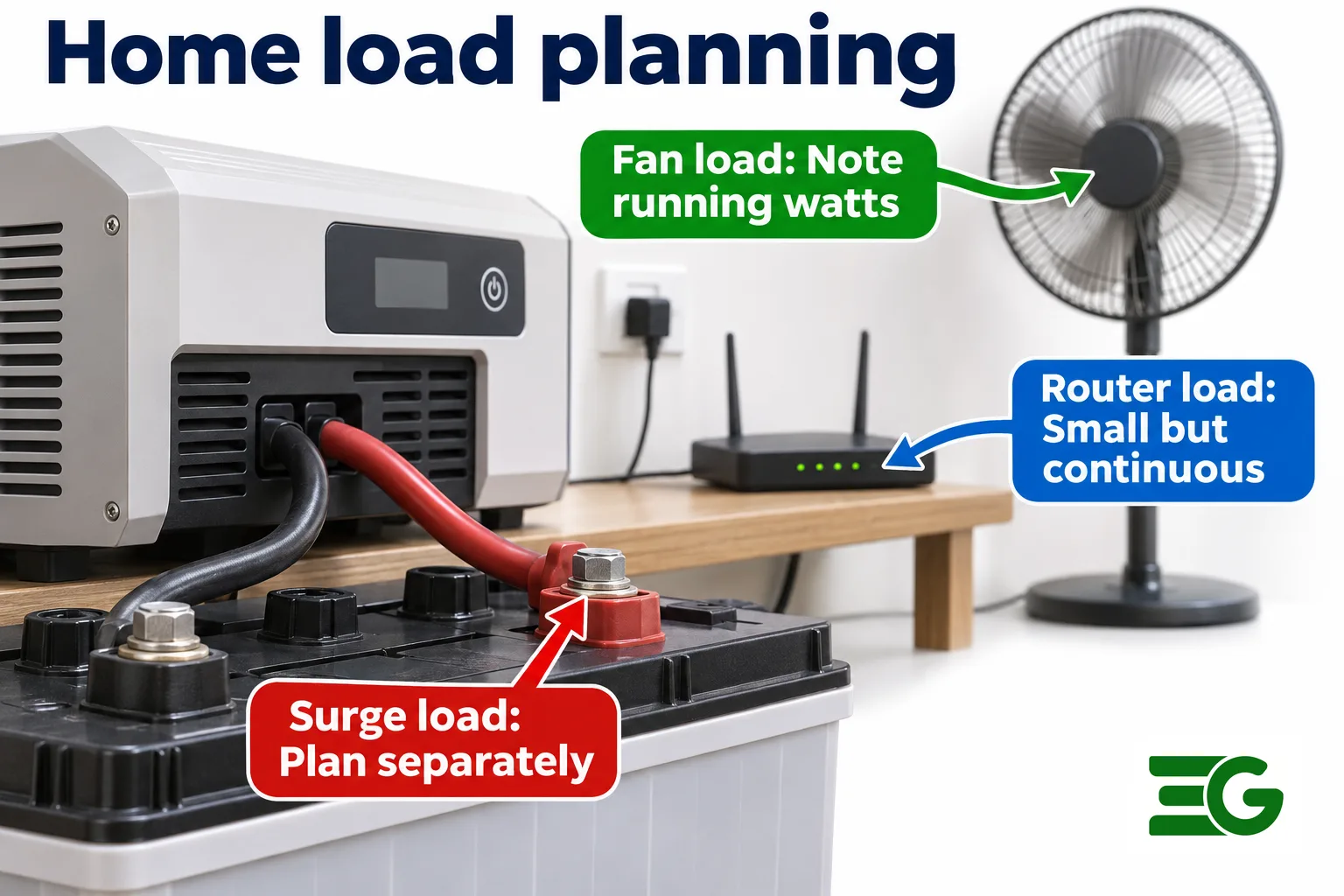
Estimate demand before purchase. Add the running watts of selected lights, fans, router, television, or computer, then decide which loads must remain available during an outage. High surge appliances such as pumps, refrigerators, and tools need separate attention because starting current can exceed the steady value. Test the installed system with the intended load and note the observed runtime. That result is more useful than a sales claim because it includes real wiring losses and the way your household uses power.
Common inverter battery buying mistakes
Choose an inverter battery after checking the inverter's DC voltage, the expected backup load, and the battery chemistry recommended by the manufacturer. Capacity is normally expressed in ampere hours, but backup time depends on the actual watt load, inverter efficiency, battery condition, temperature, and cutoff settings. A larger label alone does not guarantee useful backup. Compare the complete system: battery voltage, charging current, physical space, terminal type, warranty, and the support available where the system will be used.
For a typical home backup installation, keep battery terminals clean, tight, and protected from accidental short circuits. Use correctly sized cable and avoid extending the leads unnecessarily. Flooded tubular batteries require ventilation and periodic water checks only when the battery maker specifies it. Sealed lead acid and lithium options have different maintenance and charging requirements. Never mix old and new batteries in one bank, and do not substitute a battery type unless the inverter supports its charging profile.
Estimate demand before purchase. Add the running watts of selected lights, fans, router, television, or computer, then decide which loads must remain available during an outage. High surge appliances such as pumps, refrigerators, and tools need separate attention because starting current can exceed the steady value. Test the installed system with the intended load and note the observed runtime. That result is more useful than a sales claim because it includes real wiring losses and the way your household uses power.
Conclusion: select backup power from real load data
Choose an inverter battery after checking the inverter's DC voltage, the expected backup load, and the battery chemistry recommended by the manufacturer. Capacity is normally expressed in ampere hours, but backup time depends on the actual watt load, inverter efficiency, battery condition, temperature, and cutoff settings. A larger label alone does not guarantee useful backup. Compare the complete system: battery voltage, charging current, physical space, terminal type, warranty, and the support available where the system will be used.
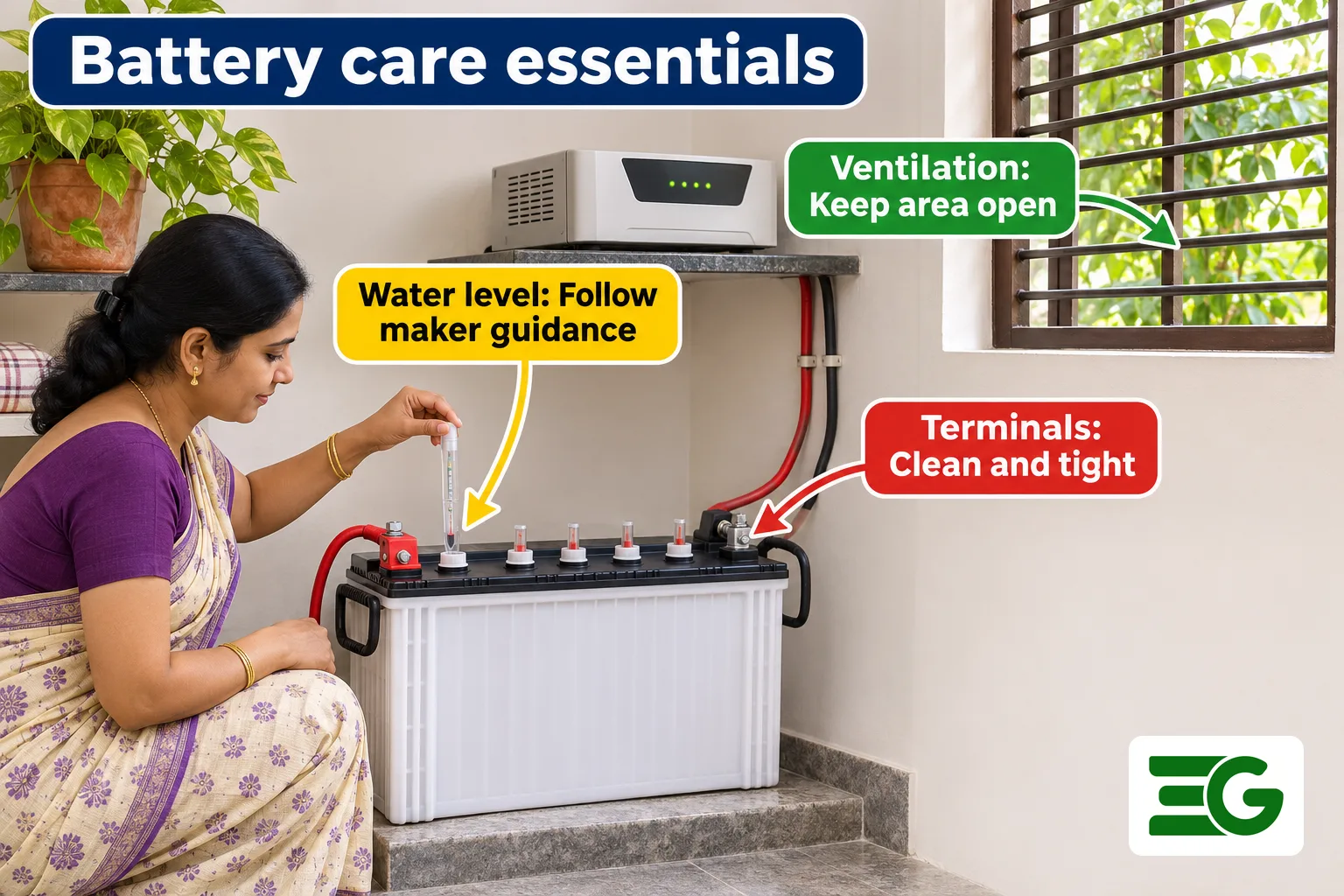
For a typical home backup installation, keep battery terminals clean, tight, and protected from accidental short circuits. Use correctly sized cable and avoid extending the leads unnecessarily. Flooded tubular batteries require ventilation and periodic water checks only when the battery maker specifies it. Sealed lead acid and lithium options have different maintenance and charging requirements. Never mix old and new batteries in one bank, and do not substitute a battery type unless the inverter supports its charging profile.
Estimate demand before purchase. Add the running watts of selected lights, fans, router, television, or computer, then decide which loads must remain available during an outage. High surge appliances such as pumps, refrigerators, and tools need separate attention because starting current can exceed the steady value. Test the installed system with the intended load and note the observed runtime. That result is more useful than a sales claim because it includes real wiring losses and the way your household uses power.
Tagged