
Li Ion Battery Price in India (2026): What You Should Really Pay
Compare lithium-ion cell and pack prices in India using usable energy, chemistry, safety and warranty rather than voltage alone.
Introduction
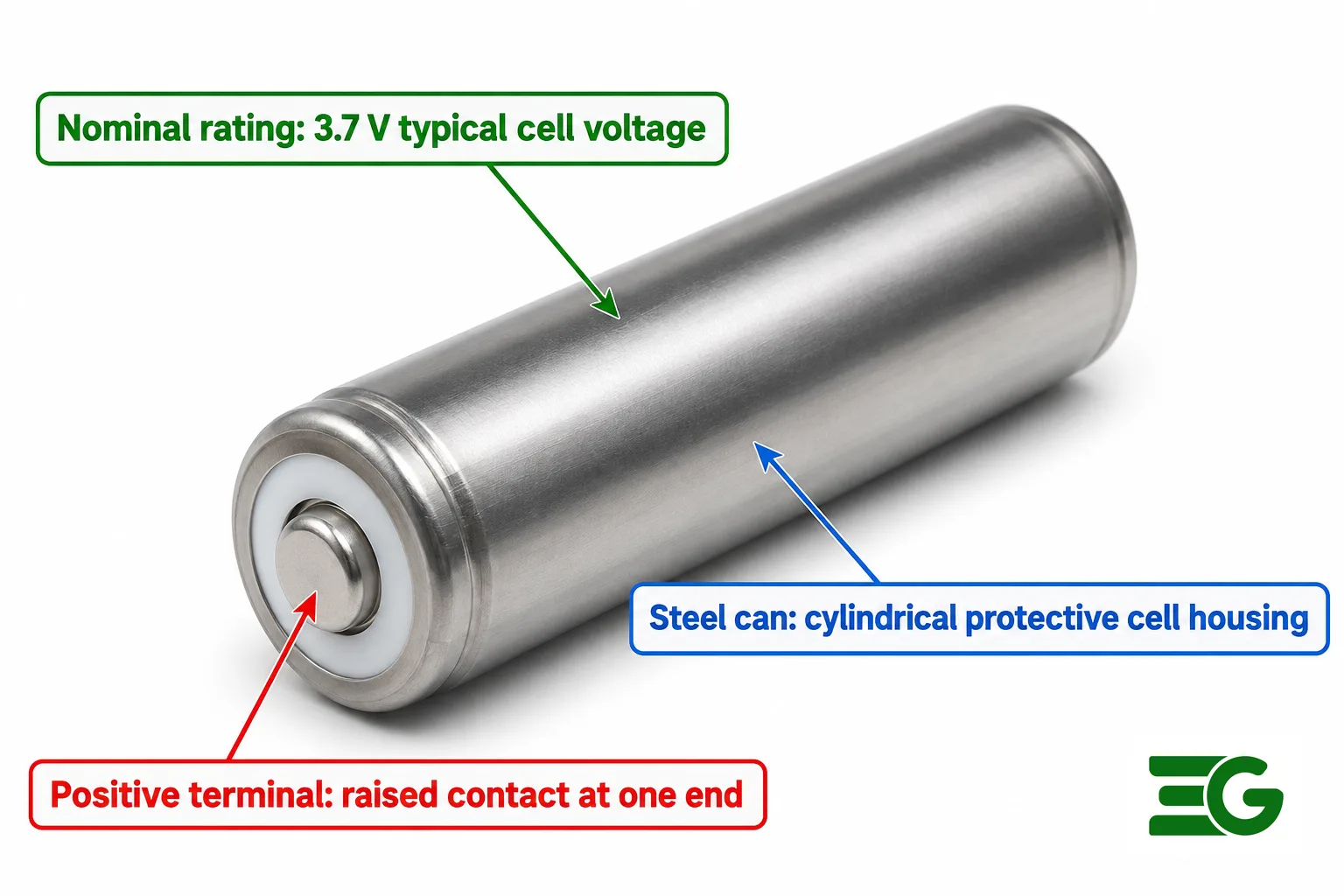
li ion battery price in India depends on what you are actually buying: a bare 18650 cell, a protected rechargeable battery or a complete inverter pack. A low sticker price can hide missing protection, a weak discharge rating or an incompatible charger.
For electronics projects, the most common confusion starts with the 3.7 V label. A conventional lithium-ion cell can measure about 4.2 V after charging, and its voltage falls under load. Neither reading alone tells you whether it will safely run a motor.
Our advice is to compare usable watt-hours, chemistry, discharge current, charger compatibility and warranty. These details explain the gap between a small retail cell and a professionally assembled pack.
What a lithium-ion battery actually does
Battery definition and rechargeable chemistry
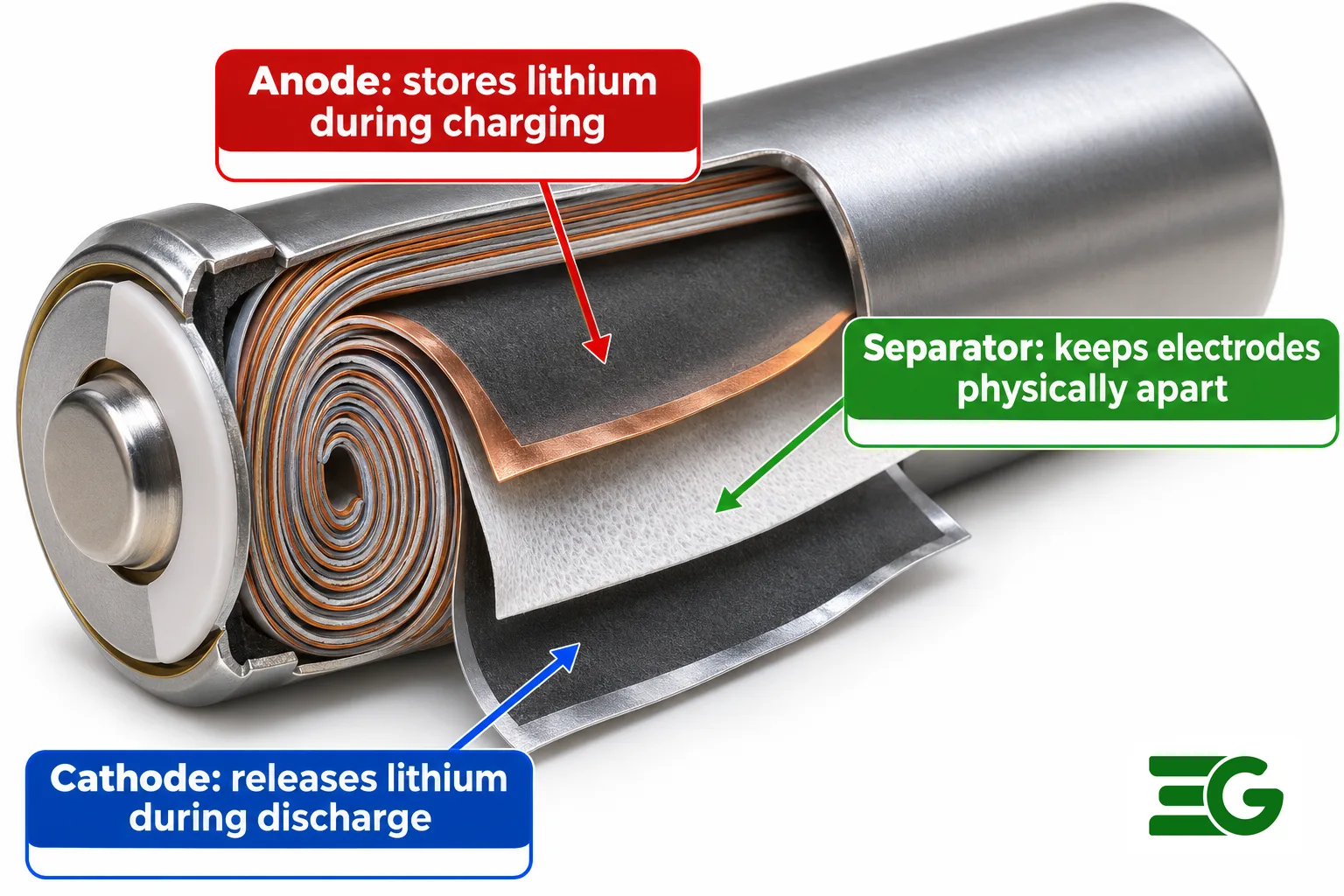
A battery converts chemical energy into electrical energy. Lithium ions move between electrodes within a rechargeable cell while electrons travel through the external circuit. A controlled charger reverses the process. Unlike a disposable primary cell, a rechargeable cell can repeat this cycle within the limits specified by its manufacturer. A bare cell is not a finished pack: the latter may include wiring, protection, a case and testing. We would never compare their prices without accounting for those parts.
Capacity versus discharge current
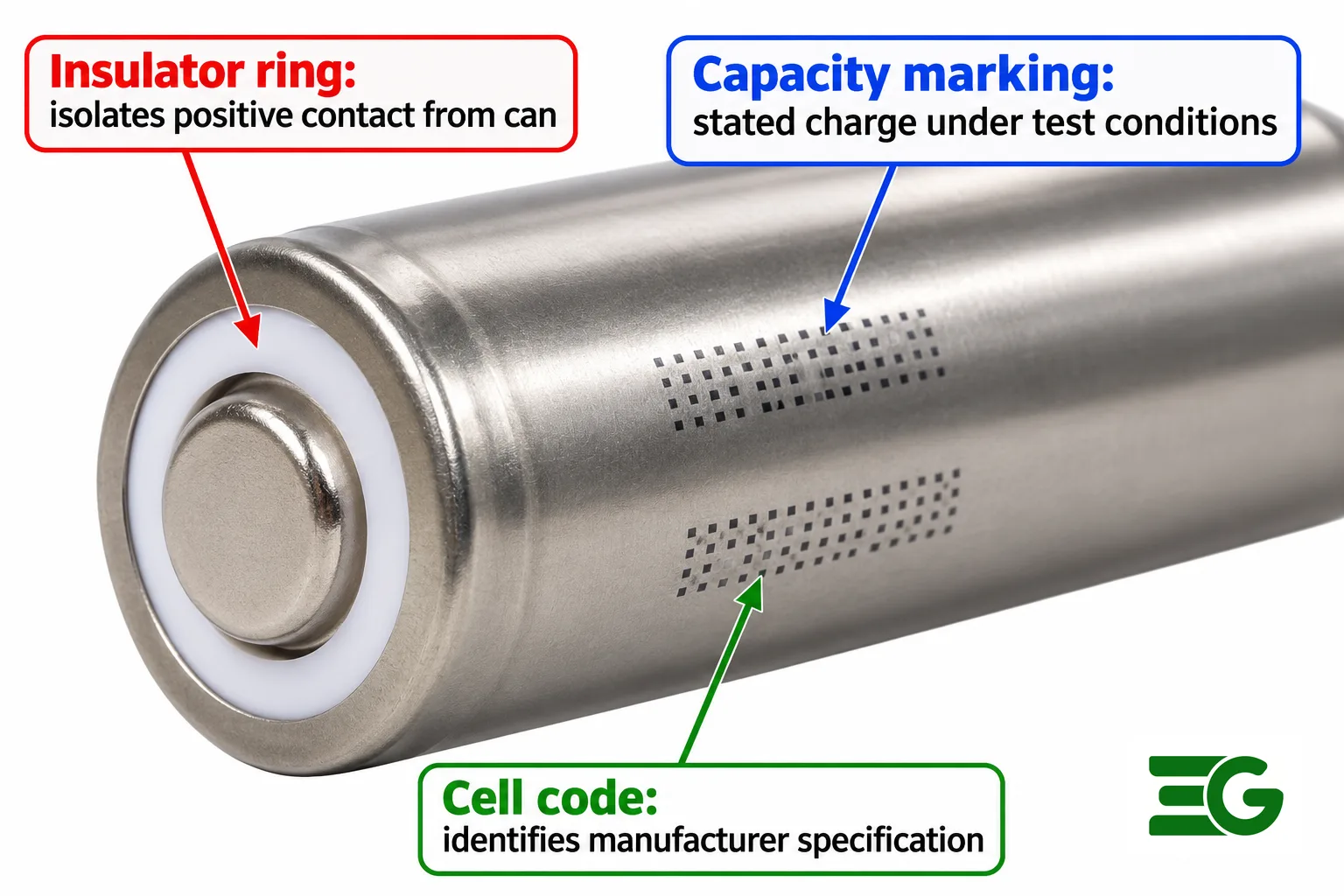
A 2600 mAh rating means 2.6 Ah under stated test conditions. It does not mean the cell can safely supply any current the load demands. Motors can draw far more current at startup than while spinning freely. Check continuous current, permissible pulses, temperature and the actual manufacturer part number. A cell with an impressive printed capacity but no traceable specifications is a poor purchase for a robot.
Why watt-hours matter
Energy in watt-hours is approximately nominal voltage multiplied by amp-hours. A 3.7 V, 2.6 Ah cell stores about 9.62 Wh on a nominal basis. A 12.8 V, 100 Ah LFP pack has approximately 1.28 kWh nominal energy. Actual delivered energy depends on discharge limits, load and temperature. Comparing Ah without voltage makes batteries with very different energy look deceptively similar.
Types of battery and their costs
Conventional lithium-ion and NMC
Many cylindrical cells have nominal voltages near 3.6 or 3.7 V. NMC chemistry can offer good energy density, but a familiar 18650 format tells you dimensions rather than authenticity, chemistry or discharge rating. Two identical-looking cells can behave differently under load. We prefer a documented cell from a traceable supplier to an unbranded cell with an exaggerated capacity claim.
LFP for larger storage systems
Lithium iron phosphate, or LFP, has a nominal cell voltage around 3.2 V. Four in series make a nominal 12.8 V battery. LFP is attractive for stationary storage, but the pack still needs suitable management and charging. Never assume a charger intended for conventional 3.7 V lithium-ion cells is compatible with LFP. The charge profiles differ.
NiMH, LiPo and lead-acid
NiMH rechargeable AA cells are generally around 1.2 V nominal, so device compatibility matters. Lithium polymer pouch cells suit slim electronics but need protection against swelling and puncture. Lead-acid is often cheaper upfront for inverter backup, though weight and usable energy can be disadvantages. Choose chemistry for the application before comparing quotations.
One practical way to verify a seller's specification is to ask for the exact cell model and then match its nominal capacity, voltage range and discharge rating against a manufacturer document. Generic listings sometimes mix specifications from different cells. If the seller cannot identify the model, treat the stated capacity as unverified. This matters most for motor projects, where current delivery can matter more than headline energy. We would rather buy a modest documented cell than an impressive unknown one.
Charging hardware deserves its own budget. A cell price may look attractive until you add a compatible charger, protection, holder and shipping. Check whether the device already contains charging electronics before buying a separate module. A power bank board, motor driver and simple battery holder are not interchangeable charging systems. When comparing two quotations, write down the total ready-to-use cost. That is the price relevant to your project, not the lowest number on a category page.
Think about operating temperature as part of the purchase decision. A battery kept near a hot window, inside a sealed plastic project box or next to a motor can behave differently from one tested in a laboratory. High temperature accelerates ageing, while cold conditions can reduce available power. Use the manufacturer's specified operating limits and leave room for safe mounting. We avoid placing loose cells where sharp metal edges or vibration could damage their insulation.
For larger packs, ask whether the capacity figure refers to the whole pack at nominal voltage and whether the supplier states usable energy. A battery can have a generous nameplate rating but reserve some capacity through its management system. That reserve may be sensible for service life, yet it affects your price per delivered kWh. Compare systems on the same basis. Also ask what happens when the pack reaches low charge: an abrupt shutdown may be unacceptable for critical loads.
Understanding the 3.7 v battery
Why a full cell reads 4.2 V
The 3.7 V printed on a conventional lithium-ion cell is nominal voltage, not constant output. Many compatible cells reach approximately 4.2 V at full charge and then decline during use. The exact limit comes from the datasheet. Voltage alone does not prove capacity or battery health. A multimeter reading near 4.2 V is not automatically a fault.
How low can discharge go
There is no universal safe minimum voltage for every lithium cell. Some models specify cut-offs around 2.5 V, while practical products may disconnect earlier. Deep discharge can damage a cell. Do not force-charge an unknown cell found at a very low voltage. Use the exact manufacturer's guidance, and remember that a BMS cannot repair damaged chemistry.
Protection boards and chargers
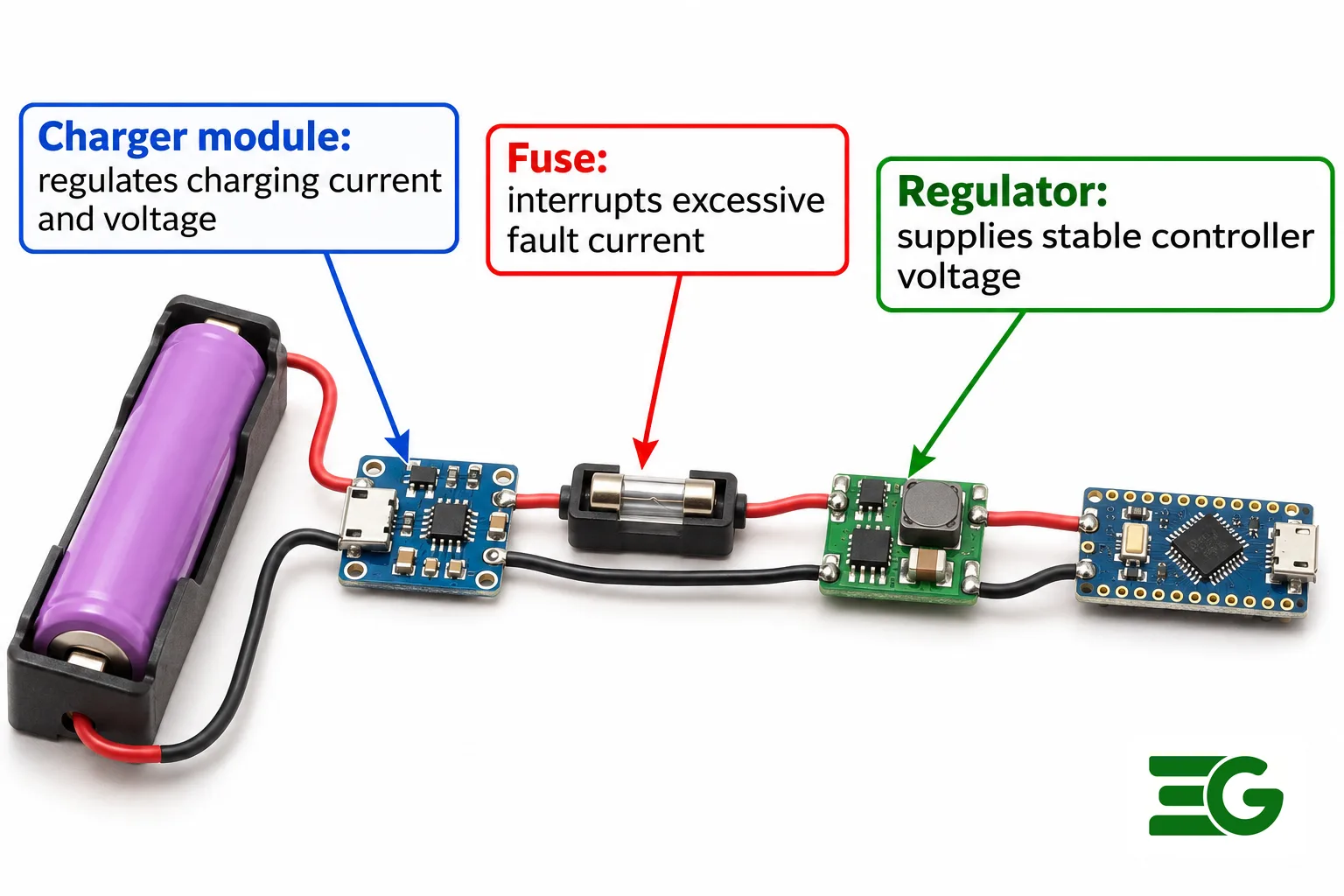
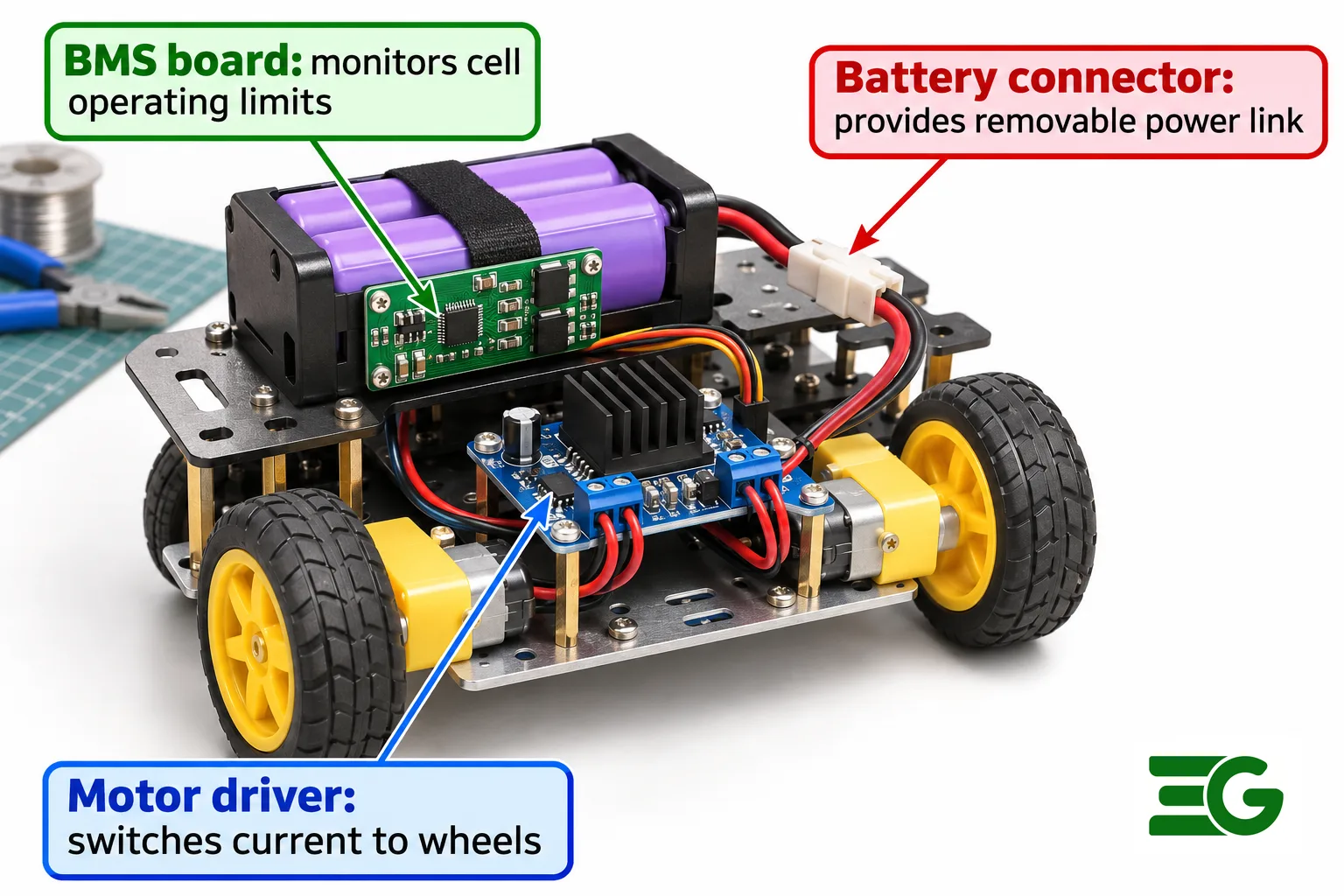
A BMS is not automatically a charger. Charging requires suitable current regulation, a chemistry-specific voltage limit and proper termination. Match the charger to series count and cell chemistry. On a student workbench, secure the holder, check polarity and consider a fuse. Do not solder directly onto an unprepared bare cell because excessive heat can damage it.
Li ion battery price in India in 2026
Observed retail cell prices
An Indian online listing for a generic 3.7 V 2600 mAh 18650 displayed ₹89, while a DMEGC 3.65 V 2600 mAh listing displayed ₹129. Another 2600 mAh cell was advertised at ₹199. These are observed examples, not guaranteed live checkout prices. Brand, authenticity, capacity verification, current rating, taxes and stock explain part of the variation. Ask for a datasheet rather than buying only by the lowest number.
What raises the pack price
A complete pack includes cells, interconnects, insulation, wiring, a BMS, connectors, testing and often an enclosure. Larger packs may also include thermal sensing and communication electronics. A 48 V inverter pack cannot be priced by simply multiplying a bargain cell price by its cell count. Request nominal watt-hours, usable energy, continuous current, chemistry and warranty terms.
Calculate price per kWh
Divide total price by nominal energy in kWh. A hypothetical ₹16,000 pack rated at 1.28 kWh works out to ₹12,500 per nominal kWh. Usable energy may be lower. BloombergNEF reported a global 2025 average pack price of $108 per kWh, with LFP averaging $81 and NMC $128. Those industry averages are not Indian one-piece retail quotations.
Li-ion versus lead-acid over five years
Upfront versus lifetime costs
Lead-acid often wins on initial price, particularly for infrequent backup use. Lithium may offer advantages in weight, usable energy, efficiency and cycle life when operated correctly. A five-year comparison needs realistic discharge frequency, ambient temperature and replacement assumptions. We would not promise a fixed payback without knowing how the battery will be used.
Calculate cost per delivered kWh
Add purchase, installation, maintenance, replacement and charging losses. Estimate total delivered energy across five years, then divide total ownership cost by that energy. A battery used only during rare outages may never recover a higher upfront cost. A daily solar storage system has different economics. Keep uncertain lifetime assumptions visible.
Check inverter compatibility
A lithium replacement is not necessarily compatible with an older lead-acid charger. Verify charge voltage, float behaviour, low-voltage cut-off, current limits and communication requirements. Summer heat in enclosed Indian cabinets can shorten battery life. Follow the manufacturer's installation and temperature limits.
Choosing batteries for robotics
Measure the load first
List operating voltage, average current and startup surge for every motor, sensor and controller. A 2S conventional lithium-ion pack is nominally around 7.4 V, but voltage changes with charge state. Check regulator limits at full charge and near cut-off. We prefer a measured current budget over assumptions based on no-load motor specifications.
Design a safe power path
Use a protected pack, suitable fuse, switch and voltage regulator. Match BMS chemistry and series count. Select connectors for expected current and secure wires against vibration. Motor startup current can cause a microcontroller to reset through voltage sag. A bigger printed mAh figure will not fix a poor regulator or loose wiring.
Test before the first run
Measure voltage and confirm polarity with a multimeter. Power the regulator first and verify its output, then add the controller and finally the motor load. Watch for voltage sag and unusual heating. Stop immediately if a cell swells, leaks or smells unusual. Never leave improvised lithium charging unattended.
An easy mistake is to use a voltage converter that is rated for the battery's nominal voltage but not its fully charged voltage. Conventional lithium-ion cells in series reach a higher voltage after charging. Read the converter's maximum input specification and leave an appropriate margin. Check current on the output side as well, because stepping voltage down raises the input-current considerations and creates heat. This is basic power design, but it prevents many unexplained resets and failed modules.
Battery safety is part of value. A protection circuit, a fuse and correctly sized wiring add cost but reduce the chance that a single fault becomes a dangerous event. Protection is not permission to ignore polarity, short circuits or physical damage. Store cells so their terminals cannot contact loose metal objects. Do not use swollen pouch cells. If a pack has been crushed or punctured, stop using it and follow appropriate local disposal guidance.
Retail prices move with availability, supplier and quantity. A one-piece order for a classroom prototype will not match the volume-weighted pricing in a global industry report. It is fair to use wholesale trends to understand direction, but not to demand that a local retailer sell one protected pack at a factory-scale average. Ask what the price includes and what documentation comes with the product. The best comparison is between two genuinely equivalent offers.
Before finalising an order, write a short requirements sheet: chemistry, minimum usable watt-hours, continuous current, peak current, voltage limits, charger, physical dimensions and operating temperature. Send the same requirements to each supplier. Their answers become much easier to compare than marketing descriptions. For a college project, this also creates a useful design record. If the project fails under load, you can revisit the actual electrical requirements rather than guessing which part was responsible.
Common mistakes and buying checklist
Unrealistic capacity claims
An implausibly large capacity printed on a standard 18650 deserves investigation. Ask for the manufacturer's part number, datasheet and continuous discharge rating. Do not mix old and new cells or different chemistries in one homemade pack. Cells with similar capacity can differ in internal resistance and ageing.
Missing parts and warranty
Check whether a listing includes protection, holder, charger, wires and connectors. Compare delivered prices including taxes and shipping. For a large pack, ask about BMS settings, warranty exclusions and replacement support. Applicable safety requirements depend on the product category, so do not assume every imported cell has identical certification.
Before you pay
Confirm chemistry, nominal voltage, watt-hours, continuous current, protection, charger and connector. Ask whether capacity is nominal or usable. For a weekend project, a reputable protected cell is usually a better choice than assembling a high-energy pack from unknown cells. For home backup, confirm inverter compatibility in writing.
Conclusion: compare usable energy before price
Practical recommendation
li ion battery price is meaningful only when comparing products with similar usable energy, current rating, protection and warranty. A ₹89 bare cell and a complete inverter pack are not substitutes. For electronics projects, buy a traceable cell or protected pack with the right charger. For home storage, calculate ownership cost per usable kWh and check installation compatibility. Browse ElectroGlobal rechargeable batteries for current component options.
Tagged