
battery definition: A Complete Beginner's Guide to How Batteries Work, Types of Cells, 3.7 V Lithium-Ion Options, Rechargeable Choices, Safety Checks and Practical Uses for Electronics Projects in India
A battery converts stored chemical energy into electrical energy. We explain how batteries work, popular cell types, key ratings and what to check before choosing one for your project.
battery definition: A Simple Introduction to Stored Electrical Energy
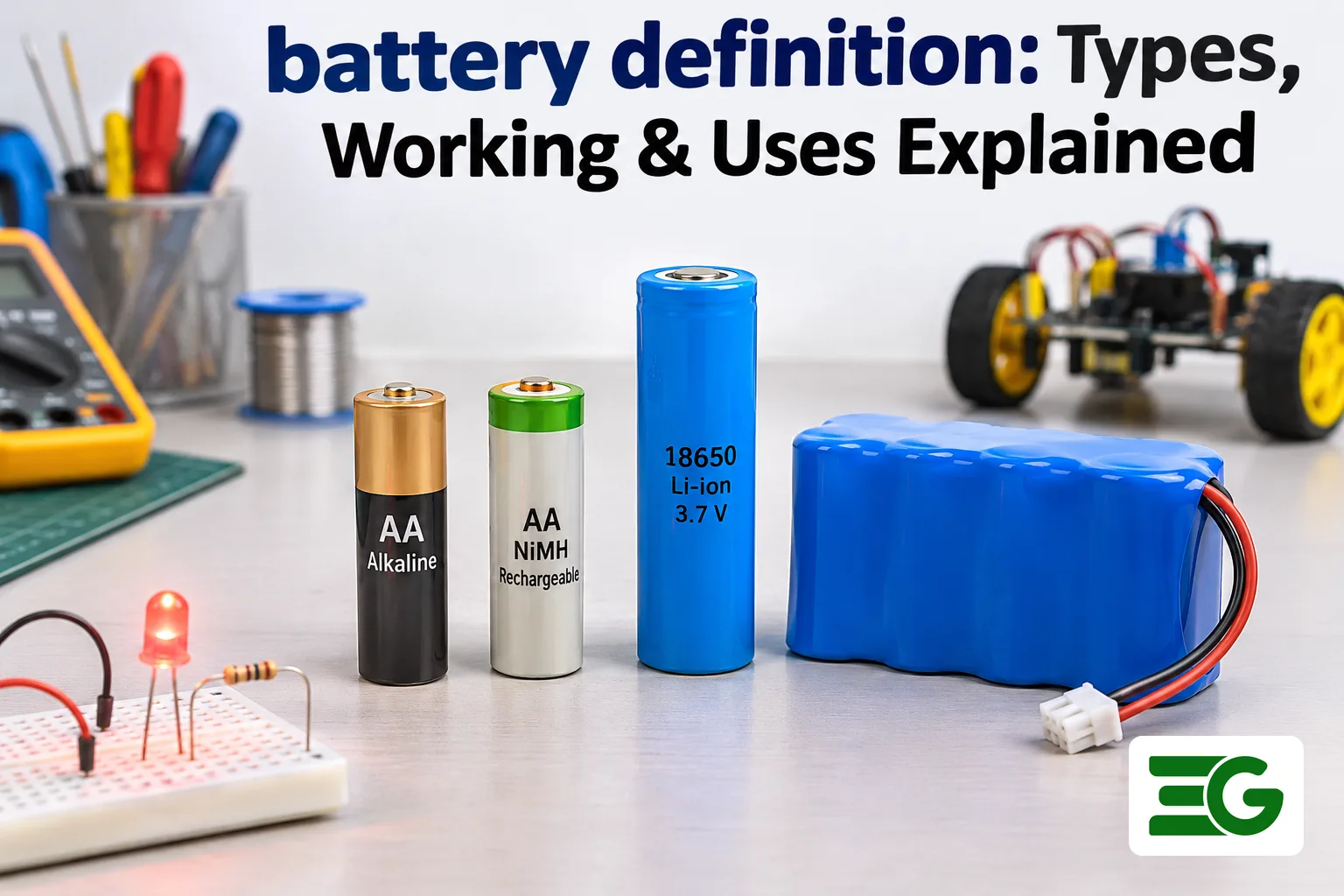
battery definition sounds like a schoolbook question, but it becomes practical the moment your torch dims, a robot car stalls or a wireless sensor stops reporting. A battery is a device that stores energy chemically and supplies electrical energy to a circuit. In everyday speech, even one electrochemical cell is called a battery. Strictly speaking, a battery may contain one or more cells.
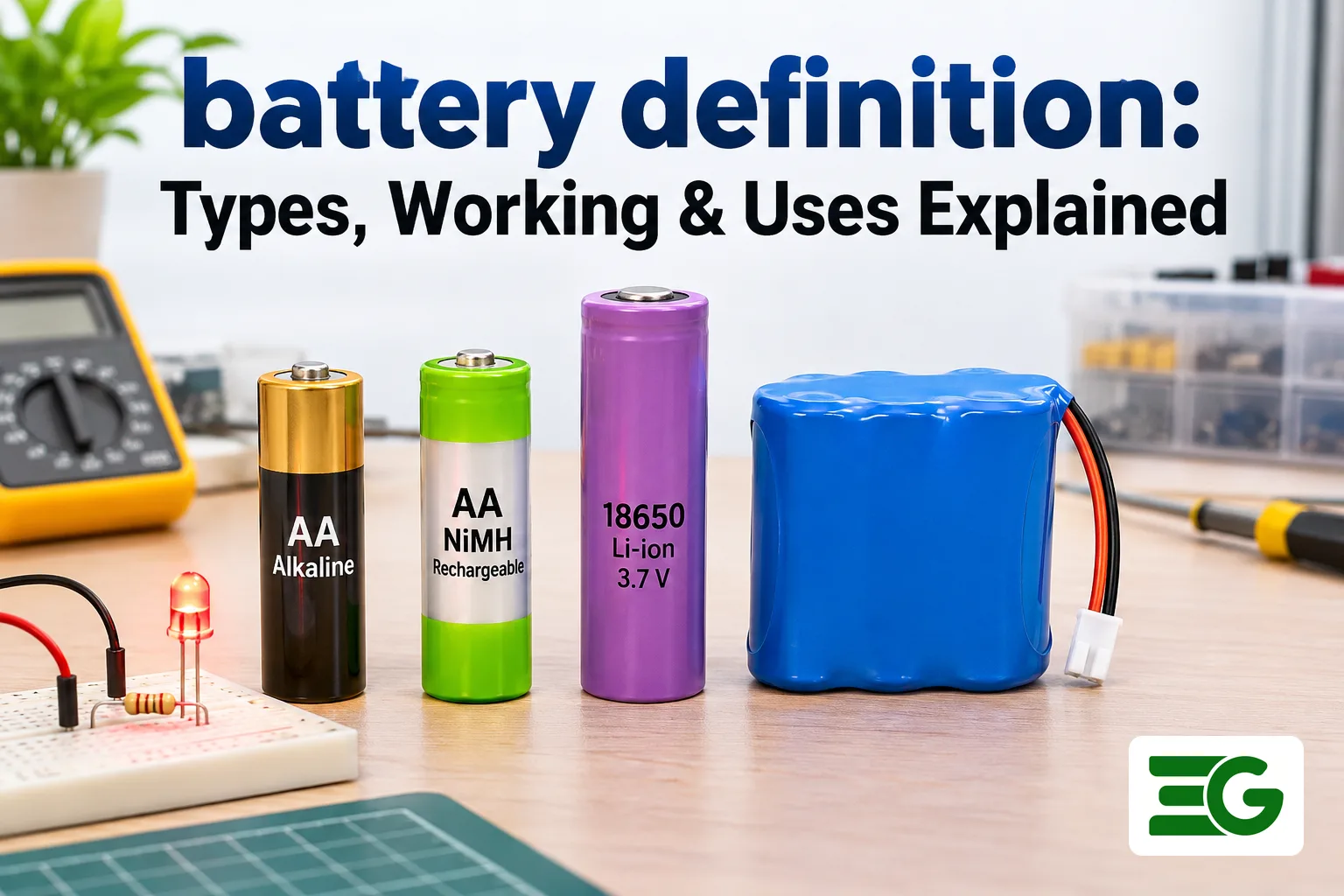
We see this confusion often when you compare AA cells, 18650 lithium-ion cells and ready-made 12 V packs. They look different, yet the basic principle is shared. Chemical reactions create a potential difference between two terminals. Connect a suitable load and current can flow. The battery is not creating energy from nowhere; it is converting energy already stored in its materials.
In this guide, we explain the parts, working principle, battery types, ratings, charging and selection checks that matter in Indian homes and electronics projects. We will also show why a cell labelled 3.7 V is not a drop-in replacement for every device using a 1.5 V AA battery.
What Is a Battery and What Does It Contain?
The electrical battery definition in one sentence
An electrical battery is an electrochemical source that delivers direct-current electrical energy through chemical reactions. The important words are electrochemical and direct current. Electrochemical means chemical processes and electrical movement are connected. Direct current means the battery presents a positive and a negative terminal rather than the alternating polarity of mains AC.
Cell versus battery: a useful distinction
A cell is one electrochemical unit. A battery can be a single cell or a collection of cells connected to provide the required voltage and capacity. An AA alkaline cell is commonly sold as a battery. A laptop battery pack contains multiple cells plus monitoring and protection electronics. Both uses of the word are normal, so read the label and specifications rather than relying on the name.
Anode, cathode, electrolyte and separator
Inside a typical cell are two electrodes and an electrolyte. During discharge, oxidation occurs at the anode and reduction at the cathode. Electrons travel through the external circuit, while ions move inside the cell to maintain charge balance. Many rechargeable cells also use a separator to keep the electrodes from touching while allowing ionic transport. The exact electrode materials and electrolyte depend on the chemistry.
The US Department of Energy explanation of batteries provides a helpful description of these chemical and electrical processes. It also explains why the reactions in rechargeable cells can be driven in the opposite direction during charging.
How Does a Battery Work in a Real Circuit?
What happens when you connect a load?
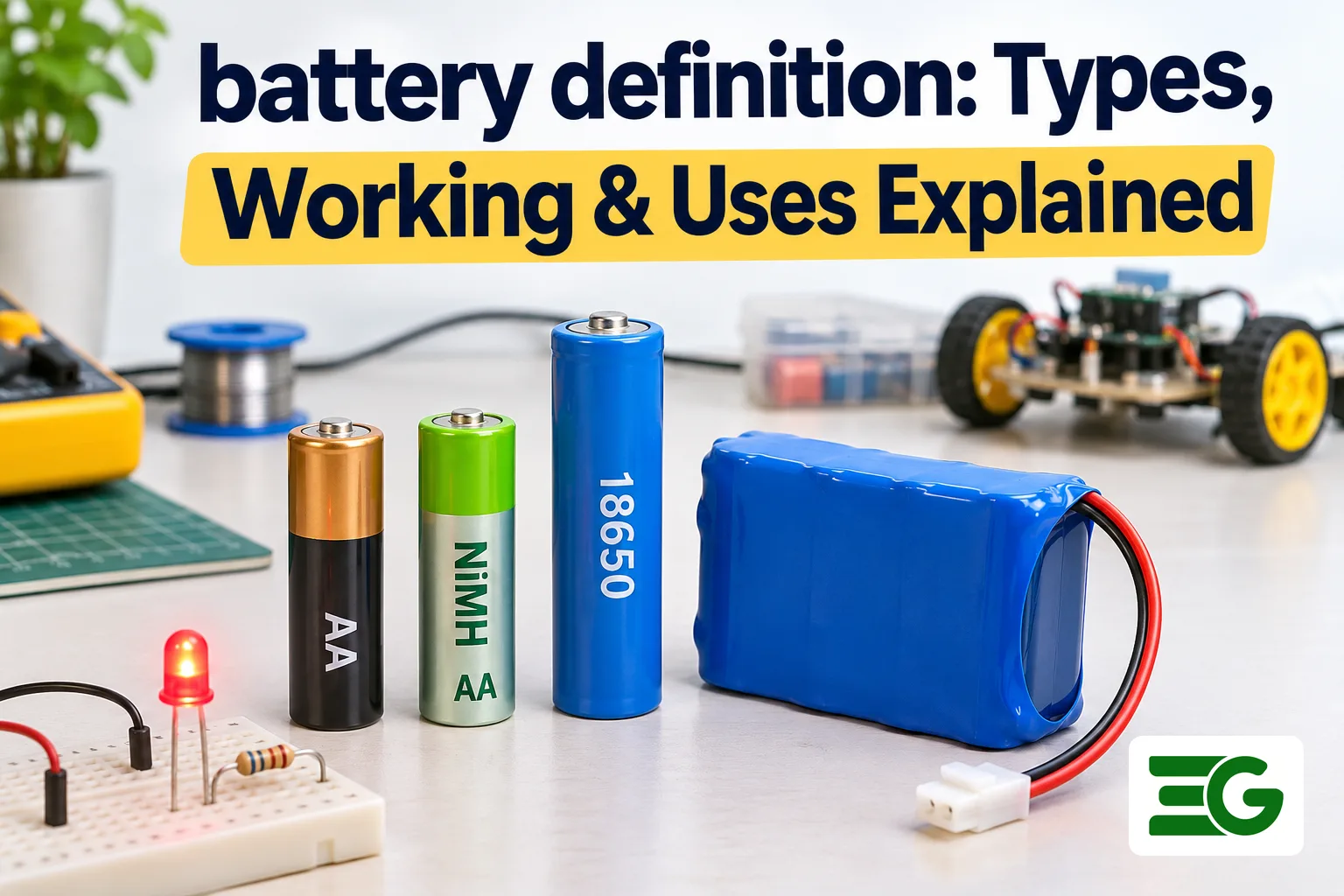
Imagine a small LED project with a battery holder, a suitable resistor and an LED. The cell maintains a voltage between its terminals. When the circuit is complete, charge moves through the external path and energy is transferred to the LED and resistor. The LED emits light; the resistor limits current. The cell's internal chemical reactions support the movement of charge until its usable stored energy is depleted.
Voltage is electrical potential, not stored capacity
Voltage, measured in volts, describes the potential difference available at the terminals. It does not tell you how long the battery will last. Two batteries can both be labelled 3.7 V while having different capacities, discharge limits, dimensions and protection arrangements. A higher voltage is not automatically better: it can damage a device designed for a lower supply.
Current depends on the circuit and the battery
Current is measured in amperes. A motor draws more current when starting or under load than it may draw while spinning freely. Your battery must be capable of delivering the required current safely. A large capacity figure alone does not prove it can handle motor start-up. Check the continuous discharge rating, peak limits where specified, wiring and connector rating.
Why a battery eventually runs down
As discharge proceeds, reactants are consumed or redistributed and the cell's voltage changes. Eventually it cannot maintain a useful output for the connected device. Rechargeable chemistry allows much of the reaction to be reversed using an appropriate charger, but no rechargeable cell lasts forever. Ageing, temperature and charging conditions gradually reduce its usable capacity.
battery definition and Types: Primary Versus Rechargeable
Primary batteries for occasional use
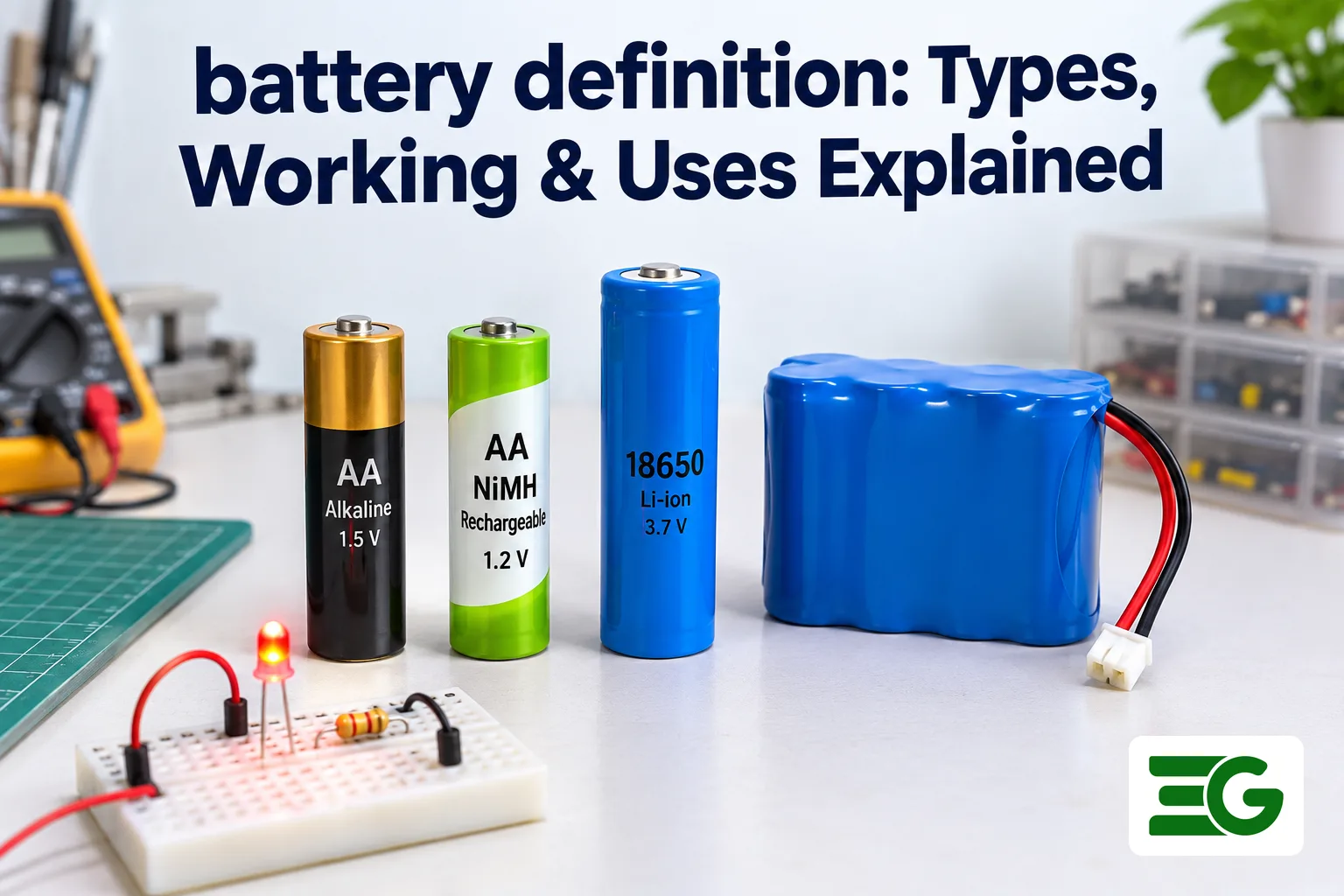
Primary cells are designed for one discharge life and are not normally recharged. Familiar examples include alkaline AA and AAA cells, zinc-carbon cells and many lithium coin cells. They can be convenient for a wall clock, remote or emergency torch because you do not need a charger. The trade-off is recurring replacement and disposal. Never attempt to charge a primary cell unless its manufacturer explicitly states it is rechargeable.
Rechargeable cell options for repeated projects
Secondary cells can be charged and used again with a compatible charger. Common families include nickel-metal hydride, lithium-ion, lithium-polymer and lead-acid. A 1.2 V nominal NiMH AA cell may suit equipment designed to accept rechargeable AA batteries. A lithium-ion cylindrical cell often has a nominal voltage around 3.6 or 3.7 V, depending on its specification.
How the major chemistries compare
| Cell or chemistry | Typical nominal voltage | Rechargeable? | Common use |
|---|---|---|---|
| Alkaline AA or AAA | 1.5 V | No | Remotes and torches |
| NiMH AA or AAA | 1.2 V | Yes | Frequently used household devices |
| Conventional lithium-ion cell | 3.6 or 3.7 V | Yes | Portable electronics and projects |
| LiFePO4 cell | 3.2 V | Yes | Storage and specialised packs |
| Lead-acid cell | About 2 V | Yes | Vehicle and backup battery packs |
These are representative nominal values, not universal operating limits. Chemistry, cell design and manufacturer specifications govern the actual charging voltage and usable discharge range. A 12 V lead-acid battery, for instance, generally uses six cells in series. A battery pack labelled 12 V may use a completely different internal arrangement if it uses lithium cells.
Pros and limits you should weigh
Primary cells are easy to replace and need no charging equipment, but repeated purchases create waste. NiMH rechargeable cells suit many repeated household uses, though their lower nominal voltage can matter in voltage-sensitive devices. Lithium-ion cells store substantial energy for their size, but demand careful charging, protection and mechanical handling. Lead-acid batteries are established for backup power, but they are comparatively heavy.
For examples of available chemistries and pack formats, browse our rechargeable batteries category and the broader batteries selection. Always compare the actual product datasheet, not just the product photo.
Reading a Battery Label Without Guesswork
Nominal voltage and full-charge voltage
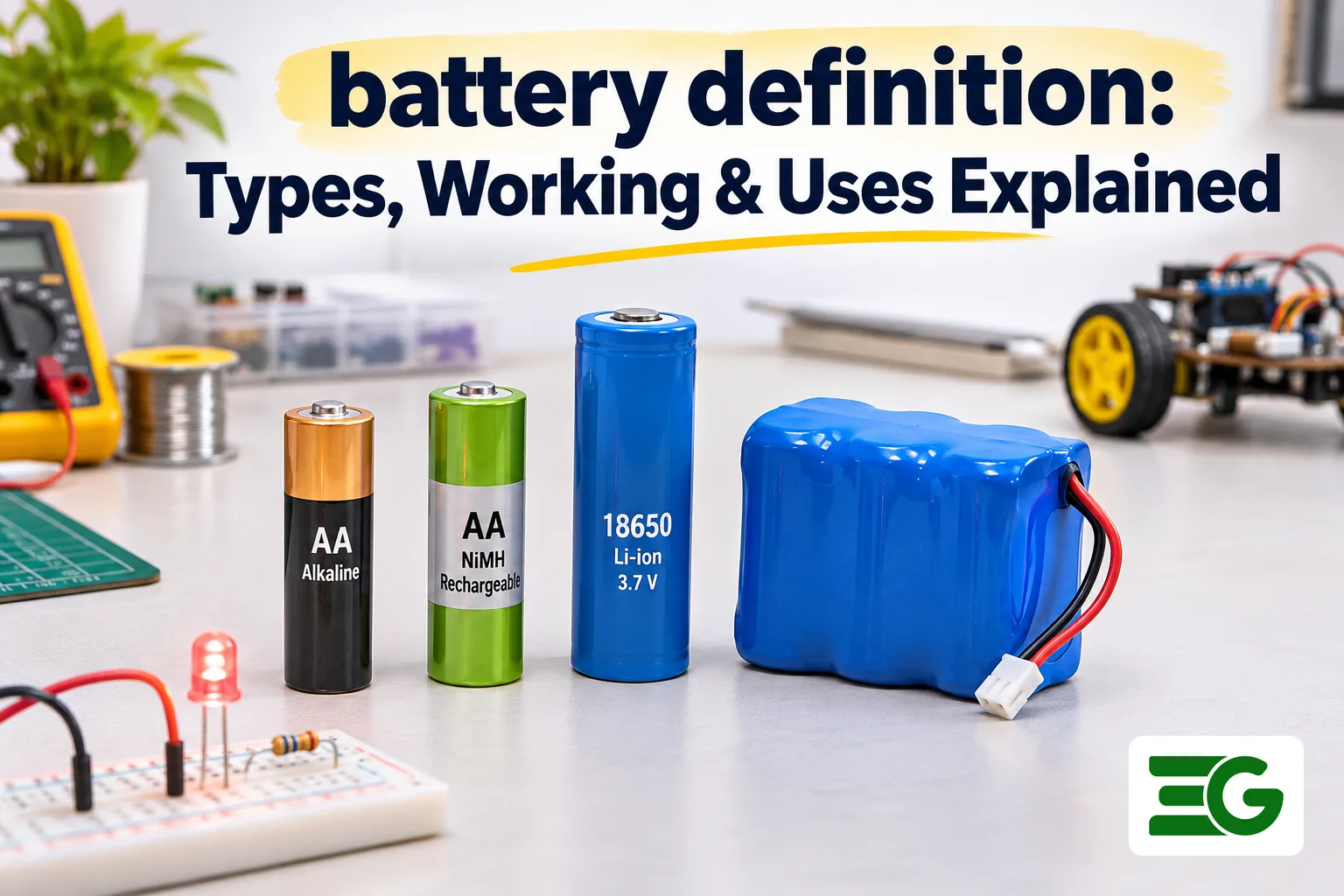
A conventional lithium-ion cell marked 3.7 V is identified by its nominal voltage. That is not necessarily the voltage you will measure immediately after charging. Many conventional 3.7 V lithium-ion cells use a 4.2 V charge limit, but other lithium chemistries and specialised cells differ. Never set a charger solely from the printed nominal voltage. Follow the manufacturer's approved charging profile.
Capacity in mAh and energy in Wh
Capacity is commonly shown in milliampere-hours. In an idealised calculation, a 2,000 mAh cell could supply 200 mA for about ten hours. Real runtime differs because of discharge rate, voltage cut-off, temperature, ageing and conversion losses. Watt-hours better describe stored energy across different voltages. For an approximate calculation, multiply nominal volts by ampere-hours.
For example, a nominal 3.7 V, 2,000 mAh cell has about 7.4 Wh of nominal energy. That does not mean your device can use every watt-hour. A voltage regulator consumes some energy and the device may stop working before the cell reaches its permitted discharge limit. Treat this arithmetic as a planning estimate, not a runtime guarantee.
Discharge rating, protection and dimensions
For motors, drones and power tools, continuous discharge current is especially important. A cell's capacity does not replace its current rating. Check whether the pack includes protection against overcharge, overdischarge and short circuits. Check physical size too: 18650 identifies a common cylindrical form factor, but protected versions can be longer than unprotected cells.
Why li ion battery price varies
When you search for li ion battery price in India, you may see very different figures for items that look similar. Capacity, verified performance, discharge capability, protection circuit, connectors, cell authenticity and whether you are buying one cell or a complete pack all influence cost. A lower price does not establish equivalent safety or performance.
Our current battery pack accessories and protection options show how holders, connectors and BMS modules are separate considerations. Compare the complete bill of materials, including charger and enclosure, before deciding what is affordable.
How to Choose a Battery for Your Electronics Project
Start with the load, not the battery photograph
Before choosing a cell, read the input voltage range on your development board, motor driver, sensor or finished device. A board that accepts 5 V through USB may not accept a raw 3.7 V cell on that same input. Likewise, a motor's rated voltage and start-up current matter more than whether the battery fits inside your chassis.
A practical seven-step selection checklist
- Write down the device's required voltage range and expected operating current.
- Measure or estimate peak current during motor start-up, radio transmission or other demanding events.
- Choose a suitable chemistry and nominal voltage; plan a regulator where needed.
- Estimate runtime from capacity or watt-hours, allowing for realistic losses.
- Check continuous discharge rating, connector polarity and wire thickness.
- Confirm a compatible charger, protection arrangement and safe enclosure.
- Test the assembled system under supervision, checking voltage, heat and shutdown behaviour.
A simple Indian classroom robot example
Suppose you are building a two-motor robot car for a college demonstration. First inspect the motor driver's permitted supply range and the motors' rated voltage. Next determine the start-up current. Only then select a protected battery pack and suitable connectors. If your microcontroller needs a regulated supply, use an appropriate converter instead of assuming the motor supply is suitable for every component.
battery definition in Practice: Charging, Safety and Care
Use a charger made for the exact chemistry
Charging is not simply connecting any higher-voltage supply to a cell. Different chemistries require different charge control methods and termination conditions. Conventional lithium-ion cells generally use controlled constant-current and constant-voltage charging. NiMH and lead-acid systems use different approaches. A charger intended for one chemistry may be unsafe for another even when the connectors fit.
Protection boards are helpful but not magic
A battery management system or protection circuit can help prevent certain electrical faults. Its features vary by product. Some modules monitor cell voltage and current; some multi-cell systems also provide balancing. A BMS does not make damaged cells safe, replace correct charging, or excuse poor wiring. Read the exact board specifications and confirm that the protection thresholds match your cell chemistry.
Store and handle cells carefully
Keep loose cells away from keys, coins and metal tools that could short the terminals. Do not puncture, crush, overheat or dismantle lithium-ion cells. Avoid using swollen, leaking, unusually hot or physically damaged batteries. For long storage, follow the manufacturer's recommended state of charge and temperature guidance. Dispose of exhausted cells through an appropriate battery collection or recycling route.
What if the battery seems dead?
Start with safe external checks: inspect the device contacts, confirm polarity and measure terminal voltage using a meter if you know how to use it safely. A low reading alone does not identify the fault. The battery could be discharged, aged or disconnected by its protection circuit. Do not force-charge an unknown or deeply discharged lithium-ion cell. Follow the manufacturer's service instructions or replace it.
For a general explanation of rechargeable technology and its applications, see the overview of rechargeable batteries. Use manufacturer documentation for the actual limits of any cell or pack you buy.
Common Battery Mistakes and What to Do Instead
Replacing a 1.5 V AA with a 3.7 V lithium cell
These products can look deceptively similar in photographs. Yet a 3.7 V nominal lithium-ion cell operates at a much higher voltage than a 1.5 V alkaline AA. Direct substitution can damage electronics. Check the voltage range, dimensions, connector arrangement and whether the device specifically supports lithium-ion batteries. Physical fit is never enough.
Assuming more mAh always means a better battery
Capacity matters for runtime, but it is only one rating. A small motor may require a burst of current that a high-capacity, low-discharge cell cannot provide safely. Another cell with a lower capacity but suitable current rating may be a better choice. We also recommend checking the credibility of unusually large capacity claims on small cells.
Connecting cells in series or parallel without a plan
Series connections raise pack voltage; parallel connections can increase available capacity and current capability when engineered correctly. Both arrangements require compatible cells and appropriate protection. Mixing old and new cells, different chemistries or significantly different states of charge creates risks. For beginners, a professionally assembled protected pack is usually more sensible than improvising a multi-cell assembly.
Confusing charger voltage with device voltage
A battery's charging requirements and a device's operating input are separate questions. A single lithium-ion cell may need a controlled charger with a higher terminal voltage than its nominal rating, while the attached microcontroller may need a steady regulated voltage. Design these paths independently and verify the wiring before switching on.
Where Batteries Make the Biggest Difference in India
Household devices and backup use
Clocks, remotes, torches and wireless accessories use small cells because portability matters. Home inverters and UPS systems use larger batteries because they must support higher loads for longer periods. Choosing between these applications starts with power, runtime, available space and maintenance needs. A cell that is ideal for a torch is not automatically appropriate for a backup system.
Learning kits, IoT and field sensors
For student projects, batteries let you demonstrate circuits away from a laboratory power supply. For an outdoor sensor, low standby current can matter more than the highest possible peak output. A remote node that wakes briefly to transmit data has a different power profile from a robot that drives continuously. Measure the real duty cycle before estimating battery life.
Comparing the result rather than the label
Imagine two portable projects with identical nominal voltage labels. One uses a radio module that sleeps most of the day. The other drives a speaker continuously. Their runtimes will differ dramatically, even with the same battery capacity. The useful question is not simply 'Which battery is strongest?' It is 'Which battery can deliver my required voltage, current and runtime safely?'
Conclusion: Match the Battery to the Job
A battery stores energy chemically and releases it as electricity. Once you understand cells, voltage, capacity, discharge current and charging requirements, choosing a battery becomes much less confusing. Primary cells suit simple occasional use; rechargeable technologies suit repeated use when you have the right charger and protection. Neither is universally best.
Before buying for your next Indian electronics project, note the device voltage, peak current and desired runtime. Then compare compatible options in our rechargeable battery range and check the exact cell or pack specifications before connecting it.
Tagged