
Swollen 4s LiPo Battery Issues and Maintenance Best Practices
Learn how to maintain your 4s LiPo battery and prevent swelling. Explore safe charging for 3s and 3000mAh LiPo batteries. Improve performance now!
May 2026By ElectroGlobal Team10 min readSEO
Table of Contents
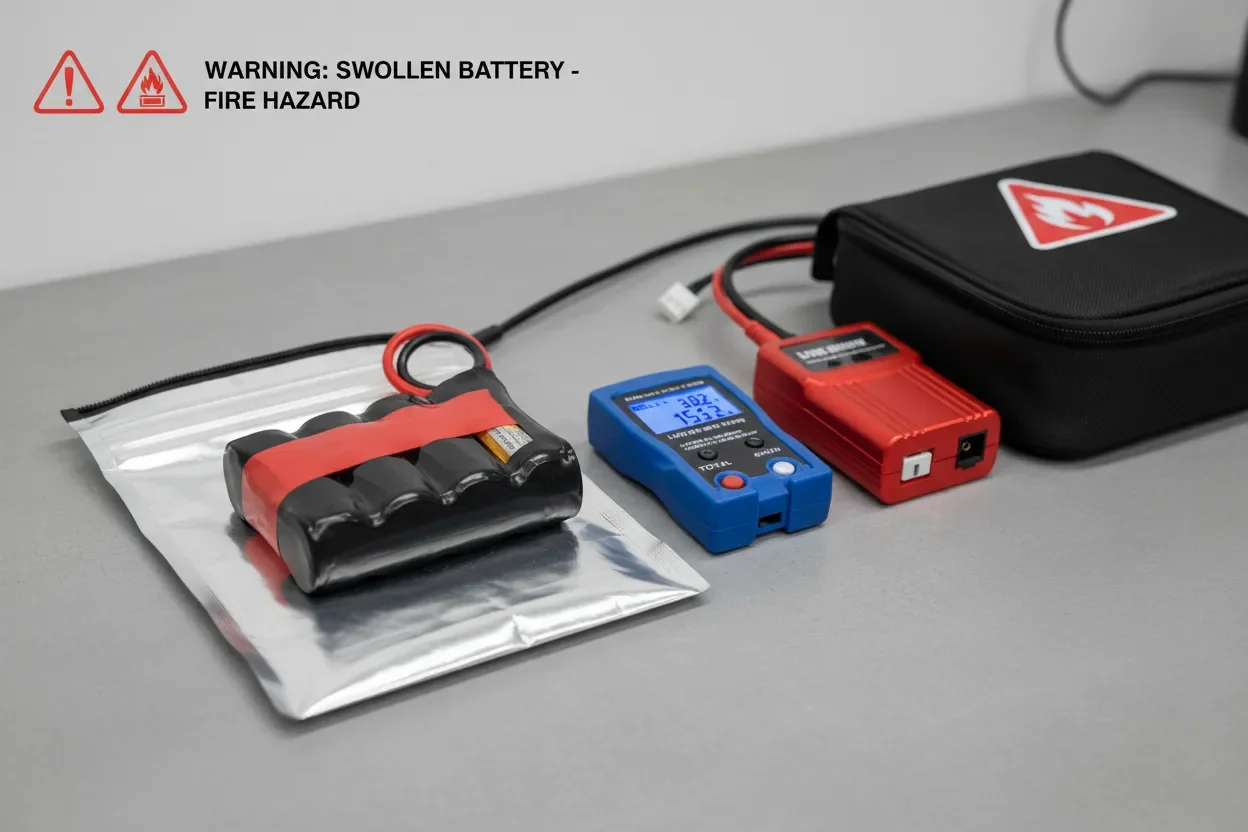
Spotting a swollen 4s lipo battery? That’s a red flag you can’t ignore, whether you’re running embedded systems or tinkering with portable gadgets. If your prized 3000mah lipo battery looks puffy, there’s trouble brewing. Swelling kills battery performance and lifespan. Even worse, it’s a serious fire hazard—there’ve been hundreds of electronics fires worldwide, just because of battery swelling. Using a trusted lipo battery charger and good battery habits really is your first layer of safety.
Around here at Electro Global, we’ve watched a neglected lipo battery puff up, warp PCBs, break connectors, or waste entire project sprints. One accidental overcharge above 4.2V/cell will swell the pack and gut its capacity for good. You’ve got to know the causes, spot the early warning signs, and use the right safety steps if you want your gear to last—especially with 3S or 4S lipo batteries.
This guide covers spotting swelling, what starts it, how to charge/store 3S and 4S packs safely, the voltage and shutdown numbers that matter, and a quick checklist you can actually use to avoid the headache of puffy LiPos in any electronics project.
Key Takeaways
Avoid any charging above 4.2V per cell to prevent irreversible swelling and capacity loss.
Always use a certified lipo battery charger with balance charging for 3S and 4S packs.
Store all lipo batteries at 3.7-3.8V per cell for longer lifespan and lower swelling risk.
Never charge batteries unattended, especially in hot environments above 45°C.
Inspect battery packs regularly for deformation, weight gain, or connector misalignment.
Replace any swollen or puffy battery immediately to prevent fire and equipment damage.
-0bf15cb2-5ac3-47de-a7ac-31d8ce5171ad.webp)
Understanding 4s lipo battery Causes and Risks
battery swelling4s liposafety
Why 4S LiPo Batteries Swell
Swelling starts inside your 4s lipo battery when gases build up in the cells. This usually happens from overcharging, deep discharging, or physical knocks. Each 4S battery has 4 cells in series (14.8V nominal, 16.8V full). Push even one cell above 4.2V just once, and the chemistry starts breaking down, releasing gas that never goes back in.
Tests show—it only takes one overcharge for swelling to become permanent. Running a 3000mah lipo battery with high current, cheap chargers, or poor airflow increases your risk further. Drone crashes, RC car flips, and hot-climate fast charging can all kick off swelling. In Indian summers, rapid charging is a big cause—seen it too many times.
Risks Associated with Swollen LiPo Batteries
Swollen batteries aren’t just annoying—they’re dangerous. They bend connectors, warp PCBs, and if you ignore them, can actually catch fire. Swelling pushes on the battery shell and solder joints. If it ruptures, it can vent flammable gas. That’s caused hundreds of fires in laptops, toys, drones, and robotics kits worldwide.
If you’re building robots, drones, or anything portable, a swollen battery can mean downtime or a dead device. Plenty of drone operators in India had to ground their rigs after charging 4S packs too quickly in the heat—no one’s risking a project-killing fire. Bottom line: Spot swelling early and take it seriously.
Safe Charging Tips for lipo battery Chargers: 3S and 4S
charging safety lipo charger temperature
Using Certified LiPo Battery Chargers
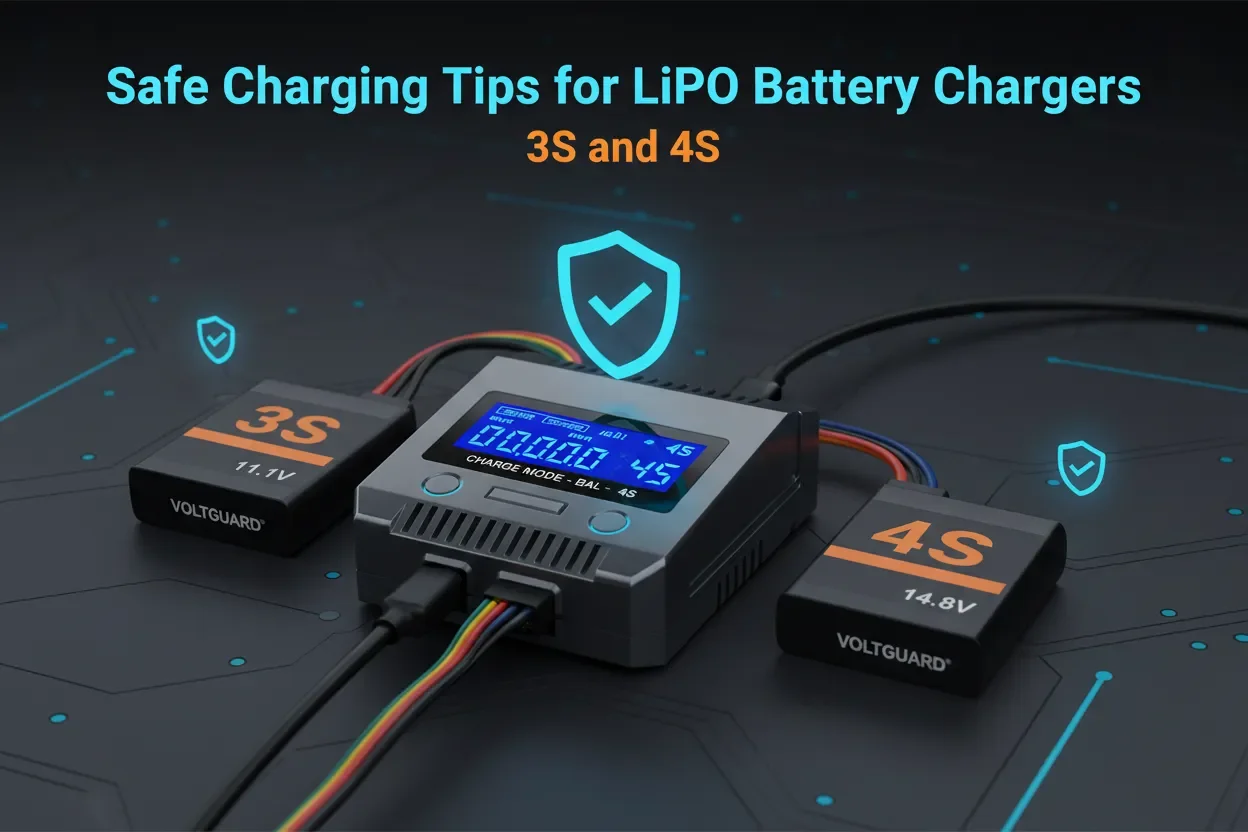
A proper lipo battery charger keeps every cell in your pack balanced. Both 4S and 3S batteries absolutely need this—if one cell goes above 4.2V, swelling can start. For example, a 3s lipo battery (11.1V nominal, 12.6V max) puffs up just like a 4S if you use a random charger or skip the balance lead. Go with a certified charger, and your battery could last 40-60% longer than with a local no-name.
Here’s the simplest safe charging routine:
Plug in both the main and balance connectors to the charger—never skip the balance lead.
Triple-check the charger’s set to the right cell count for your pack (3S or 4S).
Stick to the recommended charging rate—usually 1C, unless the battery approves higher.
Watch the screen: if any cell voltage crosses 4.2V or one lags behind, pause charging.
Expert Tip: For your 3000mah lipo battery, 3A charging (1C) is safe. Only use 'fast charge' if the battery’s datasheet gives you the green light.
Impact of Environmental Factors During Charging
Heat is a silent battery killer. Charging or using your batteries in 45°C+—think midday in Delhi—breaks down the inside chemistry, causing swelling much faster. Swollen cells actually get heavier by 5-15% due to trapped gases. Never leave a lipo battery charging alone or on a wooden desk.
DIYers in Bangalore found far fewer swelling incidents once they switched to charging in a cool, well-ventilated room and always used balance chargers for their 3S and 4S packs. Worth remembering: a few degrees cooler really does keep your batteries healthy.
-a7124f07-e686-41a8-9945-d3164c1a209a.webp)
Maintenance Practices for lipo battery Swelling Control
battery maintenance storage inspection
Proper Storage and Handling Guidelines
If you want to dodge swelling and get the most life out of your packs, store all LiPos—3S, 4S, whatever—at 3.7V to 3.8V per cell (about 50% charged). Don’t leave them fully juiced or fully drained in storage, especially in the heat—side reactions go wild and wreck your cells fast.
Try this:
After use, set packs to storage voltage using your charger’s storage mode.
Keep batteries in a fireproof, airy box—not a sealed toolbox, not squished with other gear.
Don’t stack or squash packs—physical pressure equals stress, which leads to swelling.
If you’ve got a robotics project running multiple 3000mah lipo battery packs, check each one monthly for puffiness or weight changes. It’s a 5-minute job that can save your hardware.
Routine Inspection and Replacement Criteria
Catch swelling before it becomes a problem. Check for: thicker cases, odd shapes, more weight than usual, or packs not fitting the slot. Use a digital scale—5-15% weight gain can be your first clue. In compact embedded gear, even a couple millimeters of swelling can bend boards and snap connectors.
Physical nicks are behind about 15% of swelling cases, especially with field installs. Replace anything that looks puffed—even if charge seems OK. Some Hyderabad devs found PCB-mounted 4S batteries swelled just enough to disconnect sockets and cause random resets. Swapping suspect packs on a set schedule kept their gadgets running with way fewer headaches. Bottom line: Regular inspection beats emergency repairs every time.
Comparing 3s lipo battery vs 4S: Voltage and Swelling Prevention Checklist
3s vs 4sswelling checklist voltage management
Voltage Specifications and Swelling Thresholds
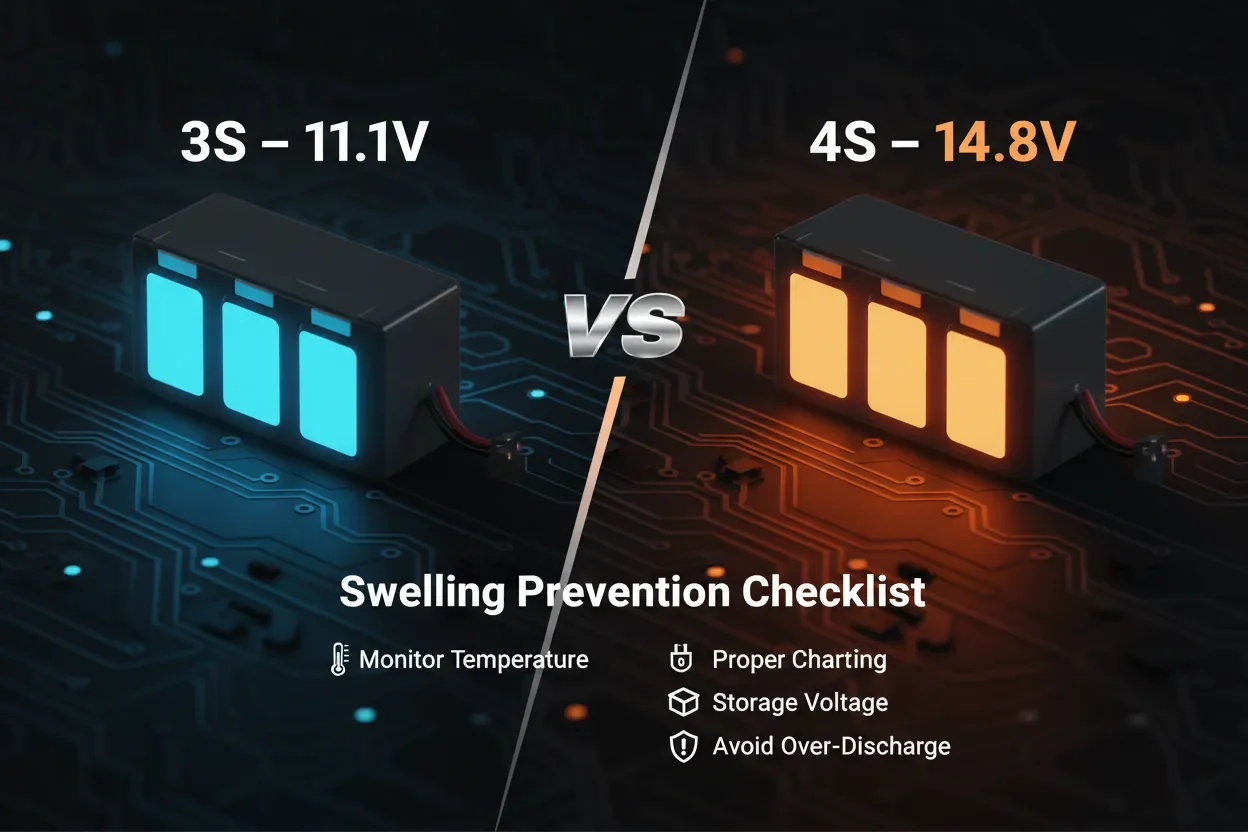
All LiPo cells work the same way, but 3S and 4S have different voltage numbers. A 3S is 11.1V nominal (12.6V max); a 4S is 14.8V nominal (16.8V max). No cell should ever cross 4.2V or drop under 3.0V—either can start swelling that’s impossible to undo.
Watch out for these:
Charging over 4.2V/cell triggers swelling and kill’s the battery’s best cycles.
Draining packs below 3.0V/cell stresses cells. After a few deep cycles, gas forms quickly.
If you’re working outdoors or near hot machines, check packs after every run—heat stress is real.
Built-in balancers and protection chips help, but once swelling starts, there’s no fix. Worth remembering: Prevention is everything here.
Checklist for Preventing Swelling in 3S vs 4S Packs
Swelling Prevention Checklist for 3S / 4S LiPo Batteries
Always use certified balance chargers for every charge/discharge cycle.
Confirm correct cell count on charger (3S = 3 cells, 4S = 4 cells) before powering up.
Store all packs at ~3.8V/cell (50% charge) between sessions; never store fully charged.
Never leave batteries unattended during charging or discharging, especially above 45°C ambient temperatures.
Inspect batteries for swelling, connector stress, or enclosure pressure monthly or after any incident/impact.
Replace any battery with puffiness, weight gain, or cell voltage spread >0.1V between cells after full charge.
Folks in a Mumbai robotics lab found their 3S packs were easier to manage for low-voltage kits. But they learned fast—chemistry matters less than sticking to this checklist. That’s what kept their bots running and their battery budget in check. Bottom line: Good practice beats luck every time.
Frequently Asked Questions
What is a 4s lipo battery and how is it different from a 3s lipo battery?
4s lipo battery = four cells in series, 14.8V nominal. 3s lipo battery = three cells, 11.1V nominal. More cells means higher voltage out of the box. Both will swell if cell voltages aren't balanced, so you’ve got to monitor them equally well.
Why do lipo batteries swell and is it dangerous?
Swelling means gas is building up inside the battery, usually from overcharging, deep discharge, or knocks. Swollen packs are dangerous—they can leak, catch fire, or even pop if shorted. Never ignore swelling; replace that battery ASAP.
How can I safely charge a 3000mah lipo battery and avoid swelling?
Use a good lipo battery charger, always with the balance plug in. Set charging current to 3A (that’s 1C for 3000mah lipo battery). Don’t go higher unless your battery’s datasheet says it’s safe, and never leave it charging alone.
What storage voltage should I aim for with lipo batteries to minimize swelling?
Aim for 3.7-3.8V per cell before you put the battery away for a while. Don’t leave packs fully charged or empty in storage. This helps prevent swelling, keeps side reactions down, and extends battery life a lot.
Can a swollen lipo battery still be used if the device works?
Never. If your lipo battery is swollen, don’t use it—even if your gizmo powers up. Swelling means internal damage and a fire hazard. Replace it right away, no exceptions. Safety first, always.
Are there differences in swelling risk between a 3s lipo battery and a 4s lipo battery?
Most swelling risk comes from cell voltage problems, not how many cells. Both 3S and 4S can swell if you ignore charging rules or if it gets too hot. What matters is the care you take with voltages and balance charging.
How do I check if a lipo battery is swelling?
Look for puffiness or bulging—if it looks fatter, it probably is. Weigh it on a digital scale; 5–15% weight gain means swelling is starting. If the battery’s hard to fit back into its slot, you’ve definitely got swelling.
What are the main causes of lipo battery swelling in embedded or PCB-mounted applications?
Most PCB-mounted lipo batteries swell from overcharge, wrong storage voltage, high heat, or pressure from the enclosure. Even a little swelling can push connectors or warp boards, causing electronics to glitch or fail.
Is fast charging safe for high-capacity 3000mah lipo batteries in India?
Only if both your battery and charger say so in writing! With Indian heat, even “safe” packs can swell if pushed too hard. Best rule: Stick to 1C (3A for 3000mah lipo battery) unless you see “fast charge” in the datasheet.
Why do manufacturers recommend replacing puffy lipo batteries immediately?
Because once a lipo is puffy, its internals are damaged. Short circuits and fires are way more likely from swelling. That’s why every battery brand says to replace a swollen battery right away, even if it still seems to work.
How should I dispose of a swollen lipo battery?
Don’t throw it in the bin. Discharge it completely (best to use a resistor or special discharger), tape the terminals, and take it to an e-waste center or battery recycler. Swollen batteries can’t be dumped with household garbage—they’re a fire risk.
Can I fix or “un-swell” a puffy lipo battery at home?
Nope, there’s no DIY fix for swelling. Gas is trapped inside the cells and can’t be reversed. Trying to “burp” or squish the battery back is dangerous—just retire it safely and get a new one.
Take good care of your 4s lipo battery and you’ll get longer life and steady power for all your builds. From drones to robotics, to those tricky embedded projects—a bit of battery discipline keeps your gear safe and your work flowing.
Stick to these charging, storage, and inspection habits, and you’ll avoid most swelling drama. Electro Global is here for battery tips, reliable gear, and answers—whenever your next question pops up. Browse our store for trusted lipo battery chargers, rugged 3000mah lipo battery packs, and real engineer support to help you build with confidence.
If you want more deep-dive technical info (or just enjoy battery geekery over chai), check out this guide on 3s lipo battery chemistry and proper voltage limits. Stay safe and keep building!
Related Content
Related Products
From the Blog
- Complete LiPo Battery Safety Guide for Engineers and Hobbyists
- 3s LiPo Battery Capacity Explained for Electronics Projects
- Optimize ESP32 Battery Life with a 3000mAh LiPo Battery
- Choosing the Best 3.7 V LiPo Battery 2000mAh for Reliable DIY Electronics
- Understanding LiPo Battery Charger Balance Charging for Optimal Safety and Performance