
Is 6000 mAh Battery Mobile Worth It For Smartphones in 2026
Explore if a 6000 mAh battery mobile with 6000 mAh lithium ion battery is worth it in 2026. Discover battery life benefits and tech insights. Learn more now!
Thinking about picking up a 6000 mah battery mobile in 2026? You’re honestly in good company. Even as chips and screens sip a bit less power every year, high-capacity batteries are still a favorite topic for anyone who hates reaching for the charger by lunchtime. New 6000 mah lithium ion battery designs promise up to 2.5 days per charge—at about 100g extra weight. Sounds great, but is bigger really better, or are there tradeoffs you shouldn’t ignore?
Each year, battery energy density gets a solid 5–7% bump. Here in India, there’s steady demand for long 6000 mah battery life, so brands are all-in on smarter battery cell arrangements and faster charging. Our Electro Global engineers see the total battery pack affecting everything from phone thickness and cost to PCB design and long-term reliability. Want a wild stat? In 2026, over 40% of new phones launched in India have at least a 6000 mAh cell. Clearly, all-day runtime isn’t just nice—it’s essential, especially outside big cities.
Here’s what you’ll get from this guide:
- How long a 6000 mAh phone actually lasts in daily use
- Real-world impact of fast charging and BMS on battery health
- The real design tradeoffs—what engineers actually face
- Cost, size, and weight realities of 6000 mAh battery packs
- How Indian brands and rural users shape 2026 battery trends
Key Takeaways
- Expect 1.5 to 2.5 days real use from 6000 mAh lithium ion batteries—a top-tier result in 2026.
- Improved energy density keeps most 6000 mAh packs slim (90–110g), so your phone doesn’t become a brick.
- Fast charging (30–65W) gets you from 0–100% in under 90 minutes, so big batteries don’t mean long waits.
- Battery life is more about smart software and efficient hardware than just mAh numbers on the box.
- With a good BMS, most batteries easily survive 500+ cycles before you’ll really notice any drop in runtime.
- Expect to pay 15–20% more for a 6000 mAh battery compared to a 4000 mAh one—but the value is there for heavy or rural users.
Evaluating 6000 mAh Battery Mobile Life and Performance in 2026
Real-World Battery Life and Usage Scenarios
On a typical day in 2026, most phones with a 6000 mAh lithium ion battery will comfortably last you 1.5 to 2.5 days if you’re using them for normal stuff—calls, WhatsApp, a bit of browsing, but not nonstop gaming. Go heavy with streaming or navigation, and you’ll still squeeze a full day before needing to charge. That’s a game-changer compared to older 4000–4500 mAh phones, where power users needed to top up by evening. In field feedback, users of models like the Micromax In 2b regularly mention 14–16 hours of actual screen-on time.
Compared to 4500 mAh phones, you’re getting about 30–40% more real use, as long as your hardware and software are up to date. Indian battery satisfaction surveys consistently show 6000 mAh models as the favorites for anyone outside metro cities, especially where reliable power isn’t a sure thing.
Impact of Fast Charging and Battery Aging
Most 6000 mAh battery mobiles today come with 30W to 65W fast charging, so you’re looking at a full charge in 75–90 minutes—pretty handy on a busy day. These speeds are possible thanks to efficient charging ICs and smarter heat control. But here’s the catch: Fast charging does age the battery cell a little quicker, though you’ll still get around 80% of original capacity after 500 cycles on most good 6000 mAh designs.
Battery life still depends on how hot things get, depth of discharge, and the quality of the BMS inside. If you’re designing for harsh field conditions, expect some drop-off in capacity as the cell ages. Sticking to partial charges (don’t go to 0% or 100% every time) and using smart battery management settings will help your battery cell last much longer.
Checklist: Is a 6000 mAh Battery Mobile Right for You?
- You want 1.5+ days between charges as a heavy user.
- You operate devices in off-grid or travel scenarios.
- Your projects require reliable power for IoT or embedded use.
- You’re okay with a phone that’s slightly heavier or thicker.
- Your workflow benefits from quick full charges (< 90 min).
Understanding 6000 mAh Lithium Ion Battery Advantages and Battery Cell Impact
Energy Density and Battery Cell Characteristics
A 6000 mAh lithium ion battery in 2026 usually means about 22.2 Wh of energy at 3.7V. That’s a lot of juice in one pack! We’ve seen energy density climb steadily thanks to better anode/cathode chemistry and clever packaging tricks. So, a 6000 mAh cell today often fits into the same space as a 5000 mAh from just a few years back. If you’re designing, you’re getting more runtime without needing to make the phone a brick.
Most 6000 mAh packs use prismatic or pouch battery cell formats. These shapes help squeeze more capacity into tight phone chassis, and let designers keep motherboard layouts simple. You’ll find multi-layer separators and built-in safety, making these batteries practical even for midrange phones—not just premium flagships.
Design Challenges and Weight Considerations
Even with better density, a 6000 mAh battery cell adds about 90–110 grams to your device. That’s a decent chunk of your phone’s total weight. Fitting the big pack inside means rethinking PCB layout, making space for proper heatsinks, and sometimes even redesigning button or speaker placement. Engineers often need to reinforce the phone’s midframe so it doesn’t flex under that extra weight.
Thermal management is a real challenge. Bigger cells get hotter, especially with fast charging or heavy gaming. That’s why Indian manufacturers like Lava are using extra thermal pads and copper sheets in their 6000 mAh models. If you’re prototyping, always test for comfort and reliability before finalizing your build.
Comparing Is 6000 mAh Battery Good Mobile With Other Capacities: Pros and Cons
6000 mAh vs 4500 mAh Battery Life and User Experience
Let’s keep it practical. If you’ve got two similar phones—one with a 6000 mAh battery, another with 4500 mAh—and both run efficient chipsets, the bigger pack gives you nearly two full days of real mixed use. The smaller cell stretches to maybe a day and a half. That 30–40% extra means you’re not searching for a socket all the time—perfect if you’re on the go, or constantly out in the field.
In India, phones like Realme’s Narzo 60 series are designed for college students and rural users who can’t always plug in at night. Most users in those areas say battery life is the single biggest reason they stick with large-battery models. When you’re away from grid power, every extra hour matters.
Impact on Device Size, Weight and Cost
A 6000 mAh lithium ion battery does add a bit of bulk—your phone might be 0.5–1.5 mm thicker, and 15–20g heavier than something with a 5000 mAh cell. Price-wise, expect 15–20% more cost compared to a standard 4000 mAh battery. For most people who want to avoid daily charging stress, that’s a fair tradeoff.
Engineers and OEMs face some extra work, too—more PCB space for the power ICs, better cooling, and finding battery cells that meet safety specs. Indian phone brands really push these high-capacity models for rural markets, where stable power isn’t a given and carrying a power bank every day is a hassle.
Quick Comparison Table: 6000 mAh vs 4500 mAh vs 4000 mAh
| Spec | 6000 mAh | 4500 mAh | 4000 mAh |
|---|---|---|---|
| Average Battery Life | 1.5–2.5 days | 1–1.5 days | ~1 day |
| Weight Added | 90–110g | 70–85g | 55–75g |
| Thickness Impact | +0.5–1.5 mm | +0.2–0.5 mm | Minimal |
| Price Difference | +15–20% | +5–10% | Base reference |
Maximizing 6000 mAh Battery Life Through Software and Battery Management Systems
Role of Battery Management Systems (BMS) in Longevity
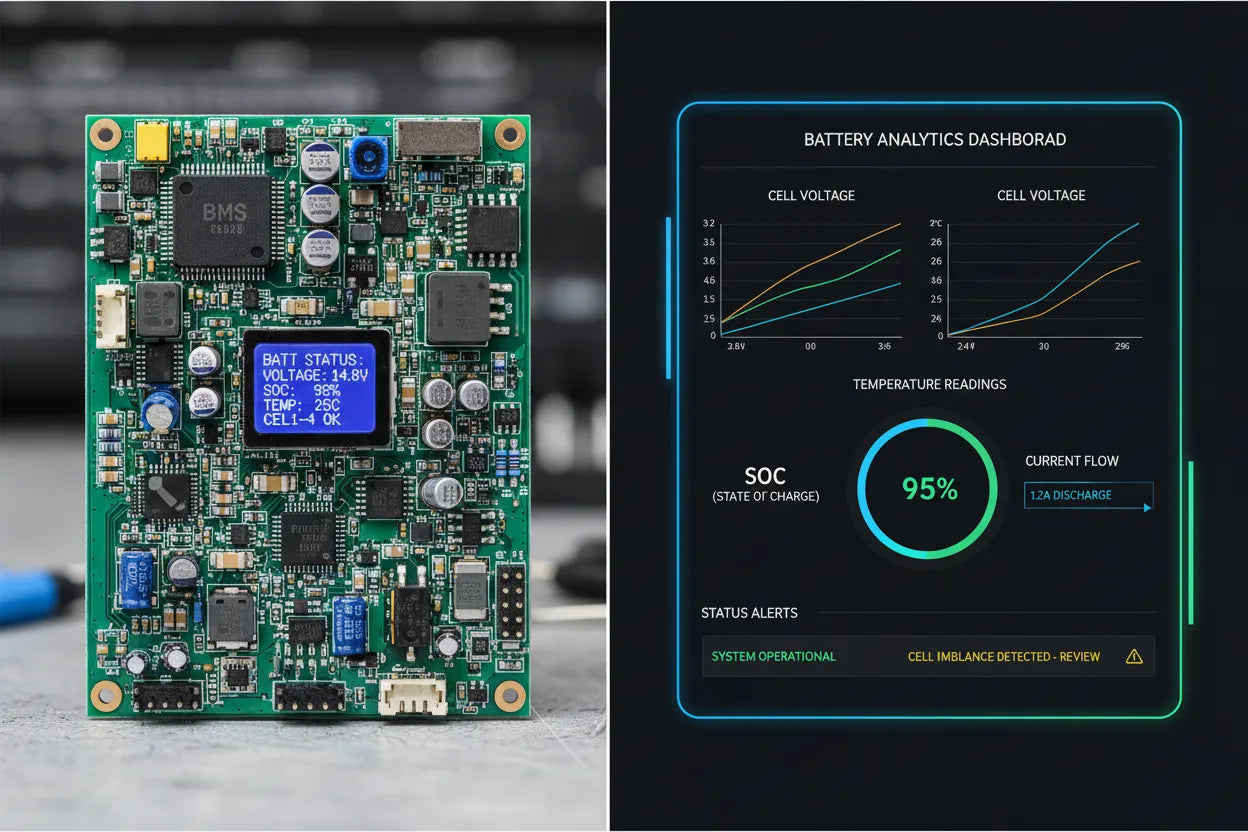
Big battery cells need smart management. Every modern phone with a 6000 mAh lithium ion battery comes with a BMS to handle charging, temperature, and voltage. A solid BMS stops your battery cell from overheating or overcharging, and keeps things safe even with rapid charging or demanding apps. Good firmware can even learn your daily habits—throttling things back to extend battery life without you lifting a finger.
As an engineer, always check if your BMS supports updates and current-limiting. Modern ICs can adjust charge and discharge according to how you use your phone. With decent practices, you’re looking at 500+ full charge cycles before seeing a big drop in battery capacity.
Software Power Optimization Techniques
These days, your phone’s OS does a lot to stretch that 6000 mah battery life. It’ll kill background apps, adjust screen refresh rates, dim the display, and throttle the processor when not needed. Features like dark mode and adaptive refresh are standard now, not just on flagships.
Samsung’s Galaxy M series is the classic example. With good software tuning plus a fat 6000 mAh cell, some users report almost three days between charges if they take it easy. For custom builds or IoT, simple firmware tricks like sleep timers or only waking sensors when needed can make your pack last even longer.
So, is a 6000 mAh battery mobile worth it? If you need all-day power and hate carrying a charger, absolutely. For engineers, these batteries offer real design flexibility without making your project too bulky. But don’t just focus on the number—pairing a big battery cell with good management and smart software is how you really win.
Whether you’re building for rural India, serious techies, or just making sure your device survives off-grid, a 6000 mAh lithium ion battery hits the sweet spot for most needs. Our team at Electro Global has helped hundreds of R&D folks pick the right pack and BMS. If you’re planning your own project, ping us at Electro Global—we’ll help you pick the right cell, size, and onboard BMS for your design.
Frequently Asked Questions
What is a 6000 mAh battery mobile?
It’s a phone that packs a 6000 mAh lithium ion battery right out of the box. That’s a bigger-than-average battery cell, so you’ll get more time away from the charger. If you’re always on the move or hate power anxiety, the extra juice really helps.
How long does a 6000 mAh lithium ion battery last in daily use?
Most folks get 1.5 to 2.5 days on a single charge with normal use—calls, streaming, apps. If you’re gaming a lot or running hotspot, expect closer to a day. It all depends on your usage and how aggressive your phone is with power saving.
Is 6000 mAh battery good compared to 4500 mAh models?
Totally! You get about 30–40% more screen time versus 4500 mAh, if the hardware and software are efficient. Best part? You don’t have to hunt for a charger as often, especially if you’re out and about a lot.
Does a bigger battery increase charging time?
Yeah, bigger means more to fill up. But today’s 6000 mAh battery mobiles almost always support fast charging (30W–65W), so you’re usually full in 75–90 minutes. Honestly, charging isn’t the pain it used to be.
What are the design challenges with high-capacity battery cell integration?
You’ll notice extra weight and a bit more thickness. Engineers also have to handle more heat and tweak the PCB layout. If you want slim and light, this isn’t ideal. But if power is your main thing, it’s worth the trade.
Is 6000 mAh the best battery choice for all use cases?
Nope—not always. If you love super slim phones or always charge at your desk, a smaller battery cell makes sense. But if you’re a road warrior, off-grid, or building a device that shouldn’t die in a day, 6000 mAh is the way to go.
How does battery aging affect 6000 mAh battery life?
Over time, all lithium ion batteries lose a bit of capacity. Most decent 6000 mAh packs hold about 80% after 500 charge cycles. Fast charging or lots of heat will speed up aging, but with care, you’ll get solid life for years.
Are there extra costs involved with 6000 mAh batteries in mobiles?
Definitely! Expect to pay 15–20% more versus a 4000 mAh battery. You’re paying for the bigger cell, fancier BMS, and better cooling. For most heavy users, the added cost is worth the peace of mind.
Why are 6000 mAh battery mobiles popular in India?
Simple: Many areas still have unreliable power. People want phones that’ll survive long trips, outages, or days away from a socket. Plus, Indian brands are pushing big batteries to win over budget and rural buyers who care about real-world battery life.
Can I use 6000 mAh lithium ion batteries for custom hardware projects?
You sure can! 6000 mAh cells are perfect for embedded builds or IoT devices that need long runtime. Just make sure you pick a proven battery cell with a solid BMS. Always check the voltage and current match your project’s load and charging setup.
What phone brands lead in 6000 mAh battery mobiles?
In India, brands like Samsung (M series), Realme, and Lava are popular for their 6000 mAh models. They’re reliable and usually fit rural or field use well. Always check reviews to make sure their BMS does a good job with battery health and safety.
Tagged
Related Content
From the Blog
- Where to Use 7Ah Battery with 12v 7ah Battery Price Insights
- Complete Guide to 6000 mAh Battery Life for Mobile Devices and More
- Choosing the Right 6000 mAh Lithium Ion Battery for Your Device
- Is 6000 mAh Battery Good for Your Mobile Devices Exploring Benefits and Drawbacks
- Understanding Battery Cell Cost and Pricing for Consumer Electronics